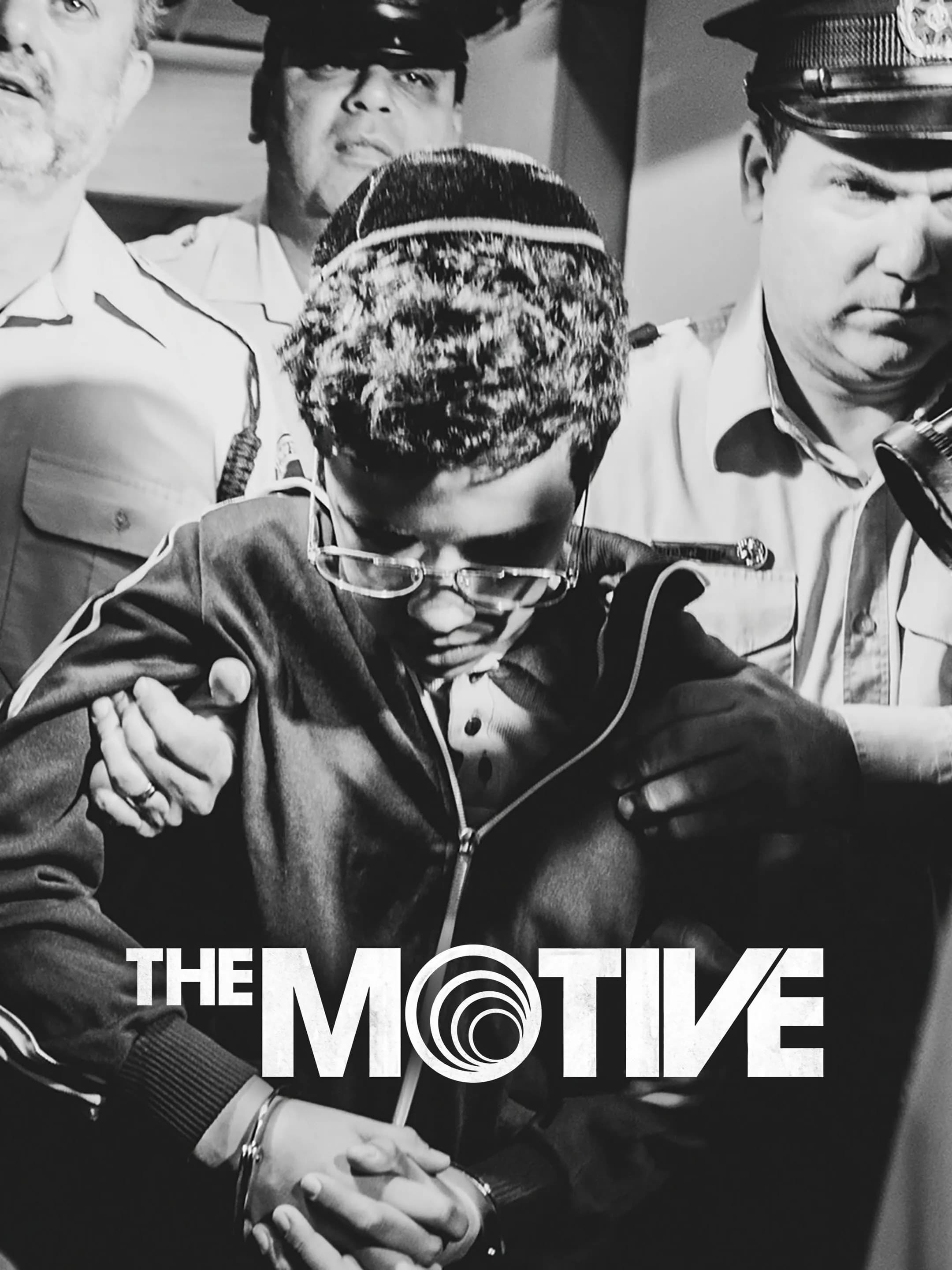
The Motive
Netflix, 2020–2021 · The 1986 Cohen family murders in Jerusalem, Israel
Quick facts
What Is the Series About?
*The Motive* is a four-part Netflix documentary series about one of Israel's most disturbing and unresolved criminal mysteries: the 1986 murder of the entire Cohen family in the Ein Kerem neighborhood of Jerusalem. The series — directed by Tali Shemesh and Asaf Sudri — does not pretend to offer a clean answer. Instead, it methodically revisits the evidence, the testimony, and the competing theories that have haunted investigators, lawyers, and the Israeli public for nearly four decades. The central and agonizing question the series pursues is stated plainly in its title: why?
First broadcast in Israel in December 2020, the series reached an international audience when Netflix released it globally on 28 October 2021. It is catalogued on IMDb under title reference tt15529566.
---
The Case
In the early hours of 22 February 1986, residents of Ein Kerem — a historic, relatively tranquil neighborhood on the western edge of Jerusalem — reported the sound of gunfire. Police arrived to find a scene of devastating violence: Nissim Cohen, 44, and his wife Leah Cohen, 40, had been shot dead in their bed. Their daughters, Anat and Shira Cohen, were also found dead inside the home. All four had been killed with a single weapon: the family's own M-16 rifle, which belonged to Nissim.
The only living family member found at the scene was the Cohens' oldest son, then 14 years old. His name was never publicly released by Israeli authorities, as he was a minor at the time of the crime. He quickly became the prime — and, as it turned out, the only — suspect.
When investigators interviewed the boy, he confessed to the killings. Yet from the outset, the case defied straightforward explanation. The teenager offered shifting and at times incoherent accounts of why he had done it. Among the explanations that emerged and were later examined in the documentary was a claim involving a "green monster" or supernatural creature that had somehow compelled him — a narrative that both prosecutors and his own defense attorney, Yossi Arnon, scrutinized closely. As the Algemeiner reported ahead of the Netflix launch, Arnon later recalled that the boy appeared to have fabricated the "green creature" story, though whether this was a deliberate lie, a symptom of psychosis, or something else entirely was never conclusively established.
Psychiatric evaluations were conducted, and both law enforcement and mental health professionals attempted to reconstruct a coherent motive. None succeeded to the satisfaction of everyone involved. The boy was convicted of the murders. According to reporting cited in viewer discussions of the series, he received a sentence of approximately 9 years and served around 6, after which he reportedly resumed a private life — though these sentencing details have not been independently corroborated in full by major press sources covering the Netflix release.
The case remains one of the most psychologically perplexing family annihilation cases in Israeli criminal history, precisely because no definitive motive was ever established in court or in the psychiatric record.
---
Production
The series was created and directed by Tali Shemesh and Asaf Sudri, two Israeli filmmakers who spent considerable time gaining access to the principal figures connected to the case. Over four episodes, the documentary draws on interviews with law enforcement officers who investigated the original crime scene, legal professionals including defense attorney Yossi Arnon, and psychiatric experts who evaluated the perpetrator at the time.
The production revisits original case files and reconstructs the atmosphere of 1986 Jerusalem, grounding the viewer in the specific social and geographic context of Ein Kerem. Rather than structuring the narrative as a procedural whodunit — the identity of the killer was never in dispute — Shemesh and Sudri lean into the psychological and philosophical dimensions of the case. As reviewers at The Latch noted, the series is less interested in what happened than in the terrifying question of why a 14-year-old boy would systematically kill the people closest to him while they slept.
The decision to withhold the perpetrator's name throughout the series reflects both Israeli legal convention — he was a juvenile — and a deliberate editorial choice to keep the focus on the victims and the unanswered questions rather than on notoriety.
---
Reception
Critical and audience reaction to The Motive has been largely strong, with reviewers consistently describing the series as chilling, haunting, and deeply unsettling — not because of graphic content, but because of the absence of resolution. Decider praised the series for its willingness to sit with ambiguity rather than manufacture false closure, a quality that distinguishes it from many mainstream true-crime productions.
On Reddit's true-crime and Israel-focused communities, viewer discussion has been extensive, with many commenters expressing shock that such a case — involving a child perpetrator, a complete family annihilation, and an unexplained motive — had not previously reached wider international attention. A recurring theme in those discussions is genuine distress at the lack of a satisfying explanation: audiences accustomed to true-crime narratives that resolve into a clear psychological or circumstantial portrait find The Motive unusually frustrating and, for that reason, unusually memorable.
Two points of confusion have circulated in online coverage and should be noted. First, some articles have described the perpetrator as 13 years old rather than 14; the Netflix materials and the more detailed press coverage consistently describe him as 14 at the time of the murders. Second, at least one written review contained a typographical error placing the crime in 1968 rather than the correct year of 1986 — a mistake that has caused occasional confusion among readers.
The IMDb page (tt15529566) lists the series as a TV mini-series with an international release date of 28 October 2021. A composite audience rating had not been widely reported in available sources at the time of publication.
---
The Case Today
The perpetrator — now in his early fifties — has lived outside the public eye since his release. Israeli law's protection of juvenile offenders' identities has held, and no verified reporting in current sources documents his name, location, or present circumstances. The case itself has never been reopened, and no new evidence has emerged to shed light on the motive that eluded investigators in 1986.
For the families, communities, and investigators connected to the case, The Motive has rekindled attention to a tragedy that Israeli society largely processed — and then set aside — decades ago. Whether the series brings any form of closure to those affected remains, like the motive itself, an open question.
The Cohen family murders stand as a stark reminder that the most disturbing crimes are not always the ones without a perpetrator — sometimes they are the ones without an explanation.