The Iceman Tapes: Conversations with a Killer
HBO, 1992 — The chilling on-camera confessions of New Jersey contract killer Richard Kuklinski
Quick facts
What is the series about?
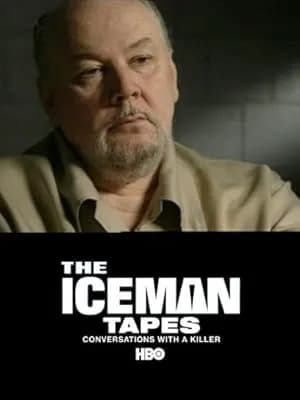
*The Iceman Tapes: Conversations with a Killer* is a single-episode HBO documentary special that aired on April 7, 1992, directed by Arthur Ginsberg. It is not a multi-episode series but a 47-minute television event — part of HBO's America Undercover strand — built entirely around extended, on-camera interviews with Richard Leonard Kuklinski, a convicted murderer who was then serving two consecutive life sentences at Trenton State Prison in New Jersey. In those interviews, Kuklinski speaks with remarkable calm about his methods, his motivations, and his victims, offering one of the most disturbing first-person accounts of serial violence ever broadcast on American television.
The documentary is currently listed on HBO Max, though availability varies by region.
---
The Case
Richard Leonard Kuklinski was a New Jersey-based contract killer whose crimes became the subject of intense law enforcement and media scrutiny. Known in the press as "the Iceman" — a nickname derived in part from his alleged practice of freezing victims' bodies to disguise the time of death — Kuklinski was associated in media accounts with organized crime figures operating out of the New York–New Jersey area.
By the time The Iceman Tapes aired, Kuklinski had already been convicted of murder and was serving two consecutive life sentences. In the HBO interviews, he described his criminal career in forensic detail, claiming to have killed more than 100 people over several decades. While investigators and criminologists have long debated the accuracy of that figure, the documentary's power lies precisely in the unnerving composure with which Kuklinski discusses acts of extreme violence.
Two victims are specifically identified in court records and documentary sources:
- Louis Masgay — Kuklinski stated on camera that he shot Masgay on July 1, 1981. This killing later became one of the charges to which Kuklinski formally pleaded guilty.
- George Malliband — Also named in later court proceedings as a victim of Kuklinski, though the exact circumstances of his death are not detailed in the 1992 broadcast.
In later legal proceedings following the documentary's release, Kuklinski pleaded guilty to additional murders, including those of Masgay and Malliband, and was handed two more consecutive life sentences, bringing his total to four consecutive life terms. He died in prison in 2006, never having been released.
---
Production
Directed by Arthur Ginsberg, the documentary was produced under HBO's America Undercover banner, a strand known for placing cameras in environments and with subjects that mainstream broadcast television would not approach. Ginsberg's method is deliberately minimalist: there is no dramatic reconstruction, no ominous narration designed to editorialize, and no attempt to sensationalize beyond allowing Kuklinski to speak for himself. The camera simply sits with the subject inside Trenton State Prison and lets the interviews unfold.
This approach — granting a convicted killer extended, largely uninterrupted airtime — was itself controversial at the time of broadcast and has continued to spark debate about the ethics of giving violent criminals a platform. Nevertheless, the access Ginsberg secured was extraordinary, and the resulting footage became one of the most-cited primary sources in subsequent journalistic and academic treatments of Kuklinski's life and crimes.
The 1992 special was the first in what would become a small trilogy of HBO documentaries featuring Kuklinski, with *The Iceman Confesses* following in later years as further legal proceedings produced new admissions.
---
Reception
Contemporary critical reception was shaped by the sheer audacity of the project. The Los Angeles Times, reviewing the film on the day of its broadcast, described it as a profile of a "Mafia killer" and drew attention to Kuklinski's claim of having murdered more than 100 people — a figure that dominated coverage and immediately raised questions about how much of his account should be taken at face value.
The documentary holds an IMDb-linked rating of approximately 7.5/10, based on data reflected in its Amazon listing, suggesting that decades after its original broadcast it retains a strong audience. Online discussion, particularly in true crime communities, consistently focuses on the interviews' deeply unsettling tone and Kuklinski's almost clinical emotional detachment — qualities that make the film as disturbing to watch today as they were in 1992.
The most enduring controversy surrounding the documentary — and around Kuklinski's media persona more broadly — concerns the reliability of his self-reported kill count and the degree to which HBO's platform transformed a convicted murderer into a kind of dark celebrity. Critics have argued that the documentary, however honestly constructed, contributed to a mythology around Kuklinski that outpaced the verified facts of his crimes. Supporters counter that the film is a legitimate and invaluable document of a genuinely dangerous man speaking without a filter.
---
The Case Today
Richard Kuklinski died in Trenton State Prison on March 5, 2006, having never been paroled. His death did not close the book on the questions his case raises. Investigators and true crime researchers have continued to debate which of his many claimed victims can be definitively verified, and the gap between his self-reported body count and the murders formally attributed to him in court remains a live topic in criminological discussion.
According to Britannica's biography of Kuklinski, his story has remained a touchstone in discussions about the psychology of career criminals and the complicated relationship between the media and violent offenders. The 1992 documentary, short as it is at 47 minutes, is consistently cited as the foundational text of that public narrative — the moment at which Richard Kuklinski stepped from court records into the cultural imagination.
The Iceman Tapes: Conversations with a Killer remains accessible to viewers through HBO Max, subject to regional availability, and continues to be required viewing in any serious survey of true crime documentary filmmaking.