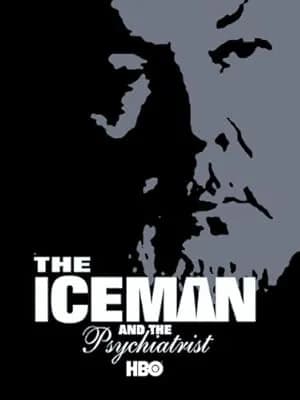
The Iceman and the Psychiatrist
HBO Max, 2003 — Richard Kuklinski, the Mafia hitman who claimed 100+ murders, faces a forensic psychiatrist in prison
Quick facts
What Is the Series About?
The Iceman and the Psychiatrist is a 49-minute HBO documentary special — not a multi-episode series — that places one of America's most notorious self-confessed killers across a table from one of the country's leading forensic psychiatrists. Produced under HBO's long-running America Undercover documentary strand and directed by Arthur Ginsberg, the film documents a series of prison interviews between Richard Leonard Kuklinski — the New Jersey contract killer known as "the Iceman" — and Dr. Park Dietz, a board-certified forensic psychiatrist who has assessed some of the most high-profile violent offenders in modern American legal history. The result is a chillingly candid portrait of a man who claimed to have killed more than 100 people and showed almost no remorse in discussing it.
---
The Case
Richard Leonard Kuklinski was born in 1935 in Jersey City, New Jersey, into a household defined by brutal domestic violence. By his own account — accounts that investigators have both corroborated and disputed in varying degrees — he committed his first murder as a teenager. Over the following three decades he built a parallel life: a family man in the suburbs of Dumont, New Jersey, on one side; a contract killer for the New York–New Jersey mob on the other.
Kuklinski operated as a freelance hitman for figures connected to the DeCavalcante crime family and, by some accounts, figures linked to the Gambino family as well. He was meticulous, varied his methods — firearms, strangulation, crossbow, cyanide — and at one point kept a victim's body in a chest freezer for over a year to obscure the time of death. That detail, more than any other, earned him the nickname that would define his public identity.
His confirmed, court-proven victims include Paul Hoffman (age 51), Peter Calabro (age 22), Gary Smith (age 23), and Louis Masgay (age not consistently documented in the public record). These four murders formed the basis of the prosecution that brought him down. The arrest itself came in December 1986, following a lengthy undercover sting operation. In 1988, a New Jersey court sentenced Kuklinski to two consecutive life terms plus 15 years — a sentence that guaranteed he would never leave prison alive.
Beyond those four convictions, Kuklinski claimed responsibility for more than a hundred additional killings. Investigators and commentators have long debated how much of that figure reflects reality and how much reflects a man who had, over decades, come to define himself through the mythology of extreme violence. Subsequent analysis of his claims suggests that while Kuklinski was undoubtedly a dangerous and prolific killer, the triple-digit body count may have been inflated — in part through Kuklinski's own appetite for notoriety.
---
Production
The documentary was directed by Arthur Ginsberg and released in 2003 as part of HBO's America Undercover documentary series, a strand known for granting unusual access to subjects on the margins or inside the carceral system. The full title, as listed on HBO Max and the network's own pages, is America Undercover: The Iceman and the Psychiatrist.
Filmed inside Trenton State Maximum Security Prison in New Jersey, the documentary's central conceit is the clinical interview format. Dr. Park Dietz — whose past subjects have included John Hinckley Jr. and Jeffrey Dahmer — conducts a forensic psychiatric assessment of Kuklinski on camera. The approach differs from standard true-crime documentaries in that it does not rely primarily on crime-scene footage, reenactments, or investigative narration. Instead, it allows Kuklinski to speak, and it positions a trained clinician to probe, challenge, and analyze what he says in real time.
This was not the first time Kuklinski had appeared on camera. He had previously been the subject of The Iceman Tapes (1992) and would later appear in *The Iceman Confesses: Secrets of a Mafia Hitman*, completing what became an informal trilogy of HBO documentary specials about his case. The 2003 Dietz interview is widely considered the most psychologically searching of the three, partly because of Dietz's clinical framework and partly because by that point Kuklinski — fully aware he would never be released — had little incentive to perform for investigators or prosecutors.
Apple TV lists the runtime at 49 minutes, making it a lean, single-sitting documentary that relies almost entirely on the tension of the interview itself rather than supplementary material.
---
Reception
HBO marketed The Iceman and the Psychiatrist as a "gripping" and "chillingly candid" documentary, leaning into the inherent drama of placing a calm forensic psychiatrist opposite a man who described mass murder with the affect of someone recounting a routine workday. That framing resonated with audiences already familiar with Kuklinski through the earlier HBO specials and with the broader cultural appetite for crime psychology in the early 2000s.
The documentary does not have a widely verified IMDb rating from the sources available for this article, and a full critical review archive from its 2003 premiere has not been comprehensively assembled in the public record. What is clear is that the film occupies a respected place within the HBO true-crime canon and is regularly cited in discussions of documentary filmmaking that prioritizes psychological depth over sensationalism.
The broader controversy surrounding Kuklinski's self-reported kill count — over 100 murders, a figure that has been scrutinized and, in the view of several investigators, found to be at least partially exaggerated — also touches the documentary. Critics of the true-crime genre have pointed to films like this one as examples of how the interview format, without sufficient counterweight from investigative or forensic experts, can risk amplifying a killer's self-mythology. Ginsberg's inclusion of Dr. Dietz as a skeptical, trained interlocutor goes some way toward addressing that concern, though the question of how much of Kuklinski's account is verifiable remains open.
---
The Case Today
Richard Kuklinski died on March 5, 2006, at St. Francis Medical Center in Trenton, New Jersey, while still serving his sentence. He was 70 years old. His death foreclosed any possibility of further prosecutions for the killings he confessed to but was never tried for.
The cases of the four victims for whom he was convicted — Paul Hoffman, Peter Calabro, Gary Smith, and Louis Masgay — remain closed. The wider universe of killings Kuklinski claimed responsibility for has never been fully adjudicated, and it is unlikely it ever will be. Cold case investigators in New Jersey and New York have over the years attempted to match his confessions against unsolved homicides, with mixed results.
Kuklinski's story has continued to generate cultural and criminological interest long after his death. Beyond the three HBO documentaries, his case inspired the 2012 feature film The Iceman starring Michael Shannon. Forensic psychiatrists and criminal psychologists continue to cite the Dietz interview as a rare documented example of a high-functioning, long-active contract killer submitting to formal psychological examination on the record.
For students of organized crime, forensic psychology, and true-crime documentary filmmaking, The Iceman and the Psychiatrist remains a landmark: uncomfortable to watch, methodologically serious, and impossible to look away from.