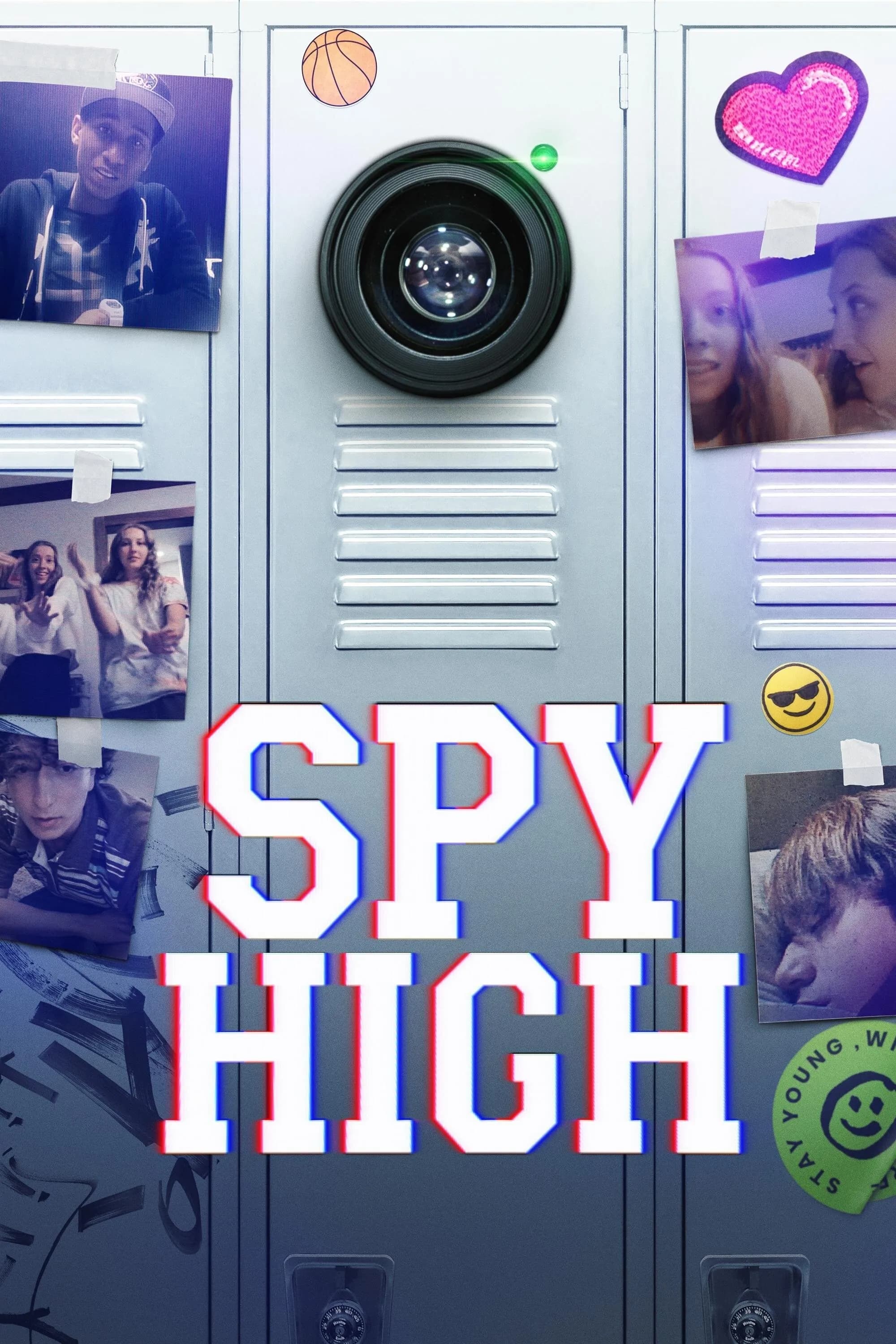
Spy High
Amazon Prime Video, 2025 — The WebcamGate school surveillance scandal
Quick facts
What Is the Series About?
Spy High is a four-part Amazon Prime Video docuseries that revisits one of the most unsettling digital-privacy scandals in American educational history: the covert webcam surveillance of students by a Pennsylvania school district. Directed by Jody McVeigh-Schultz and produced by Amazon MGM Studios alongside Mark Wahlberg's production company Unrealistic Ideas, the series premiered on April 8, 2025, and frames the story not just as a legal dispute but as a cautionary tale about institutional power, technology, and the erosion of privacy in the lives of minors.
At its core, the docuseries chronicles Robbins v. Lower Merion School District, a federal civil lawsuit filed in early 2010 after a suburban Philadelphia high school was found to have secretly activated webcams on school-issued student laptops — photographing students inside their own homes without their knowledge or consent.
---
The Case
The scandal, widely known as WebcamGate, began in the affluent Lower Merion School District on the outskirts of Philadelphia, Pennsylvania. The district had distributed Apple MacBook laptops to students as part of a one-to-one technology initiative. Embedded in the program was a remote-monitoring tool capable of activating each laptop's built-in webcam — a feature administrators described as a theft-recovery mechanism. What students, parents, and the broader public did not know was that this tool was being used in ways that went far beyond recovering lost devices.
The case came to public light when 15-year-old Blake Robbins was summoned by a school assistant principal and confronted with an accusation of selling drugs — backed, the official claimed, by photographic evidence. That evidence had been captured remotely through Blake's school-issued laptop webcam while he was at home. His family, alarmed and outraged, retained legal counsel and filed a federal lawsuit in February 2010. The filing triggered a national news cycle almost immediately.
As the lawsuit progressed, the true scale of the surveillance became apparent. According to reporting on the case, investigators found that the school district had accumulated more than 56,000 images and screenshots captured from student laptops — images taken inside students' bedrooms, living rooms, and other private domestic spaces. The scope of the data collection made it impossible to sustain any argument that the program was limited to device recovery.
The lawsuit, Robbins v. Lower Merion School District, was a civil federal case, not a criminal prosecution. The district — as an institution — was the primary defendant, and the sources covering the case do not report any criminal conviction or prison sentence handed down to a named individual. The civil matter was resolved, though the publicly available record on specific damages or settlement terms is limited. No individual school official was criminally prosecuted based on the reported outcomes.
The documentary broadens the story beyond the Robbins family, examining how the surveillance disproportionately touched students across lines of race, disability, and socioeconomic background — even within a district generally regarded as wealthy and well-resourced.
---
Production
The series was directed by Jody McVeigh-Schultz and produced under a partnership between Amazon MGM Studios and Unrealistic Ideas, the production company co-founded by actor Mark Wahlberg. The involvement of a major Hollywood producer signals the kind of platform investment that brings high-profile true crime and investigative documentary work to streaming audiences at scale.
Amazon MGM Studios released an official trailer ahead of the April 8, 2025 premiere, positioning Spy High as a timely examination of digital privacy in schools — a subject with obvious contemporary resonance given the widespread adoption of student monitoring software accelerated during the COVID-19 pandemic.
The four-episode format allows the series to move from the personal story of Blake Robbins and his family through the legal battle, then zoom out to address the systemic questions the case raised about surveillance capitalism, institutional accountability, and the rights of minors in digitally managed educational environments.
---
Reception
Spy High holds an IMDb rating of 6.3/10 at the time of publication, reflecting a moderate but engaged audience response. The score suggests the series is valued by viewers interested in its subject matter, though it has not crossed into the breakout territory of the genre's highest-rated entries.
Decider's review noted that the core story is straightforward and the privacy violation at its center is unambiguous — the school covertly photographed minors in their homes, and that fact is not disputed. The reviewer acknowledged the series lays out its case clearly, though the relatively simple legal and factual record may limit the documentary's ability to generate the kind of sustained narrative tension audiences expect from multi-episode true crime productions.
Youth Today and The 74 offered a more substantive engagement with the series' educational and policy dimensions, praising Spy High for using the WebcamGate scandal as a lens through which to examine broader, ongoing issues in student surveillance — including questions of racial equity, disability rights, disciplinary disparities, and the normalization of monitoring technology in schools.
The Daily Campus at the University of Connecticut framed the docuseries within the context of the accelerating student surveillance industry, noting that the Robbins case, though it occurred in 2010, anticipated debates that have only grown more urgent as schools deploy AI-powered monitoring tools, keyloggers, and always-on webcam proctoring software.
The principal controversy the series engages is not one of its own making — it is the underlying scandal itself: a school district covertly photographing minors inside their homes, then attempting to use that footage in a disciplinary proceeding, without any disclosure to families.
---
The Case Today
More than fifteen years after the original filing of Robbins v. Lower Merion School District, the questions at the heart of the case remain unresolved at a societal level. Student surveillance technology has expanded dramatically since 2010, with millions of students now subject to monitoring software on school-issued or school-managed devices. The legal framework governing what schools may and may not monitor — and under what disclosure obligations — remains inconsistent across jurisdictions.
No criminal convictions were secured in connection with the Lower Merion webcam program. The civil case concluded without producing the kind of landmark precedent that might have constrained similar programs elsewhere. In that sense, Spy High arrives not as a retrospective on a closed chapter but as a warning about patterns that have continued to develop in the years since Blake Robbins and his family first walked into a federal courthouse in Philadelphia.
The series asks its audience to consider not only what happened in Lower Merion in 2010, but what is happening in schools across the country today — and who is watching.