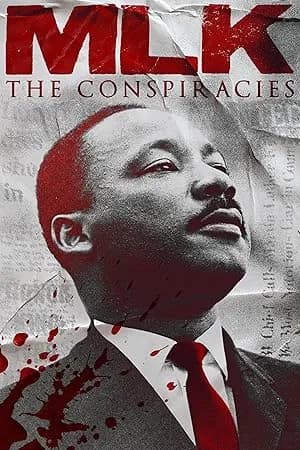
MLK: The Conspiracies
Apple TV Store, 2021 — The assassination of Dr. Martin Luther King Jr. and its unanswered questions
What Is the Series About?
MLK: The Conspiracies is a 2021 documentary series available on the Apple TV Store that examines one of the most consequential and controversial murders in American history: the assassination of civil rights leader Dr. Martin Luther King Jr. on April 4, 1968. The series does not simply retell the facts of the official case — the conviction of drifter and petty criminal James Earl Ray — but interrogates the many conspiracy theories, unanswered questions, and alternative narratives that have circulated for more than five decades. Who really killed Dr. King? Did Ray act alone? Were government agencies involved? These are the questions the series attempts to confront.
The Case
On the evening of April 4, 1968, Dr. Martin Luther King Jr. stepped onto the second-floor balcony of Room 306 at the Lorraine Motel in Memphis, Tennessee. He had come to the city to support striking Black sanitation workers. At 6:01 PM, a single rifle shot struck him in the jaw and neck. He was pronounced dead at St. Joseph's Hospital approximately an hour later, aged 39.
Within hours, the United States erupted in grief and rage. Riots broke out in more than 100 cities. The FBI, under Director J. Edgar Hoover — who had for years surveilled, harassed, and attempted to destabilise King through the COINTELPRO programme — launched a manhunt under the codename MURKIN.
James Earl Ray, a small-time criminal and escapee from Missouri State Penitentiary, was identified as the primary suspect after a rifle, binoculars, and other evidence were found in a doorway near Bessie Brewer's rooming house across from the Lorraine Motel. Ray had rented a room there earlier that day. His fingerprints were on the rifle.
Ray fled the United States, travelling through Canada, Portugal, and the United Kingdom under a series of false identities. He was arrested on June 8, 1968, at Heathrow Airport in London. Extradited to Tennessee, Ray pleaded guilty on March 10, 1969, and was sentenced to 99 years in prison. He recanted just three days later, claiming he had been manipulated by a mysterious figure he called "Raoul" and that he had not fired the fatal shot. Ray spent the rest of his life seeking a new trial. He died in prison on April 23, 1998, from liver failure.
The conspiracy dimensions of the case are not confined to fringe speculation. In 1999, a Memphis civil court — in a suit brought by the King family against a local bar owner, Loyd Jowers, who had claimed involvement — returned a verdict finding that a broader conspiracy involving government agencies had contributed to King's death. The U.S. Department of Justice reviewed this verdict and concluded in 2000 that the evidence did not support the conspiracy claims, but the King family and many historians remain unconvinced by the official narrative.
The FBI's own history of targeting King — including an infamous anonymous letter sent to King in 1964 that appeared to urge him to commit suicide — has ensured that suspicion of institutional involvement has never fully dissipated.
Production
Specific production details for MLK: The Conspiracies, including the director, production company, and episode count, have not been independently verified for this article. The series was released through the Apple TV Store in 2021 as a transactional video-on-demand title rather than through the Apple TV+ subscription platform, meaning it is available for individual purchase or rental. The choice of framing — "the conspiracies" rather than simply "the assassination" — signals that the series engages seriously with the disputed legacy of the official account, likely drawing on archival footage, declassified government documents, and interviews with historians, investigators, and potentially members of the King family, who have been publicly vocal about their belief in a broader conspiracy.
The 2021 release date is notable in context: it came amid a period of renewed national reckoning with racial injustice in America following the murder of George Floyd in 2020 and the subsequent global protests, making King's legacy and the unresolved questions around his death acutely relevant to contemporary audiences.
Reception
Verified critical ratings and audience scores for MLK: The Conspiracies are not available at the time of writing. As a title distributed through the Apple TV Store's transactional model rather than a major subscription streaming platform, the series has not attracted the same breadth of mainstream critical coverage as comparable titles on Netflix or HBO Max. No verified IMDb rating or Rotten Tomatoes score has been confirmed.
Documentaries on this subject have historically attracted significant interest but also scrutiny. Critics of conspiracy-focused King documentaries have noted the risk of amplifying unverified claims, while defenders argue that the documented hostility of the FBI and other agencies toward King makes scepticism of the official account entirely reasonable. How MLK: The Conspiracies navigates this tension — whether it presents conspiracy theories as credible or subjects them to rigorous examination — is a key question that would determine its reception among both general audiences and historians of the civil rights era.
The Case Today
The assassination of Dr. Martin Luther King Jr. remains, in a formal legal sense, a closed case. James Earl Ray was convicted, served time, and died in custody. No other individual has ever been charged or prosecuted in connection with the killing.
However, the case is far from settled in the public consciousness. The King family continues to maintain that Ray did not act alone and that government forces were involved. Declassified FBI files released over the decades have confirmed the extraordinary scope of the Bureau's surveillance and harassment of King, lending credibility to those who question whether the full truth has ever been told.
Historians continue to debate the evidence. Some, like Gerald Posner in his book Killing the Dream, argue that Ray acted alone and that the conspiracy theories are unsupported. Others, including William Pepper — who served as the King family's attorney and authored several books on the case — contend that Ray was a patsy in a government-sponsored plot.
In the absence of a definitive, transparent accounting, documentaries like MLK: The Conspiracies continue to find a willing audience among viewers who believe that the official story of one of America's most devastating political murders remains incomplete. More than fifty years after the shot rang out over the Lorraine Motel in Memphis, the full truth — if it exists in recoverable form — has yet to emerge.