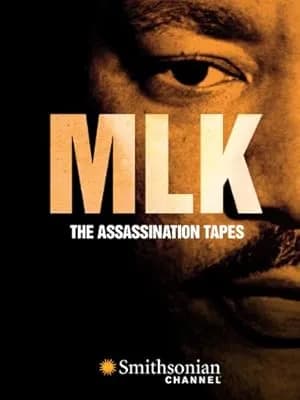
MLK: The Assassination Tapes
Pluto TV, 2012 — the assassination of Dr. Martin Luther King Jr. on April 4, 1968
Quick facts
What Is the Series About?
MLK: The Assassination Tapes is a 2012 documentary TV movie directed by Tom Jennings that reconstructs the assassination of Dr. Martin Luther King Jr. on April 4, 1968, in Memphis, Tennessee. Running 46 minutes, it is a single-part film — not an episodic series — that premiered on the Smithsonian Channel on February 12, 2012, during Black History Month, and is now available on Pluto TV. Rather than relying on retrospective interviews or dramatizations, the film is built almost entirely from recently rediscovered television broadcasts, radio recordings, and police radio audio that were chronologically reassembled to place the viewer inside the events as they unfolded in real time.
---
The Case
On the evening of April 4, 1968, Dr. Martin Luther King Jr. — then 39 years old and in Memphis to support striking sanitation workers — was standing on the second-floor balcony of Room 306 at the Lorraine Motel when a single rifle shot struck him. He was rushed to St. Joseph's Hospital and pronounced dead at 7:05 p.m. The murder sent shockwaves through the United States and the world, triggering riots in more than 100 American cities.
The man convicted of the killing was James Earl Ray, a career criminal with a history of robbery and prison escapes. Ray had been tracking King's movements for weeks and fired the fatal shot from the bathroom window of a rooming house across from the motel. He fled the scene immediately, abandoning a bundle of evidence — including the rifle — near the motel. Ray then embarked on a two-month international flight from justice, traveling through Canada, the United Kingdom, and Portugal before being apprehended at London's Heathrow Airport on June 8, 1968.
Extradited to the United States, Ray entered a guilty plea on March 10, 1969, before a Shelby County Criminal Court in Memphis and was sentenced to 99 years in prison. He recanted the plea just three days later and spent the remainder of his life seeking a new trial, maintaining that he was a patsy in a larger conspiracy — a claim he never substantiated to the satisfaction of any court. Ray died in prison on April 23, 1998.
The King family itself later pursued civil litigation and, in a 1999 civil trial, a Memphis jury found that a local businessman and unnamed co-conspirators — not Ray acting alone — were responsible for the assassination, though that verdict carried no criminal weight and remains deeply contested by historians and law enforcement officials.
---
Production
The film's distinctive quality lies entirely in its methodology. Director Tom Jennings, speaking to NPR ahead of the premiere, explained that he and his team sourced local television footage, radio sound, and police radio audio that had largely sat unexamined in archives — much of it collected and preserved by scholars at the University of Memphis. By stripping away the conventional documentary apparatus of talking-head interviews and narrated retrospective, Jennings forced the material to speak in the present tense: the viewer hears dispatchers, reporters, bystanders, and officials responding to events they do not yet fully understand.
The Smithsonian Channel's press materials describe the film as a portrait of the last days of Martin Luther King, with the archival reconstruction framing King not only as a victim but as a man still very much in motion — organizing, speaking, and planning — in the hours before his death. The result is a chronological reassembly that functions almost as a time capsule, restoring the uncertainty and chaos of April 4, 1968, rather than flattening it into settled history.
The documentary is listed on Apple TV and has also been made available through educational distributors such as Swank Motion Pictures, underlining its dual life as both a broadcast documentary and a classroom resource.
---
Reception
Critical reception was positive and focused heavily on the film's archival ambition. The Los Angeles Times called it "a highly unsettling trip back in time" in its television review, singling out the Smithsonian Channel premiere and the cumulative emotional weight of the recovered footage. The NPR feature framed Jennings's approach as a significant act of historical reconstruction, drawing attention to how much raw media from 1968 had simply gone unexamined for decades.
BBC Four subsequently broadcast the documentary and described it on its programme page as a chronologically reassembled account of the assassination using footage collected by University of Memphis scholars — indicating that the film's international reach extended well beyond its American premiere audience. At least one broadcast listing described the documentary as award-winning, though the specific award is not identified in available sources.
No significant production controversy is documented in available sources. The subject matter itself — the assassination of one of the most consequential figures in American history — carries inherent sensitivity, and the film's restrained, archive-first approach appears to have pre-empted the kind of criticism that more speculative documentaries on the case have attracted. An IMDb user rating is listed for the title (tt2190337) but was not confirmed in the sources consulted for this article.
---
The Case Today
The legal record of the MLK assassination closed definitively with James Earl Ray's death in 1998. No criminal prosecution has been brought against any other individual. The FBI's MURKIN (Murder of King) investigation files have been progressively declassified and released over the decades, and the case remains one of the most scrutinized political murders in American history.
Congressional investigations — most notably the House Select Committee on Assassinations, which concluded in 1979 that King was "probably assassinated as a result of a conspiracy" — have kept the question of Ray's sole culpability alive in public debate, even as no conspiracy has ever been proven in a criminal court. The Lorraine Motel in Memphis is today the home of the National Civil Rights Museum, which opened in 1991 and preserves the site of the assassination as a permanent memorial and educational institution.
For viewers encountering MLK: The Assassination Tapes today on Pluto TV, the documentary serves both as a piece of historical journalism and as a reminder of how much primary source material from one of America's most traumatic days was, for decades, simply waiting to be found.