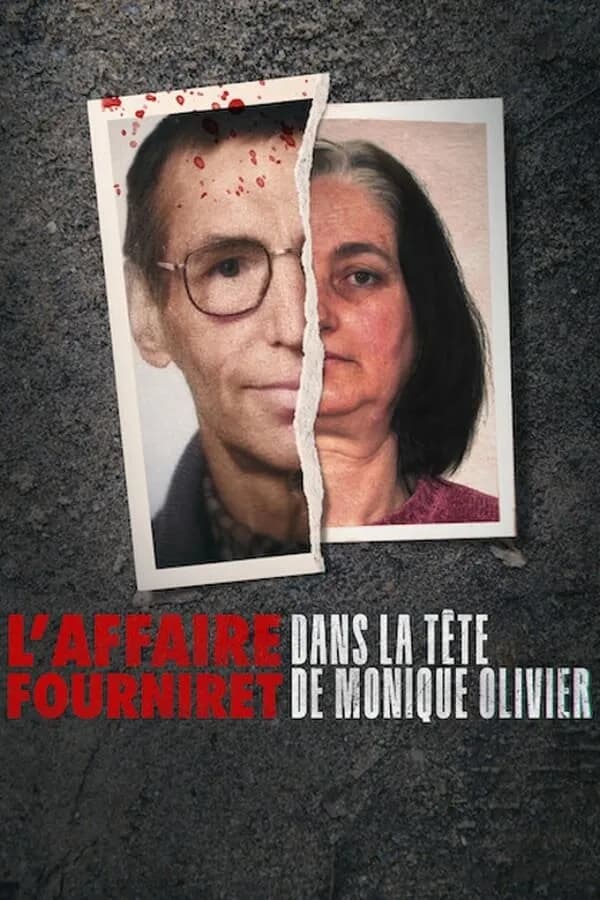
L'Affaire Fourniret: Dans la tête de Monique Olivier
Netflix, 2023 — Inside the mind of France's most notorious female accomplice
Quick facts
What Is the Series About?
L'Affaire Fourniret: Dans la tête de Monique Olivier is a Netflix documentary series released on 2 March 2023 that examines one of the most chilling serial-murder cases in French criminal history. The title translates roughly as The Fourniret Affair: Inside the Mind of Monique Olivier, and that framing is deliberate: while the series covers the full arc of the crimes attributed to Michel Fourniret and his wife Monique Olivier between 1987 and 2003, its central question is what role Olivier truly played — victim of a dominant partner, or calculating accomplice whose participation was indispensable to the killings?
The release was timed, whether by design or coincidence, shortly before the third major legal process against Olivier, making the documentary both a retrospective and a prelude to renewed courtroom drama that gripped France through late 2023.
The Case
The Perpetrators
Michel Fourniret was born in Sedan in 1942. A former worker with no outwardly remarkable profile, he was convicted of multiple murders, rapes, kidnappings, and sequestrations committed across France and BelgiumFrance and Belgium over a sixteen-year span. The couple was ultimately linked to at least seven murders. At his 2008 trial in Charleville-Mézières, Fourniret received the harshest sentence available in French law: life imprisonment without any possibility of remission. He died in detention on 10 May 2021, aged 79.
Monique Olivier was born in Tours in 1948 and worked as a home-care aide before her arrest. Her relationship with Fourniret began through prison correspondence while he was serving an earlier sentence for rape. According to BFMTV, the central legal question at the 2023 trial was whether Olivier was manipulated or manipulative. Her specific role — appearing alongside Fourniret to reassure potential victims before abductions — was identified as a key element of the couple's method. At the 2008 trial she was sentenced to life imprisonment with a 28-year security period.
The Victims
The 2023 proceedings focused on three victims:
- Marie-Angèle Domèce, 19 years old, abducted, sequestered, and killed in Auxerre, Yonne, on 8 July 1988.
- Joanna Parrish, a 20-year-old British student, murdered in France as part of the same series of crimes spanning 1987 to 2003.
- Estelle Mouzin, just 9 years old, who disappeared on her way home from school in Guermantes, Seine-et-Marne, on 9 January 2003. Her case became the most emotionally charged and legally complex in the entire Fourniret dossier, haunting French public consciousness for nearly two decades.
The Investigation and Trials
Fourniret's downfall began in Belgium in June 2003, when he attempted to abduct a young woman and was apprehended. The arrest unlocked a cascade of investigations that connected him and Olivier to a string of cold cases across France and Belgium. Interrogations of Monique Olivier — whose cooperation fluctuated dramatically over the years — gradually revealed new details about the crimes and her own participation.
The first comprehensive trial took place in Charleville-Mézières in 2008, resulting in convictions for both. Then, in March 2022, France created a dedicated cold-case unit — the pôle des affaires non élucidées et des crimes en série — and the Fourniret files became one of its first major undertakings.
The result was the third Fourniret trial, which opened on 28 November 2023 at the Hauts-de-Seine assizes. Olivier stood in the dock alone — Fourniret having died in 2021 — charged with complicity in the murders of Domèce, Parrish, and Mouzin. She was convicted and sentenced to a further life imprisonment with a 20-year security period.
Production
The documentary draws heavily on the correspondence between Fourniret and Olivier — letters exchanged during his earlier imprisonment that, according to BFMTV/RMC Crime, reveal how Olivier slid gradually into Fourniret's orbit and mindset. The series uses these letters as a psychological lens, attempting to reconstruct how a woman became not just complicit but, prosecutors would argue, operationally essential to a serial killer's crimes.
The Netflix platform positions the series as a psychological deep-dive anchored in the 2003 arrest and the subsequent years of interrogations, trials, and partial confessions. The director and precise episode count were not confirmed in available promotional materials at the time of publication.
Reception
The series arrived at a moment of acute public interest in the case. French media coverage was already intensifying ahead of the 2023 trial, and the documentary fed directly into a national conversation about how justice had — and had not — been served. The name Estelle Mouzin had remained a byword for unresolved grief and institutional failure for twenty years.
BFMTV/RMC described the documentary's approach as grounded in letters and psychological analysis rather than sensationalism, presenting it as a serious attempt to understand the inner workings of a deeply dysfunctional and criminal partnership. Viewer reactions reflected the polarising nature of Olivier herself: sympathy for a woman said to have been psychologically dominated, set against outrage at evidence of her active participation in luring victims. No verified IMDb rating was available at the time of writing.
The Case Today
With Monique Olivier's 2023 conviction adding a second life sentence to her 2008 punishment, the judicial chapter of the Fourniret-Olivier case has reached a form of closure. Fourniret's death in 2021 foreclosed the possibility of a complete confession from the primary perpetrator. Olivier's fluctuating cooperation with investigators means that some details may never be definitively established.
France's cold-case unit continues its work, and the Fourniret files remain a reference point for how the country's justice system approaches decades-old unsolved crimes. The Netflix documentary stands as a portrait of manipulation, complicity, and the long, painful reach of crimes committed across sixteen years of the twentieth century.