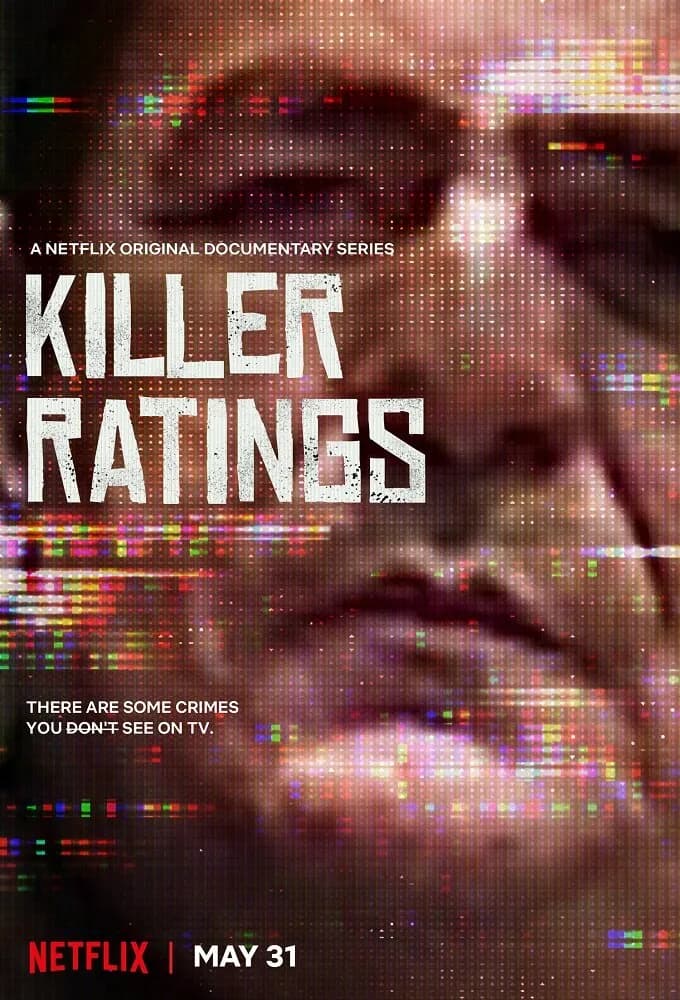
Killer Ratings
Netflix, 2019 — the Wallace Souza murder-for-ratings scandal in Manaus, Brazil
Quick facts
What Is the Series About?
Killer Ratings is a seven-episode Netflix true-crime docuseries that examines one of the most disturbing media scandals in Brazilian history: the allegation that Wallace Souza, a popular television host and sitting state politician in Manaus, Brazil, ordered murders so that his own crime program could be first on the scene — and first on air. Directed by Daniel Bogado and released on May 31, 2019, the series traces how a man celebrated as a crime-fighting TV hero was accused of being the very criminal mastermind he claimed to be exposing.
The Case
Wallace Souza spent roughly a decade building a dual reputation in Manaus, the sprawling capital of Amazonas state in the Brazilian Amazon. As the host of Canal Livre, a long-running crime program, he cultivated the image of a tough-talking crusader against violence and corruption. At the same time, he parlayed that celebrity into a political career, winning a seat in the Amazonas state assembly. To many viewers, he appeared to be exactly what he presented himself as: a no-nonsense former police officer standing up for ordinary citizens in a city plagued by violent crime.
That image began to collapse in 2009 when police investigators noticed a troubling pattern: Souza's television crew had an uncanny ability to arrive at homicide scenes in Manaus before law enforcement had even been notified. According to reporting covered in the series and confirmed by Fox News and Deadline, police went back and re-examined old episodes of Canal Livre as part of their investigation, looking at how consistently and how suspiciously early Souza's cameras appeared at crime scenes.
The conclusion prosecutors reached was alarming: Souza was not discovering violence — he was allegedly directing it. Investigators accused him of running a criminal organization responsible for drug trafficking, illegal weapons dealing, witness intimidation, and murder-for-hire. Authorities alleged that Souza ordered the killing of at least five people, with the murders serving a dual purpose — eliminating rivals or inconvenient witnesses while simultaneously generating dramatic, ratings-boosting footage for Canal Livre.
In October 2009, Souza was formally charged with multiple serious crimes, including homicide, drug trafficking, illegal possession of weapons, witness intimidation, and the formation of a criminal organization. An arrest warrant was issued and he was expelled from the Amazonas state assembly. As The Sun reported, the scale of the alleged scheme — a sitting lawmaker and TV personality accused of orchestrating murders for ratings — was almost impossible for many in Brazil to process.
Souza died of a heart attack in 2010 while proceedings against him were still underway, meaning the case never reached a completed courtroom verdict. His death foreclosed the possibility of a definitive judicial reckoning for his alleged victims and their families.
Production
The series was directed by Daniel Bogado and produced for Netflix, premiering globally on May 31, 2019. Bogado structured the seven episodes to move through the full arc of Souza's public life: his rise as a TV personality, his political career, the mounting suspicions among investigators, the unraveling of his public image, and the charges that brought him down before his sudden death.
The documentary draws on archival footage from Canal Livre itself — an unusual and deeply unsettling source base, given the allegations that some of that footage was effectively produced by the crimes Souza allegedly commissioned. Interviews with journalists, former colleagues, investigators, and community members in Manaus help reconstruct the atmosphere in which Souza operated and explain how someone so publicly associated with law and order could allegedly be orchestrating the opposite behind the scenes.
According to Yahoo Lifestyle, the series leans into how genuinely difficult the story is to believe, allowing the documented record to carry the shock rather than relying on dramatic reconstruction.
Reception
Critical and audience response to Killer Ratings emphasized the sheer improbability of the story at its center. Reviews consistently described the series as gripping, disturbing, and almost surreal in how it documents a case that, as multiple outlets noted, would be dismissed as too far-fetched if it were presented as fiction.
The IMDb listing for the series records the release date as May 31, 2019 (United States), under title ID tt10243692. Aggregated critical scores were not widely published at the time of release, but the consensus across entertainment press was that the docuseries succeeded in conveying the audacity and horror of Souza's alleged crimes without sensationalizing them beyond what the facts already provided.
The broader controversy surrounding the case — and one that the series engages with directly — is what it says about the relationship between media, politics, and crime in Brazil. Souza was not operating in obscurity; he was a public figure, a lawmaker, and a TV personality with a loyal audience. The fact that his alleged criminal enterprise ran for years beneath that public legitimacy raised serious questions about oversight, accountability, and the ways in which media celebrity can function as a shield.
The Case Today
Because Wallace Souza died in 2010 before his trial concluded, no final legal verdict was ever entered against him. Reporting indicates the case was eventually dismissed following his death, leaving a legal record that is incomplete by any measure. His alleged victims and their families received no formal judicial closure in the conventional sense.
The Netflix series, released nearly a decade after Souza's death, represents the most sustained international examination of the case to date. For audiences outside Brazil — and for many inside the country who may not have followed every detail of the 2009 investigation — Killer Ratings functions as both a true-crime document and a case study in how dangerous the intersection of media power, political immunity, and organized crime can become when left unchecked. The Wallace Souza affair remains one of the most extraordinary and disturbing stories in the modern history of Brazilian broadcast journalism.