How to Fix a Drug Scandal
Netflix, 2020 — Two Massachusetts crime-lab chemists who corrupted tens of thousands of drug cases
Quick facts
What Is the Series About?
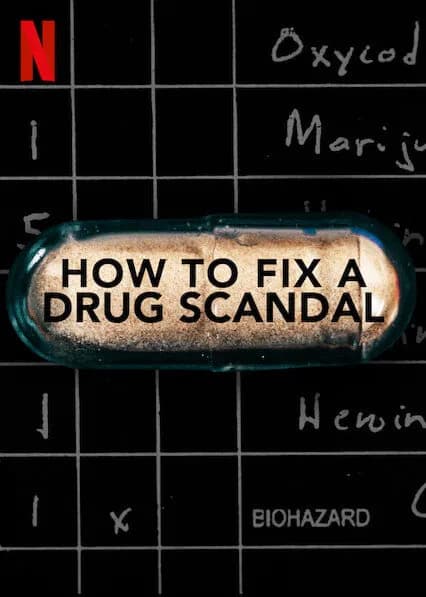
*How to Fix a Drug Scandal* is a four-episode Netflix limited series directed by Erin Lee Carr and released on April 1, 2020. Unlike many true-crime documentaries that focus on a single perpetrator or a single dramatic crime, this series examines two separate but thematically linked forensic scandals that unfolded inside the Massachusetts state drug-testing system. Both scandals involved chemists employed at official crime labs — chemists whose job was to provide the objective scientific evidence on which drug prosecutions depended. When those chemists turned out to be corrupt, the consequences were staggering: tens of thousands of criminal cases were thrown into doubt, and the legal system was forced into an unprecedented reckoning.
The series centers primarily on Sonja Farak, whose 2013 arrest exposed that she had been using the controlled substances she was supposed to be testing at the state crime lab in Amherst. It also covers the earlier and in some ways even more prolific misconduct of Annie Dookhan, who worked at a separate Massachusetts lab in Boston and was found to have fabricated drug-test results and falsified certificates on a massive scale. Together, the two cases form what critics and legal scholars have called one of the most catastrophic failures of forensic credibility in American judicial history.
---
The Case
Sonja Farak
Farak worked as a forensic chemist at the Massachusetts state drug lab in Amherst. Her role was straightforward and critical: she analyzed seized substances and certified, under oath, whether they were illegal drugs. Prosecutors across the state relied on her certificates to secure convictions. What investigators eventually discovered, however, was that Farak had been tampering with evidence and consuming the very drugs she was assigned to test, reportedly over a period of years. She was arrested in January 2013 at the age of 35. Her arrest immediately raised questions about every case she had ever touched — and about how long the misconduct had gone undetected. Farak has since been released from custody, though full details of her sentencing record were not fully documented in available sources at the time of publication.
Annie Dookhan
Dookhan's misconduct at the Boston state lab was of a different character but equally destructive. Rather than consuming drugs herself, she fabricated test results, forged signatures, and bypassed proper testing protocols — effectively lying about whether substances were illegal in order to push cases through the system faster. She was prolific: her false certifications affected an enormous volume of prosecutions. Dookhan was convicted of her crimes and released on parole in 2016.
The Victims: Thousands of Defendants
The victims of these two scandals are not a single person or a small group — they are the tens of thousands of defendants whose cases rested, at least in part, on evidence certified by Farak or Dookhan. According to sources cited in coverage of the series, approximately 44,000 convictions were dismissed and more than 47,000 cases were affected or vacated in some form. Many of those defendants had already served their sentences. Some had lost jobs, housing, or custody of children as a result of convictions that were now revealed to be built on fraudulent science. The documentary treats this systemic harm as the true moral core of the story.
The Legal Fallout
The review of cases triggered by both scandals became one of the largest mass dismissals of criminal convictions in United States history. Massachusetts courts were required to examine case after case, notify defendants, and process dismissals on an industrial scale. The process exposed not only the individual misconduct of Farak and Dookhan but also deep structural failures: inadequate oversight of lab chemists, institutional pressures that prioritized throughput over accuracy, and, in Farak's case, allegations that prosecutors and officials may have delayed disclosing the full scope of her misconduct to defense attorneys.
---
Production
The series was directed by Erin Lee Carr, a documentary filmmaker known for her work on other investigative true-crime projects for streaming platforms. Carr adopts a deliberately procedural approach across the four episodes, tracing the legal and investigative machinery that eventually brought both scandals to light. Rather than relying on dramatic reconstruction, the series draws on interviews with attorneys, investigators, and people directly affected by the tainted convictions. The Guardian treated the release as a major true-crime event, noting the scale of the institutional failure it documents. The series is structured so that viewers come to understand not just what Farak and Dookhan did, but how a system supposedly built on checks and balances failed to catch either of them for so long.
---
Reception
Critical reception was strongly positive. Reviewers praised the series for treating a genuinely complex legal and institutional story with the seriousness it deserved, rather than reducing it to simple villain-and-victim sensationalism. Vox described it as a staggering true story of justice gone very wrong, lauding its focus on systemic failure rather than individual drama. Boston public radio station WBUR noted that the series "elevates process" — a pointed observation that Carr prioritized understanding how the system broke down over simply dwelling on the horror of what happened. Newsweek recommended it as essential true-crime viewing. The series generated significant conversation about drug-law enforcement, the reliability of forensic evidence, and the ways in which defendants — particularly those without resources to mount strong legal challenges — are disproportionately exposed when the system fails.
The central controversy the series surfaces is not just the misconduct of two individuals but the question of institutional accountability: who knew what, when did they know it, and why did it take so long to act? The allegation that Massachusetts prosecutors may have sat on information about Farak's misconduct rather than promptly disclosing it to defense counsel added a second layer of scandal on top of the first.
---
The Case Today
Both Farak and Dookhan have been released from custody. The legal aftermath of their misconduct continues to echo through the Massachusetts court system. The mass dismissal of tens of thousands of cases represents an ongoing effort to restore some measure of justice to defendants whose outcomes were shaped by fraudulent science. For many of those individuals, however, dismissal of a conviction comes too late to undo the real-world consequences — lost employment, broken families, immigration consequences, and years of stigma. How to Fix a Drug Scandal stands as a document of how completely a justice system can fail when the institutions meant to guarantee objectivity are left without meaningful oversight.