Hells Angels – storhed og fald
HBO Max / Discovery+, 2023 — the rise and bloody biker wars of Danish Hells Angels
Quick facts
What Is the Series About?
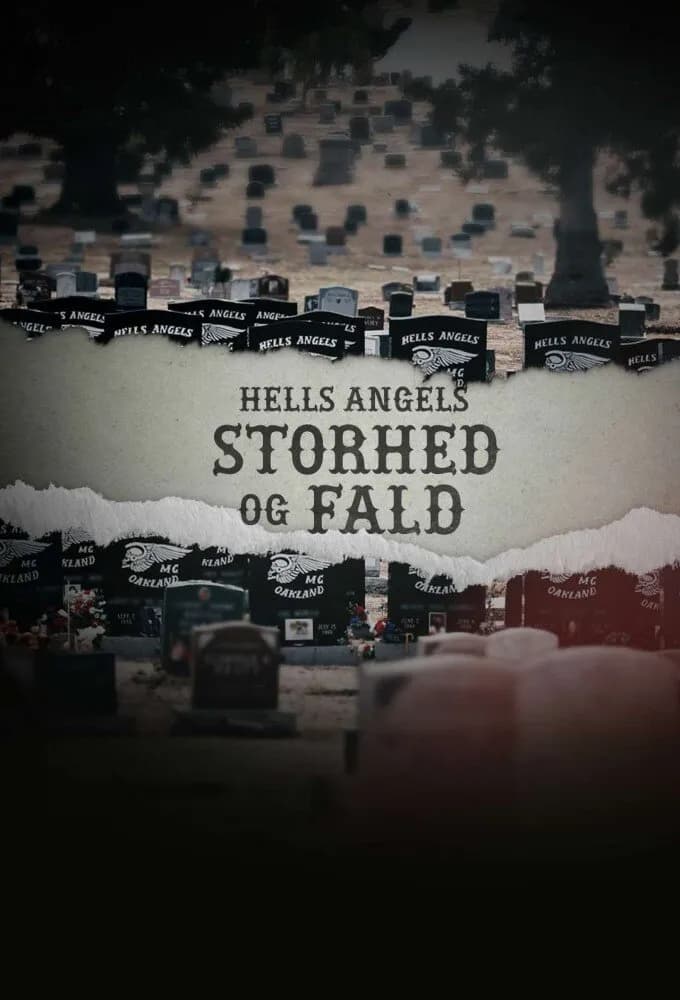
*Hells Angels – storhed og fald* is a six-episode Danish true-crime documentary series that chronicles the rise of the Hells Angels motorcycle club in Denmark and the devastating organized-crime biker wars that followed. Premiering on 15 February 2023 on Discovery+ and Kanal 5, the series was also made available on HBO Max across the Nordic market — appearing in Sweden as Hells Angels Danmark – uppgang och fall and in Norway under the Hells Angels banner. The IMDb-registered production represents one of the most ambitious Danish true-crime documentary efforts in recent years, pulling back the curtain on a world that has long operated in deliberate secrecy.
The series begins its story in 1980, when the Danish chapter of Hells Angels was formally established. According to the HBO Max synopsis, the documentary offers an in-depth insight into the Danish motorcycle club scene and traces how a subculture rooted in post-war American biker identity transformed, over the course of two decades, into a fully structured organized-crime network with lethal territorial ambitions.
The Case
Unlike single-case true-crime documentaries that focus on one murder or one trial, Hells Angels – storhed og fald takes a sweeping historical approach. Its central subject is the Danish biker war — a prolonged and brutally public conflict, primarily between Hells Angels and the rival Bandidos MC, that scarred Scandinavian society throughout the 1990s.
The conflict, often referred to as the Great Nordic Biker War, is one of the most violent gang confrontations ever recorded in a Western democracy. Between approximately 1993 and 1997, the two clubs waged open warfare across Denmark, Sweden, Norway, and Finland. The weapons were not the switchblades of street gangs but military-grade ordnance: anti-tank missiles, car bombs, and hand grenades were deployed in attacks that killed rival club members and, in several horrifying instances, innocent bystanders. Civilian deaths drew international media attention and forced Scandinavian governments to rethink their approach to organized crime entirely.
At the heart of the Danish chapter of this war was the question of territory, drug distribution networks, and the symbolic prestige of controlling Scandinavian chapters. Hells Angels, having established their Danish foothold in 1980, regarded the later arrival of Bandidos as a direct existential threat. The resulting conflict produced dozens of deaths across the Nordic countries.
The violence finally reached a formal, if fragile, conclusion in September 1997, when representatives of the two clubs signed a truce — an almost unprecedented event in the history of outlaw motorcycle clubs. The truce ended the most acute phase of hostilities, though law enforcement continued to pursue club members through the courts for years afterward, resulting in multiple convictions across Denmark and the wider Nordic region.
Because the series functions as a broad historical overview rather than a single-case procedural, it draws on testimony from former club members, law enforcement officers, journalists, and surviving victims to construct its six-episode narrative arc — from the idealistic early days of the 1980s Danish chapter, through the catastrophic violence of the biker war, to the legal reckoning and structural changes that followed.
Production
The production is positioned as serious investigative documentary journalism rather than sensationalized entertainment. A Danish review on Vielskerserier.dk describes the series as skraemmende god true crime-journalistik — frighteningly good true-crime journalism — a phrase that signals the reviewers found the material both rigorously reported and genuinely unsettling.
The format of six episodes gives the production room to develop its historical argument properly, allowing it to move through distinct phases of the Hells Angels' Danish history rather than compressing decades into a single feature-length film. The Swedish-language HBO Max page notes that the series begins with the founding of the Danish chapter in 1980 and frames everything that follows as the unfolding of a bloody era of power struggles, suggesting the narrative arc is deliberately structured around escalation and consequence.
Director information has not been made publicly available in current sources. The series was produced for the Scandinavian market with Discovery+ and Kanal 5 as its primary broadcast partners, before being picked up for the wider HBO Max Nordic catalogue. The production's access to what is described as a closed world suggests either cooperation from former members willing to speak on record, extensive archival research, or both.
Reception
Critical reception in Denmark has been positive. The SE og Hor article covering the premiere describes the series as offering a unique insight into a closed world, framing it as a genuinely revelatory piece of documentary television rather than a rehash of already well-known material. The Danish review calling it frighteningly good true-crime journalism reinforces this sense that the series offers something substantive.
No formal IMDb audience score or Rotten Tomatoes rating is available in current sources. No significant controversy or backlash has been documented in available reporting, which is itself notable given that documentaries touching on active or recently active criminal organizations sometimes attract legal pressure or public criticism from those portrayed.
The series arrives at a moment of significant global appetite for organized-crime documentaries, and its specific focus on a European biker war that involved military weaponry on civilian streets gives it a built-in hook that distinguishes it from the crowded field of American gang and mob documentaries.
The Case Today
The formal biker war between Hells Angels and Bandidos in Denmark has been over for more than two decades, but the organizations themselves have not disappeared. Danish law enforcement has continued to monitor both clubs, and periodic criminal prosecutions of individual members for drug trafficking, violence, and other offenses have kept the topic alive in Scandinavian news coverage.
The broader question of how Denmark — a country with a strong rule-of-law tradition and a relatively small population — found itself hosting one of the most violent gang conflicts in modern European history remains a subject of genuine public and academic interest. Hells Angels – storhed og fald enters that ongoing conversation as a piece of documentary record, archiving testimony and context that might otherwise be lost as the key figures of the 1980s and 1990s age out of public life.
For international viewers unfamiliar with the Nordic biker wars, the series offers an essential primer on a chapter of European organized crime that has been underreported in English-language media — and a reminder that outlaw motorcycle clubs are not merely an American phenomenon, but a global one with local consequences that can be catastrophic.