Fru Stæhr og mysteriet om babyliget på loftet
DRTV, 2020 — the unsolved discovery of an infant skeleton in a Copenhagen loft
Quick facts
What Is the Series About?
Fru Stæhr og mysteriet om babyliget på loftet is a Danish documentary that aired on DR2 and is available on DRTV in January 2020. The film takes as its starting point a deeply unsettling real-life discovery: the skeletal remains of a newborn found hidden inside a box in a drying loft in a residential building on Prinsesse Maries Allé in Frederiksberg, Copenhagen. Rather than following the arc of an arrest, trial, and conviction — because no such arc exists — the documentary is structured as a historical detective story. Two residents of the building set out to understand who put the child there, why, and what became of everyone involved. The title translates roughly as Mrs. Stæhr and the Mystery of the Baby Corpse in the Loft.
The Case
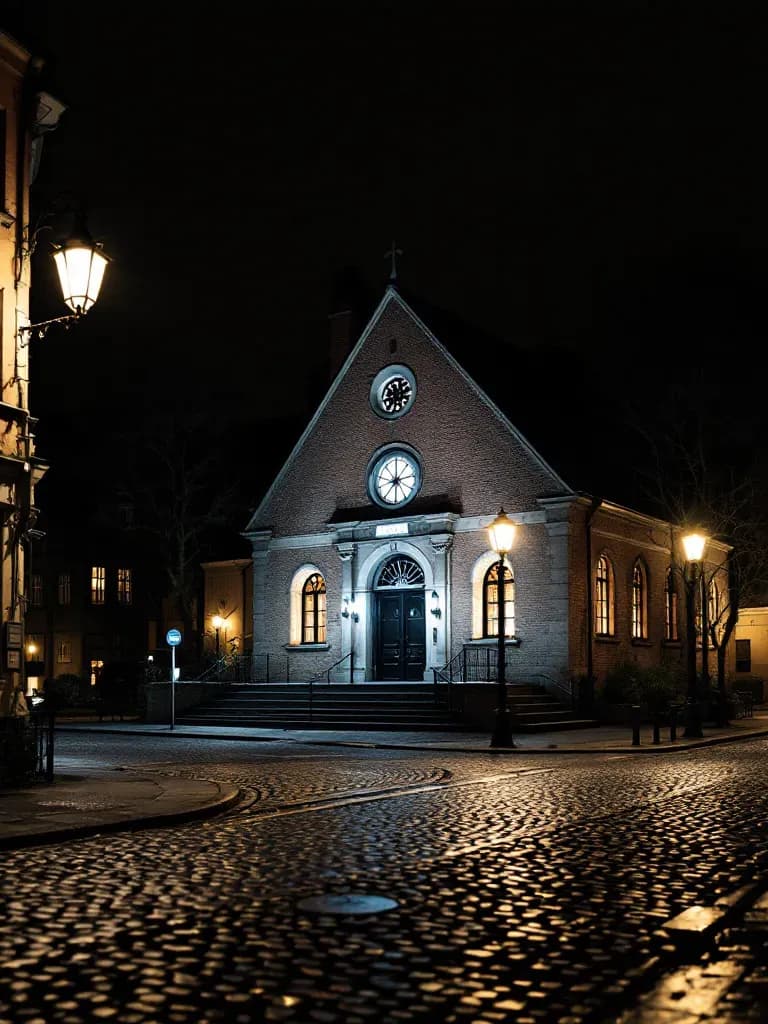
In August 2018, workers carrying out routine maintenance in the storage loft of an apartment block on Prinsesse Maries Allé in Frederiksberg made a disturbing find: a small box containing the bones of an infant. Police were called and a formal criminal investigation was opened to determine whether a crime had been committed.
Forensic analysis, including carbon-14 dating conducted with the involvement of Aarhus University, established that the remains dated from somewhere between 1938 and 1954 — with the scientific estimate narrowing the window to approximately 1942–1954. Given that the death had occurred at least six decades earlier, police announced on 18 January 2019 that the investigation was being closed. No suspect had been identified, no living witness could be traced, and the passage of time meant that even if a perpetrator had once existed and could now be named, no prosecution would have been possible.
The infant — whose sex and precise age at death have not been confirmed in available reporting — was never formally identified. The child remains nameless in the official record.
The documentary's narrative centres on a woman named Hansigne, identified in DRTV's own episode synopsis as the most likely historical subject. According to the documentary's reconstruction, Hansigne was an unmarried woman who became pregnant at a time — somewhere in the middle decades of the twentieth century — when unwed pregnancy carried severe social stigma in Denmark. She is said to have given birth in secret, concealed the dead infant in her dresser, and never told anyone what had happened. It is important to be precise about what Hansigne is and is not in this story: she is the documentary's reconstructed historical subject, not a charged or convicted perpetrator. The police investigation was closed without identifying anyone, and Hansigne's connection to the case is a conclusion reached by the filmmakers and the building's residents through archival and genealogical research, not by a court of law.
The broader historical context, explored in a Politiken feature connected to the case, places the likely concealment within a well-documented social phenomenon: women in mid-twentieth-century Denmark who became pregnant outside marriage faced not only shame but potential economic ruin, family rejection, and social exclusion. Concealment of a birth, or even infanticide, was not uncommon in this era across Scandinavia and wider Europe, and historical records document numerous cases in which women hid or disposed of infant remains under precisely these pressures. The documentary uses the Frederiksberg case as a lens through which to examine that history.
Production
The documentary was produced for DR — Denmark's national public broadcaster — and aired on DR2 before being made available on the streaming platform DRTV, where it remains accessible until at least November 2025. The director has not been confirmed in available sources. The production approach, as described in the DRTV synopsis and related press coverage, is investigative and participatory: two residents of the apartment building at the centre of the story drive the narrative, conducting their own archival research, interviewing historians and forensic specialists, and attempting to trace the former occupants of the flats. The Aarhus University carbon-14 dating work forms a key forensic pillar of the film. The documentary blends true-crime investigation with social history, acknowledging throughout that the case was never solved and that the story it tells is a reconstruction rather than a proven account.
Reception
No formal critical review aggregate or audience score has been located in available sources for this documentary. The DRTV platform page confirms the film remains in active distribution as of its listed expiry date of 25 November 2025, suggesting continued audience interest. The Politiken newspaper engaged with the case as a serious subject of historical and cultural interest, using it to discuss broader patterns of concealed births in twentieth-century Denmark — an indication that the story resonated beyond the immediate true-crime audience. An IMDb rating and ID could not be verified from available sources.
The documentary does not appear to have generated a specific public controversy. Its subject matter — a possible infanticide committed by an unnamed, long-dead woman under circumstances of extreme social pressure — is inherently sensitive, and the filmmakers appear to have approached it with historical sympathy rather than prosecutorial framing. The principal uncertainty at the heart of the series, as noted by both the police and the scientific sources, is that the case cannot be definitively solved: the exact date of the child's death, the precise identity of the mother, the cause of the infant's death, and whether any criminal act was committed in the strict legal sense all remain open questions.
The Case Today
The police investigation into the Frederiksberg infant skeleton has been formally closed since January 2019 and there is no indication it has been reopened. The child's remains have not been publicly identified. No individual has been charged or named as a suspect by authorities. Hansigne, as the documentary's likely subject, was never accused of a crime by police and is presented in the film as a historical figure to be understood rather than condemned — a woman caught in circumstances that Danish society of the mid-twentieth century gave her almost no way to navigate openly. The case endures as a reminder of what social stigma and the absence of legal or medical support for unmarried pregnant women could produce, and of the limits of forensic science when the trail has gone cold for more than half a century.