From Rock Star to Killer
Netflix, 2025 — The Bertrand Cantat case: how a French rock icon killed actress Marie Trintignant
Quick facts
What Is the Series About?
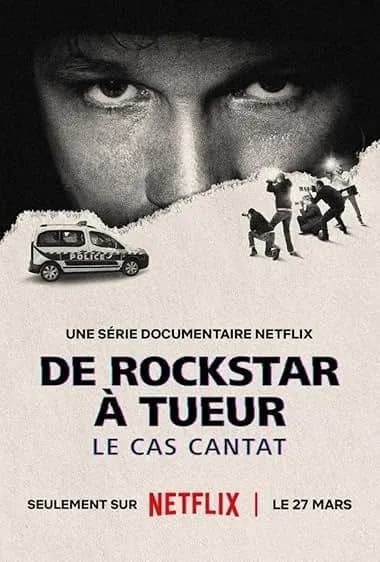
From Rock Star to Killer — originally titled De rockstar à tueur: le cas Cantat — is a Netflix limited documentary series that examines one of France's most notorious and divisive criminal cases: the 2003 killing of celebrated French actress Marie Trintignant at the hands of her partner, rock singer Bertrand Cantat. Directed by Zoé de Bussierre and released on March 27, 2025, the three-part series reconstructs the crime, the legal proceedings, and the cultural aftershock that rippled through France for more than two decades.
The series is not simply a retelling of a violent act. It is, at its core, an interrogation of how France — its media, its justice system, and its public — responded when the perpetrator was a beloved rock star and the victim was a famous woman. For many viewers, it is as much a documentary about collective denial as it is about a single crime.
The Case
On July 26, 2003, in a hotel room in Vilnius, Lithuania, Bertrand Cantat brutally assaulted Marie Trintignant. Trintignant was in the Lithuanian capital to film a television production; Cantat had accompanied her. Following the attack, she was hospitalized in critical condition. Six days later, on August 1, 2003, Marie Trintignant died from her injuries. She was 41 years old.
Marie Trintignant was one of France's most respected actresses, the daughter of legendary actor Jean-Louis Trintignant. Her death sent shockwaves through the French cultural world. Bertrand Cantat, meanwhile, was the frontman of Noir Désir, one of the most iconic French rock bands of the 1990s — a group whose anti-establishment, politically charged music had made Cantat a counterculture hero to millions.
The collision of these two identities — celebrated victim, celebrated perpetrator — immediately complicated the public narrative. According to coverage reviewed by Euronews, a significant portion of French media and public opinion at the time framed the killing through the lens of a crime passionnel — a crime of passion — rather than as a straightforward act of fatal domestic violence. Critics and advocates for victims of abuse pointed out that this framing amounted to a cultural excuse for murder.
Cantat was convicted of murder and sentenced to prison. He served time for the killing, though the specifics of his sentence length and parole timeline remain subjects of ongoing public discussion in France. His conviction did not prevent a partial rehabilitation in certain quarters of the French music world, a fact that the documentary series addresses directly.
Production
The series was directed by Zoé de Bussierre and produced for Netflix as a three-episode limited series. According to available coverage, the production draws on court records, archival news footage, and interviews with journalists, legal observers, and others who covered or were involved in the case. The official Netflix trailer gives a sense of the documentary's approach: methodical, archive-heavy, and focused on the broader cultural and institutional failures the case exposed.
De Bussierre's approach situates the Cantat case within a wider feminist and sociological framework, treating it not as an isolated tragedy but as a lens through which to examine how France historically minimized violence against women when the perpetrator held cultural capital. The use of archival media coverage is particularly pointed: contemporary news reports and television commentary from 2003 reveal, with uncomfortable clarity, how much sympathy flowed toward Cantat in the immediate aftermath of Trintignant's death.
The series is listed on IMDb under the title From Rock Star to Killer with the original French title De rockstar à tueur: le cas Cantat, IMDb ID tt36241713.
Reception
Since its release on March 27, 2025, From Rock Star to Killer has reignited debate in France and beyond about domestic violence, celebrity culture, and media accountability. Review coverage and commentary have highlighted several recurring themes.
First, media sympathy toward Cantat: numerous critics have pointed to the documentary's excavation of how French journalists and commentators in 2003 softened their coverage of a convicted murderer because of his cultural standing. Second, societal silence: the series has been praised for giving a platform to voices — advocates, journalists, feminist analysts — who argue that the case was a critical missed moment in France's reckoning with violence against women. Third, the crime passionnel framing: perhaps the most discussed element of the documentary's argument is its challenge to the romantic-violence mythology that allowed some to cast Cantat's actions as somehow explicable through the grammar of passionate love.
As of publication, no verified aggregate critical score or IMDb user rating is available from confirmed sources.
The Case Today
More than two decades after Marie Trintignant's death, the Cantat case remains one of the most debated criminal episodes in modern French cultural history. The Netflix documentary arrives at a moment when France has been increasingly confronting its record on domestic violence and femicide — making the timing of From Rock Star to Killer feel less like a retrospective and more like a live conversation.
Bertrand Cantat, identified in available coverage as a convicted murderer who served prison time, has remained a public figure in France, a fact that the documentary does not shy away from examining. For many advocates and observers, his partial reintegration into public life is itself a symptom of the same cultural blind spots the series dissects.
For viewers unfamiliar with the case, the series offers a thorough, if deeply unsettling, introduction to one of Europe's most consequential celebrity crime cases. For those who lived through the original media coverage, it offers something rarer: a reckoning.