Free Chol Soo Lee
Apple TV, Viaplay & more — the 1973 wrongful murder conviction that sparked a pan-Asian movement
Quick facts
What Is the Documentary About?
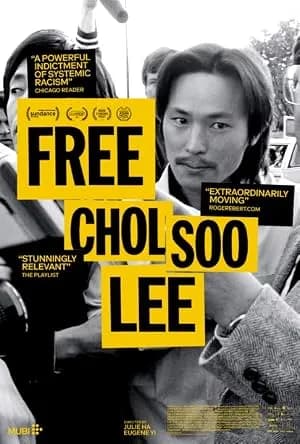
Free Chol Soo Lee is a 2022 feature-length documentary directed by Julie Ha and Eugene Yi about one of the most consequential wrongful conviction cases in Asian American history. The film tells the story of Chol Soo Lee, a Korean immigrant who was convicted in 1974 of murdering Chinatown gang leader Yip Yee Tak in San Francisco in 1973 — a crime he did not commit. It documents not only Lee's decade behind bars, including four years on death row, but also the remarkable pan-Asian solidarity movement that ultimately secured his freedom in 1983. The film had its world premiere at the Sundance Film Festival in January 2022 and received a limited US theatrical release on 12 August 2022, before becoming available on PBS Independent Lens, Apple TV Store, Viaplay, Filmstriben, SF Anytime, and Blockbuster.
---
The Case
In 1973, a man named Yip Yee Tak — described by multiple sources as a Chinese American gang leader — was shot and killed near the intersection of Pacific and Grant in San Francisco's Chinatown. San Francisco police arrested Chol Soo Lee, a young Korean immigrant who was approximately 20 years old at the time of the murder. Despite the lack of robust physical evidence tying Lee to the crime, he was convicted of first-degree murder and sentenced to life in prison.
The conviction rested on two deeply contested pillars: a disputed ballistics test and unreliable eyewitness testimony. As PBS Independent Lens documents, investigators and later reviewers concluded that systemic failures — including racial profiling and assumptions rooted in anti-Asian stereotypes — had shaped the entire investigation from the outset.
Lee's situation became even more dire while he was incarcerated. Facing violence in prison, he killed another inmate in what he maintained was an act of self-defence. He was convicted of that killing as well and sentenced to death, spending four years on death row in addition to the time already served on his life sentence.
The turning point came not through the courts alone, but through the streets. Investigative journalist K.W. Lee — no relation to Chol Soo Lee — began scrutinising the original case in the late 1970s and concluded that the police work had been fundamentally corrupted by racism and racial bias. His reporting galvanised a pan-Asian American coalition made up of Korean, Japanese, and Chinese American communities who organised, fundraised, and campaigned relentlessly for a new trial. That movement is now regarded as a watershed moment in Asian American civil rights history.
After approximately ten years in prison, Chol Soo Lee was acquitted on retrial and freed in 1983. He died on 2 December 2014, aged 62, never having fully escaped the shadow of his ordeal. As the documentary notes, Lee once described his own experience in stark terms — that he had been framed for a murder he did not commit.
---
Production
The documentary was directed by Julie Ha and Eugene Yi, both of whom approach the subject with deep personal and journalistic investment in Asian American history. The film draws on archival footage, interviews with surviving activists and community members, and Lee's own words recorded before his death in 2014. The Documentary.org project page confirms the film's development within the independent documentary community, reflecting its origins as a passion project aimed at rescuing a largely forgotten chapter of American legal and civil rights history.
At just 83 minutes, the film is tightly constructed. Rather than sensationalising the crime itself, Ha and Yi centre the human cost of wrongful conviction — the years lost, the psychological damage, and the community labour required to fight a broken system. The result is a film that functions simultaneously as a legal thriller, a civil rights document, and a portrait of a man undone and only partially redeemed by the institutions that failed him.
---
Reception
Free Chol Soo Lee holds an IMDb rating of 7.2/10 (ID: tt16376512) and was met with widespread critical acclaim upon release.
The Guardian called it a "wrenchingly sad chronicle of injustice", noting with particular weight Lee's death in 2014 — which means the film is, in part, a posthumous reckoning. A second Guardian review described it as a "compelling portrait of a wrongly convicted man."
Rolling Stone framed the documentary provocatively as an "anti-true crime documentary" — a deliberate rebuke of the genre's tendency to focus on spectacular violence rather than the systemic failures that produce wrongful convictions. The review praised the film for refusing to make entertainment out of suffering.
Salon highlighted the film's central argument: that Lee was framed, that the justice system failed him at every level, and that only extraordinary community mobilisation — not the courts acting alone — eventually set him free.
The primary controversy the film engages with is the case itself: a wrongful conviction rooted in racial bias, shoddy police work, and the invisibility of Asian American communities within 1970s American public life. The documentary does not traffic in ambiguity about Lee's innocence in the Yip Yee Tak killing.
---
The Case Today
Chol Soo Lee did not live to see the documentary made in his name. He died in December 2014, more than three decades after his release, a man whose freedom had come too late to undo the damage of wrongful imprisonment. The film is therefore also an act of posthumous justice — a public record of what happened to him and why.
The case retains its significance today as an early and under-documented example of anti-Asian racism within the US criminal justice system. The pan-Asian movement that freed Lee is now studied as a formative moment in Asian American political identity, predating by decades the broader national conversations about race and wrongful conviction that have come to define contemporary true crime discourse.
For viewers in Denmark and Scandinavia, the film is available via Viaplay | Lej & Køb and Filmstriben. It is also accessible through Apple TV Store, SF Anytime, and Blockbuster in relevant markets, as well as through PBS Independent Lens in the United States.