Fear City: New York vs The Mafia
Netflix, 2020 — The FBI's landmark RICO takedown of New York's five Mafia families
What Is the Series About?
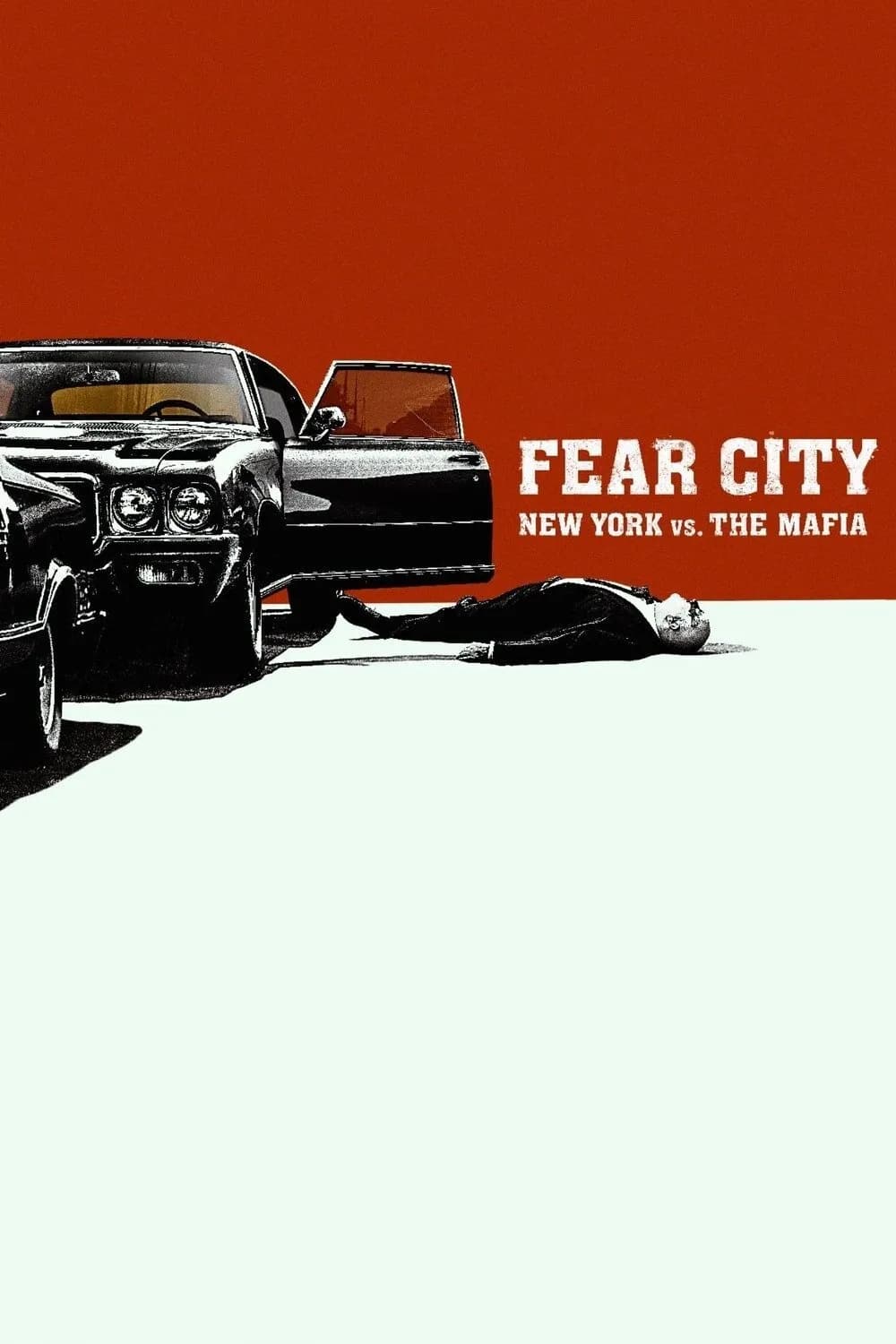
Fear City: New York vs The Mafia is a Netflix documentary series about one of the most consequential law-enforcement operations in American history: the federal government's coordinated effort to dismantle all five New York Mafia families simultaneously using the Racketeer Influenced and Corrupt Organizations Act — better known as RICO. Directed by Sam Hobkinson and released on September 22, 2020, the three-part series uses archival footage, wiretap recordings, and interviews with former FBI agents, prosecutors, and organized-crime figures to reconstruct a decade-long battle that forever changed the landscape of American organized crime.
The series does not center on a single murder or a single victim. Instead, it takes a wider lens, presenting the Mafia as a systemic criminal enterprise that corrupted labor unions, extorted businesses, controlled entire industries, and terrorized communities across New York City. The true subject of Fear City is power — who held it, who wanted to take it away, and what it cost both sides.
The Case
By the late 1970s, the five New York Mafia families — Gambino, Genovese, Lucchese, Bonanno, and Colombo — operated as a near-invisible parallel government across the city. Together, their senior leadership formed what prosecutors would come to call the Mafia Commission, a governing body that arbitrated disputes, approved murders, and coordinated criminal activity on a scale that dwarfed anything law enforcement had previously documented.
The FBI's response was methodical. Beginning in the early 1980s, agents deployed sophisticated wiretaps and physical surveillance targeting the Commission's leadership directly. The goal was not to prosecute individual crimes in isolation — extortion here, a loan-sharking ring there — but to prove that the Commission itself was a criminal enterprise under RICO, making every act carried out in its name a federal offense chargeable to its leaders.
The resulting indictments, handed down in February 1985, named the bosses and senior figures of all five families. Key defendants included Anthony "Fat Tony" Salerno of the Genovese family, Anthony Corallo of the Lucchese family, Carmine Persico of the Colombo family, and Philip "Rusty" Rastelli of the Bonanno family. John Gotti, who seized control of the Gambino family after the murder of Paul Castellano in December 1985, was not part of the Commission Trial itself but looms large in the series as a symbol of the era's brazen mob culture.
The Mafia Commission Trial opened in 1985 in Manhattan federal court. On November 19, 1986, all defendants were found guilty. Sentences were severe — in some cases reaching 100 years — and were intended to ensure that the men convicted would never leave prison. The sentences held. Salerno died in custody in 1992, Corallo in 2000, and Persico in 2019. John Gotti, convicted separately in 1992 and sentenced to life, died in prison in 2002.
The victims in this case were diffuse but real: workers whose union pension funds were looted, small business owners who paid protection money to operate, and ordinary New Yorkers who lived under the shadow of mob-controlled construction, garbage hauling, and garment industries.
Production
Director Sam Hobkinson assembled Fear City from a rich archive of source material that gives the series an immediacy rare in historical documentaries. FBI surveillance footage, covertly recorded audio from wiretapped conversations, and courtroom recordings from the Commission Trial itself all feature prominently, allowing viewers to hear the defendants in their own words.
The series also draws on on-camera interviews with several of the FBI agents and prosecutors who built the case, providing a law-enforcement perspective that dominates the three episodes. This editorial choice — giving considerably more screen time to the investigators than to former mob figures or defense-side voices — became one of the more discussed aspects of the series among reviewers.
Hobkinson's three-episode structure moves at a brisk pace, covering roughly fifteen years of organized crime history and a multi-year federal investigation within a total runtime of well under four hours. This compression was both praised for its accessibility and criticized for the complexity it necessarily sacrificed.
Reception
Critical reception to Fear City was broadly positive. Reviewers at outlets including Variety, Decider, and The New York Times praised the quality and quantity of archival material and the clarity with which Hobkinson explained the legal mechanics of RICO prosecution — a subject that can become dauntingly technical — to a general audience. The series was credited with making a genuinely complicated institutional story feel propulsive and dramatic.
Viewer reactions echoed those of critics, with many noting that Fear City functions more as a history of American anti-Mafia enforcement than as a narrowly focused true-crime case study. For viewers drawn to the genre by individual-murder investigations, the series' broader scope was occasionally cited as a source of mild disorientation. For viewers interested in systemic crime and institutional power, it was widely regarded as a strength.
The more substantive criticism centered on perspective. Some observers argued that the series, by leaning so heavily on law-enforcement interviewees, presented an incomplete picture — one that accepted the FBI and prosecutorial narrative largely at face value without interrogating the complexities of informant use, civil liberties questions around mass surveillance, or the lived experience of communities caught between the mob and federal law enforcement. The IMDb rating for the series had not been independently verified at the time of publication.
The Case Today
The Mafia Commission Trial remains a landmark moment in American legal history. The prosecutorial theory that an organization's leadership can be held criminally liable for the full scope of that organization's crimes — rather than only for acts they personally directed — reshaped how federal law enforcement approached not only the Mafia but organized crime of all kinds in the decades that followed.
All of the major Commission Trial defendants are now dead, having served until their deaths the sentences imposed in 1986. The five families still exist in attenuated form, but their grip on New York's economy, labor unions, and political structures has been dramatically weakened compared to the peak era documented in Fear City. Federal organized-crime prosecutions using RICO have continued, but the coordinated, top-down decapitation strategy perfected in the Commission Trial has never been replicated on quite the same scale.
Fear City: New York vs The Mafia is available to stream globally on Netflix.