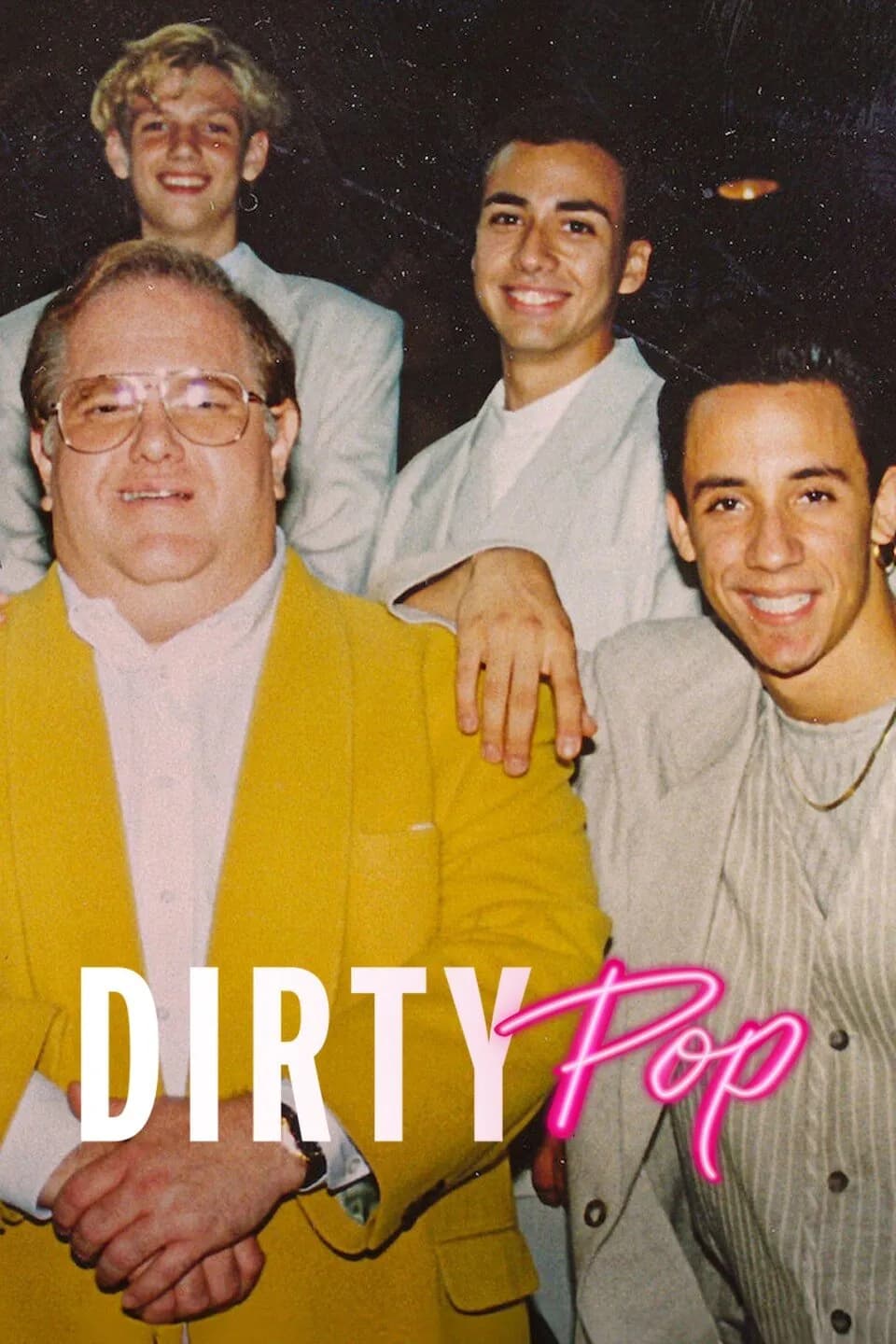
Dirty Pop: The Boy Band Scam
Netflix, 2024 — Lou Pearlman's $500 million Ponzi scheme behind the boy-band era
Quick facts
What Is the Series About?
Dirty Pop: The Boy Band Scam is a Netflix limited documentary series about Lou Pearlman — the music manager who manufactured some of the biggest boy bands of the 1990s and early 2000s — and the massive financial fraud he ran in parallel with his entertainment empire. Directed by David Terry Fine and released on July 24, 2024, the three-episode series chronicles how Pearlman built a pop-music dynasty featuring the Backstreet Boys, NSYNC, O-Town, LFO, and Aaron Carter, while simultaneously operating what investigators would later describe as one of the largest and longest-running Ponzi schemes in American history.
The series does not simply celebrate the nostalgia of the boy-band era. It exposes the dark machinery behind it: the exploitation of young artists, the manipulation of investors, and the extraordinary scale of deception that Pearlman sustained for years before it finally collapsed.
The Case
The Man Behind the Music
Louis Jay Pearlman — known universally as Lou Pearlman — engineered himself into the center of the pop-music world. He is credited with discovering and launching the Backstreet Boys and NSYNC, groups that went on to sell hundreds of millions of records worldwide. On the surface, Pearlman appeared to be a visionary talent manager with a golden ear for commercial pop.
In reality, he was running two parallel operations. One was the boy-band business. The other was a sprawling, decades-long investment fraud.
The Ponzi Scheme
According to reporting covered by TIME, Pearlman defrauded investors and others out of roughly $500 million through fraudulent investment vehicles tied to his entertainment companies. The scheme operated by soliciting money from investors with promises of returns backed by businesses that either did not exist as described or were grossly misrepresented. It is characterized in multiple sources as one of the largest and longest-running Ponzi schemes in U.S. history.
The fraud was not limited to faceless institutional investors. The documentary and surrounding coverage make clear that the artists themselves — including members of the Backstreet Boys and NSYNC — were victims of Pearlman's exploitation, with financial arrangements that shortchanged them even as he profited from their global success.
Investigation and Collapse
The scheme began to unravel when legal and financial pressure — including a lawsuit involving Pearlman's own attorney — drew scrutiny to his business dealings. As coverage reviewed by Salon details, the FBI then stepped in and uncovered the full scale of the fraud. The investigation revealed that what appeared to be a legitimate entertainment conglomerate was, at its core, a vehicle for financial crime.
Trial and Sentencing
In 2008, Lou Pearlman was convicted on charges of conspiracy, money laundering, and making false statements during a bankruptcy proceeding. He was sentenced to 25 years in federal prison — a term that reflected both the scale of the financial crimes and the duration over which they had been committed.
Investigators were able to recover only approximately $10 million of the roughly $500 million that had been taken. The vast majority of the stolen funds were never returned.
Death in Custody
Lou Pearlman died in federal prison in 2016, following a cardiac arrest. He had served only a fraction of his sentence and never made meaningful restitution to the hundreds of investors and artists he had defrauded.
Production
The Guardian noted on the day of release that the series takes a shocking and surreal approach to the material, leaning into the dissonance between the glittering pop-culture surface of Pearlman's world and the criminal infrastructure underneath it. Directed by David Terry Fine, the three-part series draws on interviews, archival footage, and first-hand accounts to reconstruct Pearlman's rise and fall.
The series covers not only the mechanics of the Ponzi scheme but also the personal dynamics of his relationships with the boy-band members — the manufactured intimacy and calculated exploitation that characterized how he operated. Time Studios was involved in the production, aligning with TIME magazine's in-depth editorial coverage of the case that accompanied the series release.
Reception
The Guardian described the series as a shocking and surreal examination of the swindle behind some of the biggest acts in pop history, emphasizing Pearlman's dual role as boy-band architect and financial predator. Critics noted the series is effective in using the cultural familiarity of the Backstreet Boys and NSYNC as an entry point into a far more serious story about fraud, manipulation, and institutional failure.
Audience reaction, as tracked by Dexerto, skewed strongly toward discomfort — with many true-crime viewers reporting that the exploitative aspects of Pearlman's conduct left them unsettled in ways that went beyond typical documentary fare. The combination of pop-music nostalgia and genuine criminal horror appears to have been a particularly effective and disturbing combination.
Commentary across multiple outlets highlighted Pearlman's manipulation of young artists' dreams as the emotional core of the series, with the financial fraud serving as the legal backbone of a story that is, at its heart, about systematic exploitation of trust. The series carries an IMDb title ID of tt32758825, registered as Dirty Pop: The Boy Band Scam (TV Mini Series 2024). A confirmed IMDb audience score was not available in verified sources at the time of publication.
The Case Today
Lou Pearlman's death in 2016 closed the criminal chapter of his story, but it did not resolve the financial devastation he left behind. The recovery of only approximately $10 million against $500 million in losses means that the overwhelming majority of his victims never received meaningful compensation.
The legacy of the Backstreet Boys and NSYNC has endured; both groups have continued to record and perform in the years since Pearlman's imprisonment and death. But the series makes clear that their early success was built on a foundation that enriched their manager at their expense, and that the full accounting of what Pearlman took — from investors, from artists, and from the public — remains sobering.
Dirty Pop: The Boy Band Scam stands as a document not only of one man's criminality but of the systemic failures that allowed a Ponzi scheme of this scale to operate for so long inside one of the most visible industries in American entertainment.