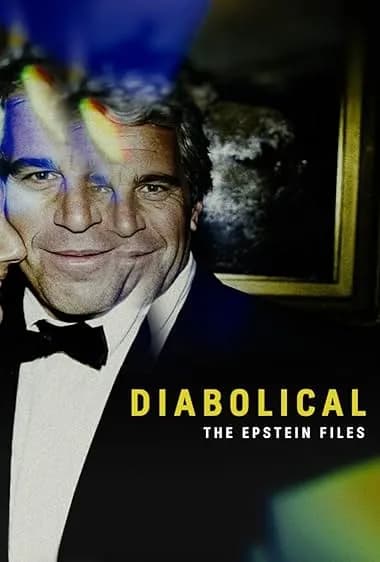
Diabolical: The Epstein Files
DRTV, 2026 — A forensic documentary exposing Jeffrey Epstein's sex-trafficking network and the release of investigative records
Quick facts
What Is the Series About?
Diabolical: The Epstein Files is a 2026 true-crime documentary film that places the Jeffrey Epstein sex-trafficking case under a fresh forensic lens, fuelled by the public release of thousands of pages of investigative records that had been sealed for years. Running approximately one hour and thirty minutes, the film is not a dramatisation or a speculative retelling. It is a document-driven investigation anchored by journalist Grace Tobin, who guides viewers through the paper trail, the survivor accounts, and the political entanglements that allowed one of the most consequential sex-abuse networks in American history to operate largely unchecked for decades.
The documentary aired on M-Net on Saturday 4 July 2026 at 21:00, with distribution through DRTV and ABC Australia, among other platforms. It is also available to stream via Apple TV.
The Case
The underlying case is one of the most heavily documented and most disputed criminal investigations of the early twenty-first century. Jeffrey Edward Epstein, an American financier and convicted sex offender, operated a sprawling abuse network involving the systematic trafficking and sexual exploitation of underage girls across multiple U.S. jurisdictions, principally in Palm Beach, Florida, and New York City.
According to the federal indictment later unsealed in 2019, Epstein's criminal conspiracy began on or around 2002 and involved the recruitment, procurement, and sexual abuse of minors. The indictment charged him on two federal counts: conspiracy to commit sex trafficking of minors, and sex trafficking of minors.
Epstein had previously avoided the full weight of federal prosecution in 2008, when a controversial non-prosecution agreement brokered with federal prosecutors in Florida allowed him to plead guilty to state solicitation charges instead. He served just 18 months in a Palm Beach County detention facility — a sentence that investigative journalist Julie K. Brown spent years bringing back into public scrutiny through her reporting for the Miami Herald.
In July 2019, following renewed federal charges in the Southern District of New York, Epstein was arrested and held without bail. On 10 August 2019, he was found dead in his cell at the Metropolitan Correctional Center in Manhattan. His death was ruled a suicide by hanging by the New York City medical examiner, though it prompted immediate public scepticism and calls for independent investigation.
With Epstein dead, federal prosecutors pursued his closest associate: Ghislaine Maxwell, a British socialite who prosecutors argued had been instrumental in recruiting, grooming, and abusing victims on Epstein's behalf. In December 2021, Maxwell was convicted by a federal jury on five counts including sex trafficking of a minor. She was sentenced to 20 years in federal prison and remains, as of 2026 reporting, the only other person criminally convicted in direct connection with the core abuse network.
Because of ongoing privacy and safety considerations, many official and media accounts — including this documentary — refer to victims collectively as survivors rather than naming them individually.
Production
The film was directed by Justin Stevens, who is credited as creator and director across international listings including the Letterboxd entry for the documentary. The on-camera investigative lead is journalist Grace Tobin, whose presence gives the film its journalistic spine — she is framed not as a narrator standing outside the story, but as an active investigator working through the files in real time as they enter the public record.
According to ABC Australia's publicity materials, the documentary draws on a wide range of interview subjects including Julie K. Brown, the investigative journalist whose Miami Herald reporting was widely credited with forcing the reopening of the federal case against Epstein; Mark Epstein, Jeffrey's brother; congressman Thomas Massie; and congresswoman Marjorie Taylor Greene. The inclusion of political figures reflects the documentary's interest in the broader institutional and political context of the files' release in 2026.
The timing of the film is directly tied to the release of the so-called Epstein files — a substantial cache of investigative and court-related documents made available to the public in 2026, which re-ignited scrutiny of who knew what, and when.
Reception
As of the time of publication, formal critical reviews and audience scores for Diabolical: The Epstein Files have not been widely catalogued, and no verified IMDb rating is available. Broadcaster promotional materials describe the film as a tell-all deep dive into Epstein's inner circle and a forensic examination of how wealth, power, and institutional silence enabled sustained abuse over many years.
The M-Net promotional trailer frames the documentary in urgent, high-stakes terms, consistent with the broader public appetite for accountability journalism around the Epstein case. Given the political attention surrounding the 2026 release of the Epstein files — tracked in real time by outlets including CBS News — the documentary entered a media environment already primed for controversy.
The subject matter itself ensures the film will remain contentious. Questions about the original 2008 non-prosecution agreement, the circumstances of Epstein's death, and the identities of other powerful individuals allegedly connected to his network have never been resolved to public satisfaction — and the documentary does not claim to resolve them.
The Case Today
As of 2026, the legal landscape of the Epstein case is defined by finality in some respects and ongoing uncertainty in others. Epstein himself is dead. Maxwell is serving her 20-year sentence. No other individual has faced federal criminal charges directly tied to the core sex-trafficking conspiracy, despite years of public pressure and speculation about the role of other wealthy and politically connected figures in Epstein's network.
The release of the Epstein files in early 2026 added new documentary evidence to a case that had already generated enormous public scrutiny, but whether those materials will lead to further prosecutions or formal accountability for other actors remains an open question. The Freeview Australia listing for the documentary notes that it engages surviving witnesses, journalists, politicians, and members of Epstein's former inner circle — a breadth of access that suggests the filmmakers are attempting to map the full institutional landscape of the case, not just its criminal core.
For the survivors — many of whom have pursued civil litigation and public advocacy over the years — the release of the files and the attention of documentary filmmakers represents both a form of vindication and a reminder that full institutional accountability has yet to arrive.