De rockstar à tueur : Le Cas Cantat
Netflix, 2025 — The fatal assault on actress Marie Trintignant by rock star Bertrand Cantat
Quick facts
What Is the Series About?
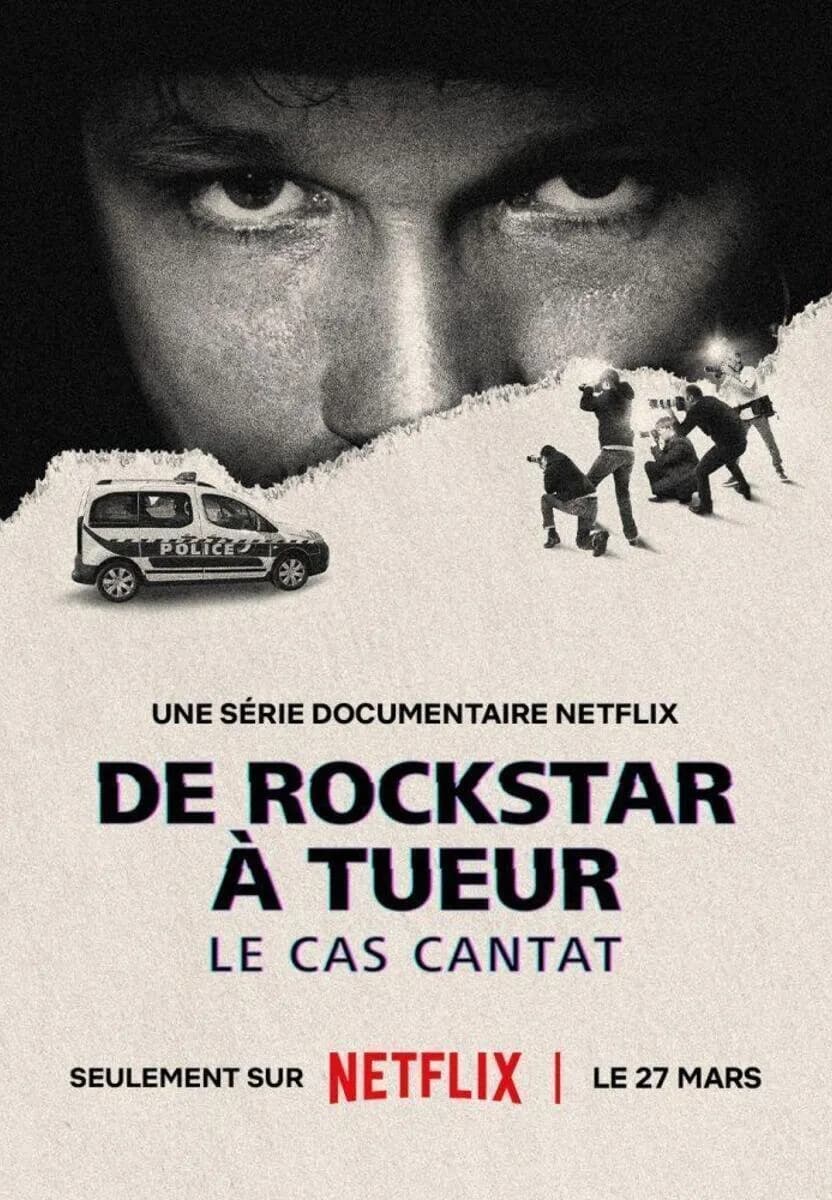
De rockstar à tueur : Le cas Cantat is a Netflix documentary mini-series that revisits one of the most controversial criminal cases in modern French history: the fatal assault on actress Marie Trintignant by Bertrand Cantat, lead singer of the French rock band Noir Désir, in Vilnius, Lithuania, in July 2003. Released on 27 March 2025, the series consists of three episodes of approximately 40 to 41 minutes each and is directed by Anne-Sophie Jahn, Nicolas Lartigue, Zoé de Bussierre, and Karine Dusfour. Produced by CAPA and Studio TF1 with producers Maud Gangler and Patrice Lorton, the documentary does not merely reconstruct a crime — it interrogates why French media and cultural institutions shielded a celebrated artist from the full moral weight of what he did.
Netflix's own synopsis frames the series as a re-examination of an affair that "divided France," describing how in 2003 Cantat killed his partner, actress Marie Trintignant, and how the case forced a reckoning — however delayed — with the country's treatment of male artists accused of violence against women.
---
The Case
The Night of 26–27 July 2003
In the summer of 2003, Bertrand Cantat — then at the peak of his fame as the frontman of Noir Désir, one of France's most celebrated rock bands — was in Vilnius, Lithuania, with Marie Trintignant, the 41-year-old actress who was shooting a project there. During the night of 26 to 27 July 2003, Cantat subjected Trintignant to a brutal physical assault inside their hotel room. The violence inflicted upon her was devastating: a subsequent autopsy revealed 19 blows, a detail that Le Parisien highlighted in its coverage of the documentary, noting that the case was initially discussed publicly as though it might have been an accident.
Marie Trintignant was transported to a hospital in France, but she never recovered. She died on 1 August 2003 from her injuries. She was 41 years old, the daughter of legendary French actor Jean-Louis Trintignant, and a celebrated performer in her own right.
The Trial and Conviction
Bertrand Cantat was tried in Lithuania for the killing. He was convicted and sentenced, with the case and its aftermath — including controversies around parole and early release — becoming a subject of ongoing debate in France. French media sources frame the killing explicitly as a femicide, situating it within a broader pattern of violence against women that was too often minimized in the context of male artistic celebrity.
The documentary also touches on the story of Krisztina Rády, another former partner of Cantat, whose suicide is addressed within the series — deepening the portrait of a pattern of harm that extended beyond the 2003 case.
Media Complicity and Silence
Perhaps the most disturbing dimension of the case — and the one that gives the documentary much of its contemporary urgency — is the response of French cultural and media institutions. As Le Point argued in its recommendation of the series, the documentary exposes "an extremely violent" case that was systematically softened by a media ecosystem more invested in protecting the artist's image than in confronting the reality of what he had done. The series is positioned, in part, as a corrective to that long silence.
---
Production
The series was produced by CAPA and Studio TF1, with four co-directors — Anne-Sophie Jahn, Nicolas Lartigue, Zoé de Bussierre, and Karine Dusfour — sharing the filmmaking duties across the three episodes. The production draws on archival footage and recent testimony to construct a dual-narrative structure: as Le Parisien described it, the documentary puts "two versions" of the affair face to face, allowing viewers to weigh the official and popular accounts of the case against emerging evidence and retrospective analysis.
The use of archival news coverage is particularly pointed, given that much of the early media framing of the case was sympathetic to Cantat. By returning to those original broadcasts and placing them alongside survivor testimony and forensic detail, the filmmakers foreground not just the crime itself but the cultural machinery that surrounded it.
---
Reception
The series landed on Netflix on 27 March 2025 and immediately generated significant public conversation in France and beyond. Critical reception was strongly positive among outlets that engaged with its subject matter seriously.
Le Parisien praised the documentary's structural approach, describing how the face-to-face presentation of competing narratives allows the 19-blow autopsy finding to land with its full, undeniable weight — exposing how easily early coverage had sidestepped that reality.
Le Point recommended the series unreservedly, arguing that it performs a necessary cultural function: forcing a confrontation with the violence of the case and with the media environment that softened it for years.
Canal+ framed the series as an interrogation of the violence-and-silence dynamic — the unresolved questions about why so many in the French cultural establishment continued to support Cantat after the killing.
The IMDb title ID for the series is tt36241713, though a verified numeric rating was not available at the time of publication.
Viewer reactions across platforms reflected the broader cultural resonance of the documentary, with extensive discussion focused on media complicity, femicide, and the double standards applied to celebrated male artists. The Netflix release was significant enough to spark new programming and renewed public debate about the case.
---
The Case Today
Bertrand Cantat was convicted in Lithuania following the killing of Marie Trintignant in 2003. The subsequent years brought controversy over parole and the terms of his release, as well as ongoing questions about his attempts to resume his music career — attempts that have been met with sustained public opposition, particularly from feminist groups and advocates for victims of domestic violence. The death of Krisztina Rády, addressed within the documentary, further complicated any rehabilitation narrative.
The release of De rockstar à tueur : Le cas Cantat in March 2025 represents the most high-profile revisiting of this case in years, and its placement on a global streaming platform ensures that the story — and the questions it raises about cultural power, media silence, and violence against women — reaches an audience far beyond France. For many viewers, the documentary is not merely a chronicle of a past crime but an active intervention in an ongoing conversation about accountability.