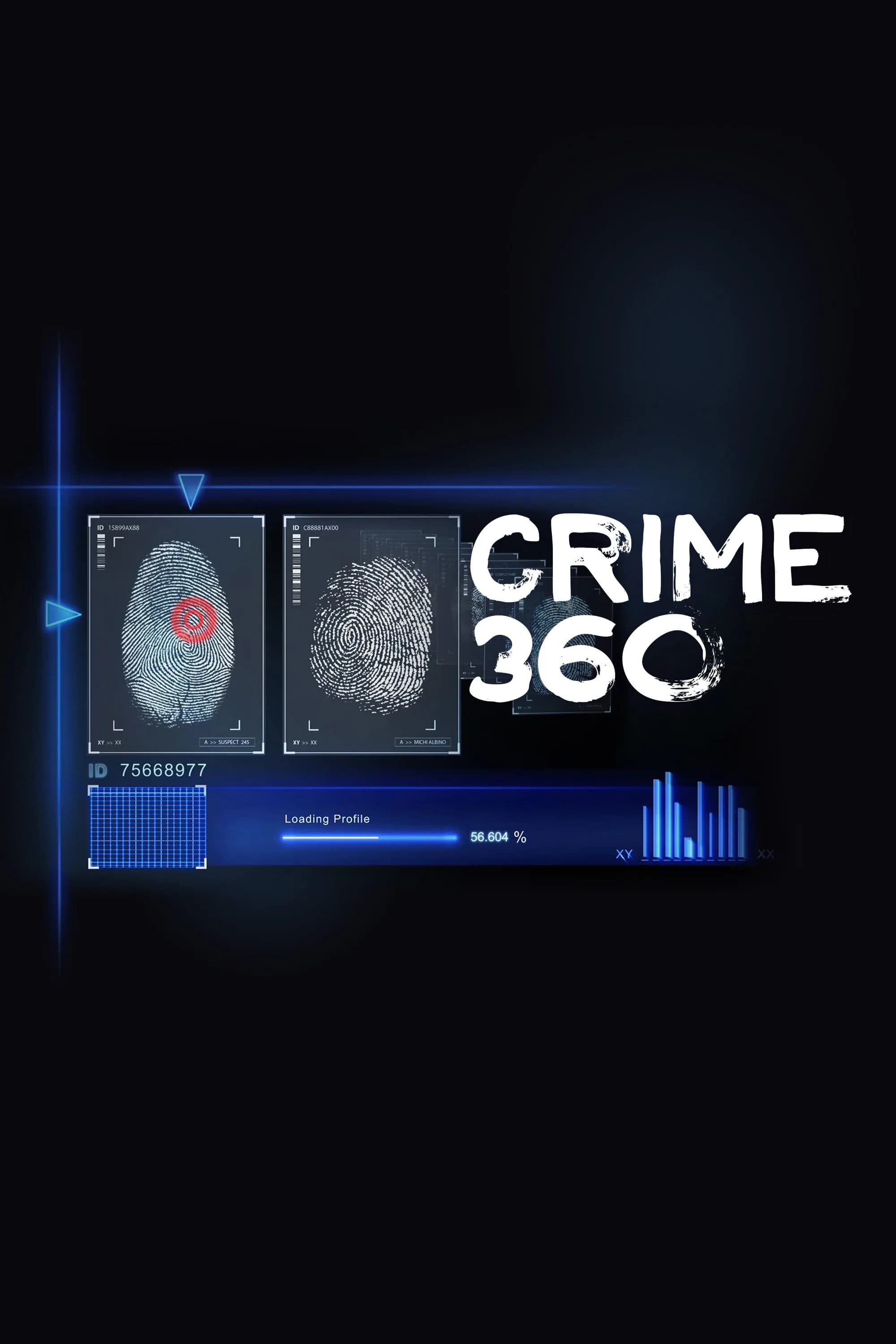
Crime 360
A&E, 2008 — Reality series following detectives solving homicides across the U.S.
Quick facts
What Is Crime 360?
Crime 360 is an A&E reality television series that premiered on March 6, 2008, following real homicide detectives across multiple U.S. cities as they investigate and solve murders using cutting-edge forensic technology. Unlike a documentary focused on a single case, Crime 360 is a multi-case series — each episode presents an entirely different homicide investigation, complete with its own victim, suspects, and resolution. The show ran for two seasons between 2008 and 2009 and is now available to stream for free on platforms including Pluto TV, The Roku Channel, Samsung TV Plus, LG Channels, and Plex.
The series was produced by BASE Productions and is listed on IMDb under the title Crime 360 (tt1159604). It carries a TV-14 content rating.
---
The Cases
Because Crime 360 covers a different homicide in each episode, there is no single perpetrator or victim that defines the series as a whole. Instead, the show documents real investigations handled by detectives in cities including Cleveland, OH, Rochester, NY, Richmond, VA, Indianapolis, IN, and Little Rock, AR.
Among the cases featured:
- Cleveland, Ohio: Detectives investigate the murder of a man whose body was found concealed between the hedges and the front porch of his own grandmother's house. The grim discovery, hidden in plain sight in a residential neighborhood, required meticulous forensic documentation to piece together the sequence of events.
- Rochester, New York: What begins as a missing persons investigation gradually transforms into a homicide case, demonstrating the show's emphasis on real-time investigative decision-making and the shifting nature of criminal inquiries.
Across its episodes, at least one perpetrator featured in the series was sentenced to 7–14 years in prison, though the specific case and names were not disclosed in available source materials. The TV Guide listing for the series provides episode-by-episode summaries for viewers interested in specific case details.
---
The Forensic Technology at the Heart of the Show
What distinguished Crime 360 from other true crime programming at the time of its release was its heavy reliance on forensic visualization tools that were, in 2008, largely unfamiliar to general audiences. The production team deployed:
- 3D laser scanning of crime scenes, capturing precise spatial data that could be revisited and analyzed long after the physical scene had been cleared.
- 360-degree digital photography, allowing investigators — and viewers — to examine every angle of a location.
- CGI reconstructions that translated raw forensic data into visual narratives, showing how crimes may have unfolded based on physical evidence.
These tools gave the series its name and its identity. Rather than relying solely on detective interviews or archival footage, Crime 360 attempted to place the audience inside the investigation itself, using technology to bridge the gap between raw evidence and narrative understanding.
---
Production
Crime 360 was produced by BASE Productions for the A&E network. The series featured detectives from several major American cities, working real active and recently closed cases. No single director is credited across all episodes in available records; the series was structured more as a rotating documentary unit embedded with different police departments.
Trailer and preview footage from the series is available on YouTube, and A&E maintains a dedicated YouTube channel for the series where clips and full episodes have been posted. Additional episode content can be found via a second YouTube upload.
The series was also made available internationally, including through Apple TV in Germany, suggesting A&E pursued broader distribution for the format.
---
Reception
Critical reception for Crime 360 was decidedly mixed. According to Rotten Tomatoes Season 1 data, the series attracted attention from both supporters and detractors, largely divided on the question of whether its technological gimmickry enhanced or undermined the underlying human drama.
Barry Garron of The Hollywood Reporter was largely dismissive, writing that the show featured "too much computer-generated graphics" and characterizing it as "just Cops with a community college degree." The critique pointed to a perceived imbalance between flashy visuals and substantive investigative storytelling.
Kevin McDonough of the Daily Journal World offered a more favorable reading, comparing the series to "CSI… without all of those Jerry Bruckheimer special effects" — framing the show's grounded, real-world approach as a virtue rather than a limitation.
General viewer reactions, as documented in contemporary reviews, echoed the professional divide: some praised the show for making forensic science accessible and visually engaging, while others felt the CGI reconstructions created an artificial distance from the real human tragedies at the center of each case. The show was seen by some as a transitional artifact — arriving just as true crime television was beginning to experiment with production techniques that would become standard in the genre over the following decade.
---
The Series Today
Crime 360 concluded its run after two seasons in 2009, but it has found new life on free ad-supported streaming platforms. The series is currently available on Pluto TV, The Roku Channel, Samsung TV Plus, LG Channels, and Plex, making it accessible to a new generation of true crime viewers without a subscription requirement.
The cases featured in the series remain part of the public record. While the show did not pursue post-conviction follow-ups in the manner of later true crime documentaries, the real detectives and departments featured continued their work after filming concluded. The forensic techniques showcased in 2008 — particularly 3D laser scanning of crime scenes — have since become standard practice in major homicide investigations across the United States.
For viewers curious about the series, the Wikipedia entry for Crime 360 provides additional episode-level information, and the IMDb page lists cast, crew, and viewer ratings.