Cowboy Cartel
Apple TV+, 2024 — Los Zetas' horse-racing money-laundering conspiracy, exposed by the FBI
Quick facts
What Is the Series About?
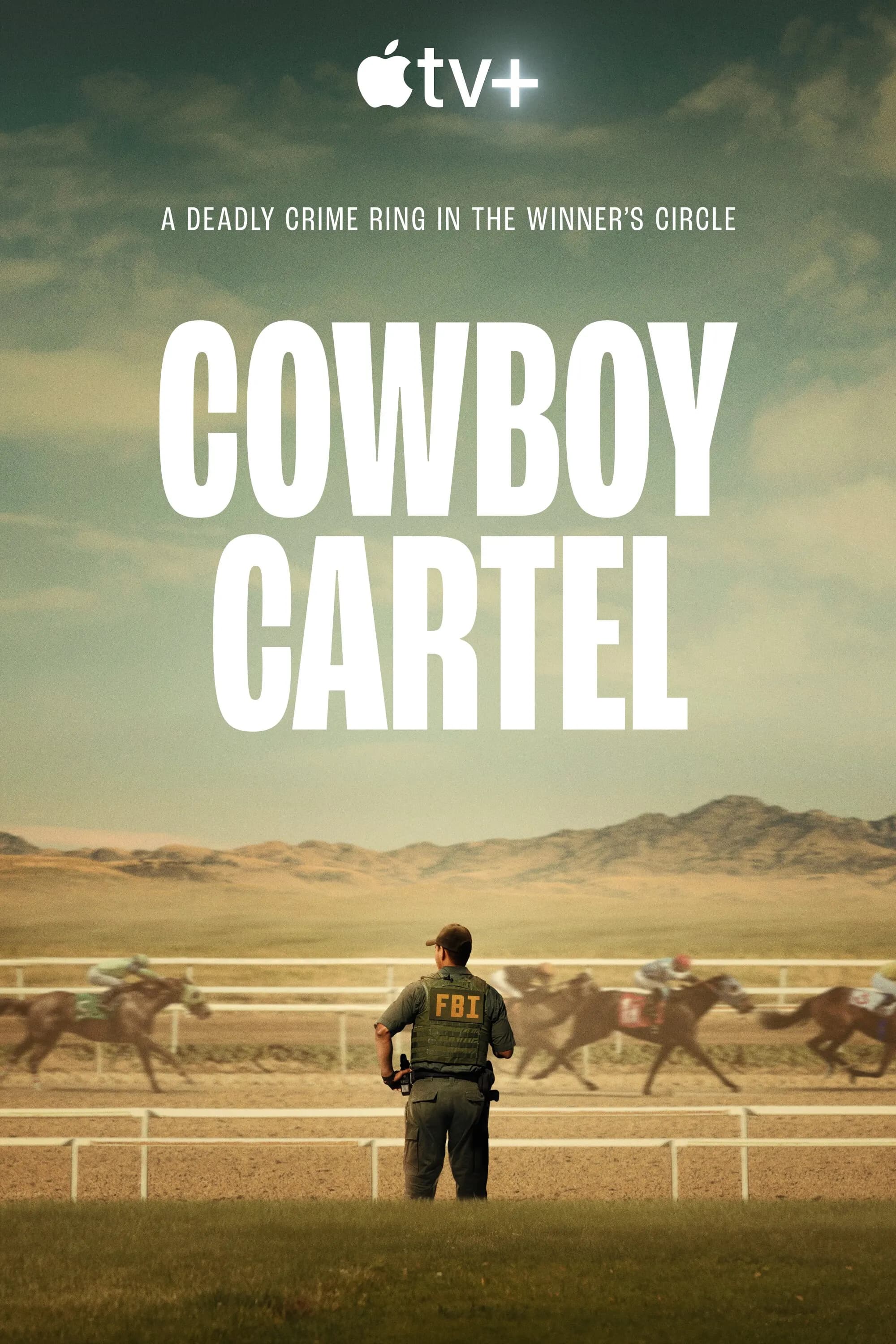
*Cowboy Cartel* is a four-part documentary series streaming on Apple TV+ that tells the story of how leaders of the Mexican cartel Los Zetas used the American quarter horse racing world to launder tens of millions of dollars in drug proceeds. Premiering on August 2, 2024, the series was directed by Dan Johnstone and Castor Fernandez, with executive producers Eric Newman, Jodi Flynn, and Steve Michaels. It is one of the more unusual entries in the true crime documentary genre — not a murder investigation, but a financial crimes case that unfolds across sun-bleached racetracks, ranch auctions, and the U.S.-Mexico borderlands.
The Case
The story begins around 2009, when a rookie FBI agent named Scott Lawson began noticing something strange: lavishly priced quarter horses were changing hands in the American Southwest, and the buyers traced back to figures connected to Los Zetas, at the time one of Mexico's most powerful and feared drug trafficking organizations.
At the center of the alleged scheme were the Treviño brothers — Miguel Treviño Morales and Omar Treviño Morales — the cartel's top leadership. According to the official Apple TV+ press page, the Treviños allegedly funneled cartel drug money into the purchase, breeding, and racing of quarter horses in the United States, using winnings and sales to clean the proceeds and move funds across the border. The quarter horse racing world — with its large cash transactions, relatively loose oversight compared to other financial sectors, and culture of high-stakes private deals — provided an ideal vehicle for laundering.
As Lawson dug deeper, the investigation expanded to involve the IRS, the Irving, Texas Police Department, and federal prosecutors. What had started as a hunch about horse trading evolved into a sprawling international case targeting the financial infrastructure of one of North America's most dangerous criminal organizations.
The official trailer describes how Lawson and allied law enforcement officials tracked the Treviños' racehorse transactions, infiltrated the cartel's operation, and eventually uncovered a full-scale international money-laundering network.
The series features first-time on-camera interviews with key figures from the real investigation, including:
- Scott Lawson (FBI)
- Steve Pennington (IRS)
- Steve Junker, Brian Schutt, and Kim Williams (Irving Police Department)
- Doug Gardner (Assistant United States Attorney)
- Ginger Thompson (The New York Times)
- Joe Tone, author of Bones: Brothers, Horses, Cartels, and the Borderland Dream, the book on which much of the case's public documentation is based
The documentary does not present a conventional victim profile — there is no single murder victim at the heart of the case. The harm, as the series frames it, was systemic: the corruption of a legitimate American sport and financial system by narco-dollars, and the threat that Los Zetas' reach into U.S. territory represented for law enforcement and civilian witnesses alike.
Verified sentencing details and final trial outcomes for the Treviño brothers are not confirmed in available sources for this documentary's coverage, and truecrime.news does not speculate beyond what the series and its cited sources establish.
Production
The series was produced for Apple TV+ and directed by the team of Dan Johnstone and Castor Fernandez, with executive producers Eric Newman, Jodi Flynn, and Steve Michaels credited on the Apple press page. The four-episode format gives each installment room to trace a distinct phase of the investigation — from Lawson's initial suspicions through the full unraveling of the laundering network.
A notable production achievement is the access secured to principal investigators and prosecutors, many of whom had not previously spoken on camera about the case. The inclusion of New York Times journalist Ginger Thompson and author Joe Tone grounds the series in a body of prior investigative journalism and book-length reporting, lending it additional documentary credibility.
The series is catalogued on IMDb under title ID tt33030134 as a TV series with a 2024 release.
Reception
Critical reception has been mixed. The Guardian acknowledged the case's compelling premise but concluded that the story is told "so poorly" that even the talking heads featured in the documentary describe the outcome as "anti-climactic" — a notably unusual situation in which interview subjects undercut the series' own dramatic arc. The review suggested that the four-episode structure may stretch a relatively contained story beyond its natural length.
Decider, on the other hand, recommended the series with a "STREAM IT" verdict, describing Cowboy Cartel as a distinctive and compelling docuseries that stands out in the crowded true crime space precisely because of its unusual subject matter — money laundering through horse racing rather than the more common murder-investigation format.
The New York Times characterized the series as a "galloping story" about the cartel's laundering scheme and the investigators who exposed it, framing it as an entertaining and informative account of a case that received less mainstream attention than its scale deserved.
A numeric IMDb audience rating was not available in sources reviewed at time of publication.
The primary critical tension in reviews centers on pacing and structure: the case is undeniably fascinating, but whether four episodes is the right length for it — or whether a tighter, two-part treatment would have been more effective — is a question the mixed reception raises without fully resolving.
The Case Today
Miguel Treviño Morales was captured by Mexican authorities in 2013, a significant moment in the disruption of Los Zetas' top leadership. His brother Omar Treviño Morales was arrested in Mexico in 2015. Los Zetas, once among the most feared cartels operating along the U.S.-Mexico border, has since fragmented significantly, though successor factions continue to operate in parts of Mexico.
The horse-racing money-laundering case they allegedly orchestrated remains one of the more unusual financial crime investigations in the history of U.S.-Mexico cartel enforcement — a reminder that drug cartel operations reach far beyond street-level violence and into the seemingly mundane world of American sports and commerce. Cowboy Cartel brings that story to a streaming audience four years after the peak of public attention on the case, offering new interview material and a documentary treatment for viewers encountering it for the first time.