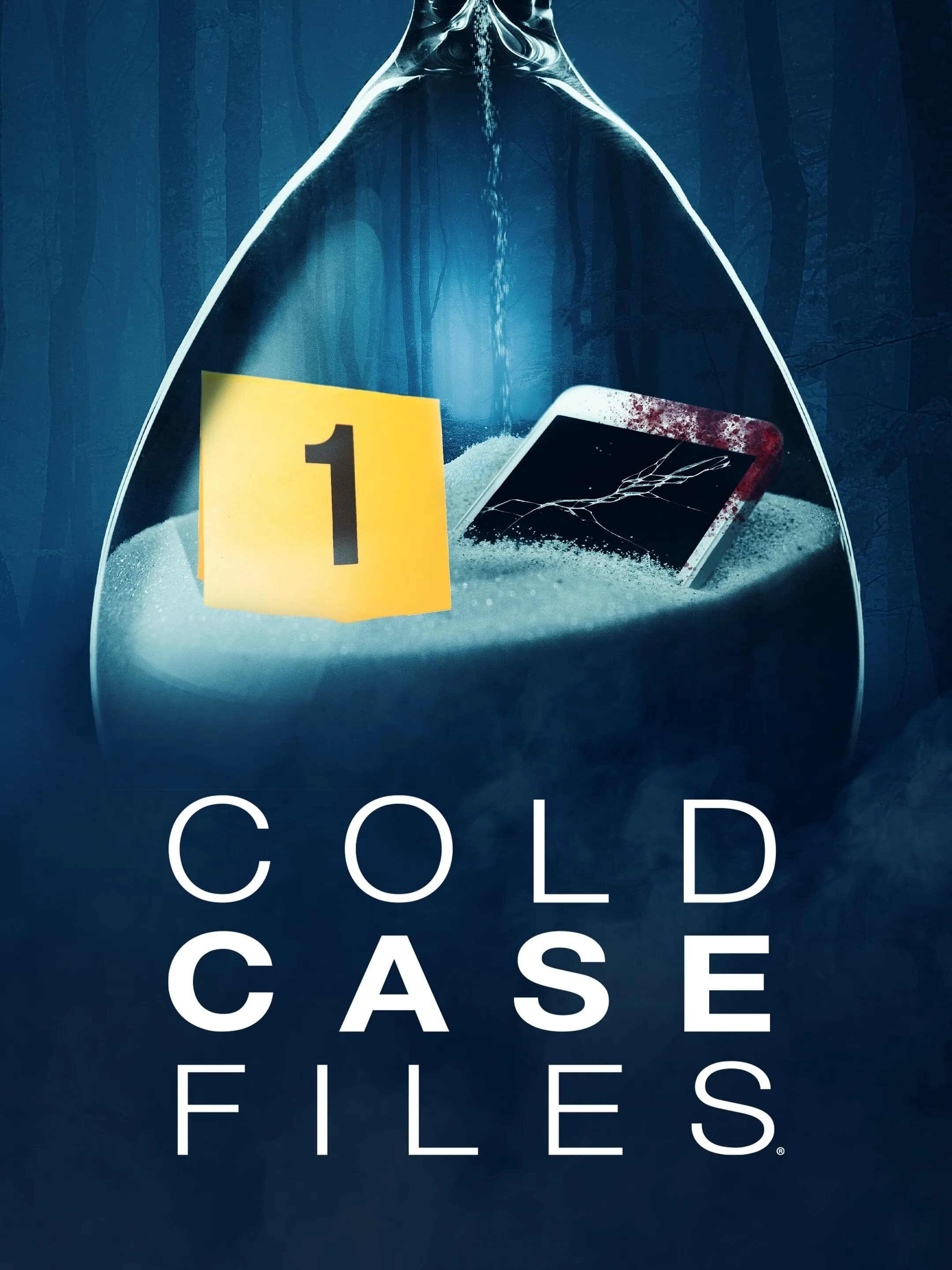
Cold Case Files
A&E / Pluto TV / Roku Channel, 1999 & 2017 — unsolved murders reopened across America
Quick facts
What Is Cold Case Files?
Cold Case Files is an Emmy-nominated documentary anthology series that revisits unsolved murders and cold cases from across the United States, spanning crimes committed between the 1960s and the 2000s. Rather than focusing on a single criminal case, the series functions as a compendium of justice — each episode following detectives, forensic scientists, and prosecutors who refuse to let a case stay cold forever. Hosted and narrated by veteran broadcast journalist Bill Kurtis, the show has become one of the most enduring brands in American true crime television.
The series originally premiered on A&E in 1999 and ran through 2006, establishing Bill Kurtis as a defining voice in the genre. A full reboot launched in 2017 — also on A&E, also narrated by Kurtis — incorporating modern forensic tools such as advanced DNA analysis, digital surveillance footage, and social media investigation techniques that simply did not exist when many of the featured crimes were first committed. The 2017 reboot spans 52 or more episodes across four seasons and is indexed on IMDb under the identifier tt6459472.
Today, episodes from both eras of the series are available on a wide range of platforms, including Netflix, Hulu, and ad-supported free streaming services such as Pluto TV, The Roku Channel, Samsung TV Plus, LG Channels, and Plex.
---
The Cases: Stories Across America
Because Cold Case Files is an anthology, no single case defines the series. Instead, the show derives its power from accumulation — over 60 stories of victims whose deaths went unanswered for years, sometimes decades. Below are three representative cases featured in the series.
The Murder of Brenda Dupont — Louisiana, 1988
In May 1988, Brenda Dupont of Louisiana failed to show up for a coffee date with her sister Linda. Her body was subsequently discovered in a lake, and investigators opened a homicide inquiry. The case went cold for years before detectives revisited the evidence and identified Theresa Dupont as a central figure in the murder, allegedly acting with her sons.
The case resolved when Theresa Dupont pleaded guilty to two counts of first-degree murder in exchange for a prosecutorial agreement not to charge her sons. She was sentenced to 25 years to life in prison. Her sons were never prosecuted.
The Murder of Ed and Minnie Maurin — West Virginia
The murders of grandparents Ed and Minnie Maurin in West Virginia were the kind of case that stayed with investigators long after the files were shelved. A detective who had known about the case since childhood eventually returned to it, driven by a personal sense of obligation. After more than 20 years, the investigation produced enough evidence to imprison Rick Riffe for the killings.
Caught on Tape — Louisville and Georgia
Season 5, Episode 13 — titled Caught on Tape / A Son Remembers — follows two parallel investigations. In Louisville, a serial attacker targeting multiple women was identified after ATM surveillance footage placed a suspect at a key location. In Georgia, a decades-old murder case was cracked by a police chief's own son, who had grown up haunted by the unsolved killing.
---
Production
Cold Case Files is not the product of a single director but rather a rotating team of documentary filmmakers working under the A&E banner. The consistent thread across all episodes is the presence of Bill Kurtis as narrator and host. Kurtis, a former CBS News anchor, brings a measured and authoritative cadence to the material that has become inseparable from the show's identity.
The 2017 reboot was explicitly designed to modernize the franchise. Producers incorporated forensic advancements including expanded use of genetic genealogy, improved DNA testing, and the growing role of social media in surfacing witnesses and identifying suspects. Many episodes feature the original detectives returning to cases they had worked years or decades earlier.
The official A&E page for the series describes the show's mission as delivering closure to victims' families. A full episode playlist is also available on YouTube.
---
Reception
Cold Case Files has earned Emmy nominations across its run, a recognition that reflects its standing as a serious documentary enterprise. Critics and audiences have consistently praised the series for its restrained approach — the show trusts the facts of each case to carry the emotional weight without resorting to reenactment excess or manufactured suspense.
The 2017 reboot was particularly well-received for its integration of modern forensic science into older narratives, demonstrating that advances in DNA technology and digital surveillance had made previously unsolvable cases newly tractable. The show's availability on free ad-supported platforms has introduced the series to a new generation of true crime viewers.
---
The Cases Today
For cases like the Brenda Dupont murder, the legal process has concluded: Theresa Dupont remains incarcerated under her 25-years-to-life sentence, and no further prosecutions are expected. For the Maurin family in West Virginia, Rick Riffe's imprisonment closed a chapter that had been open for more than two decades.
But Cold Case Files, by its nature, is never entirely finished. The series' anthology format means that dozens of the cases it has featured remain in various states of legal and investigative resolution. Some perpetrators have died before prosecution. Others remain unidentified. What Cold Case Files leaves behind is less a record of closure than a record of persistence: the argument that no murder is truly unsolvable, only unsolved.