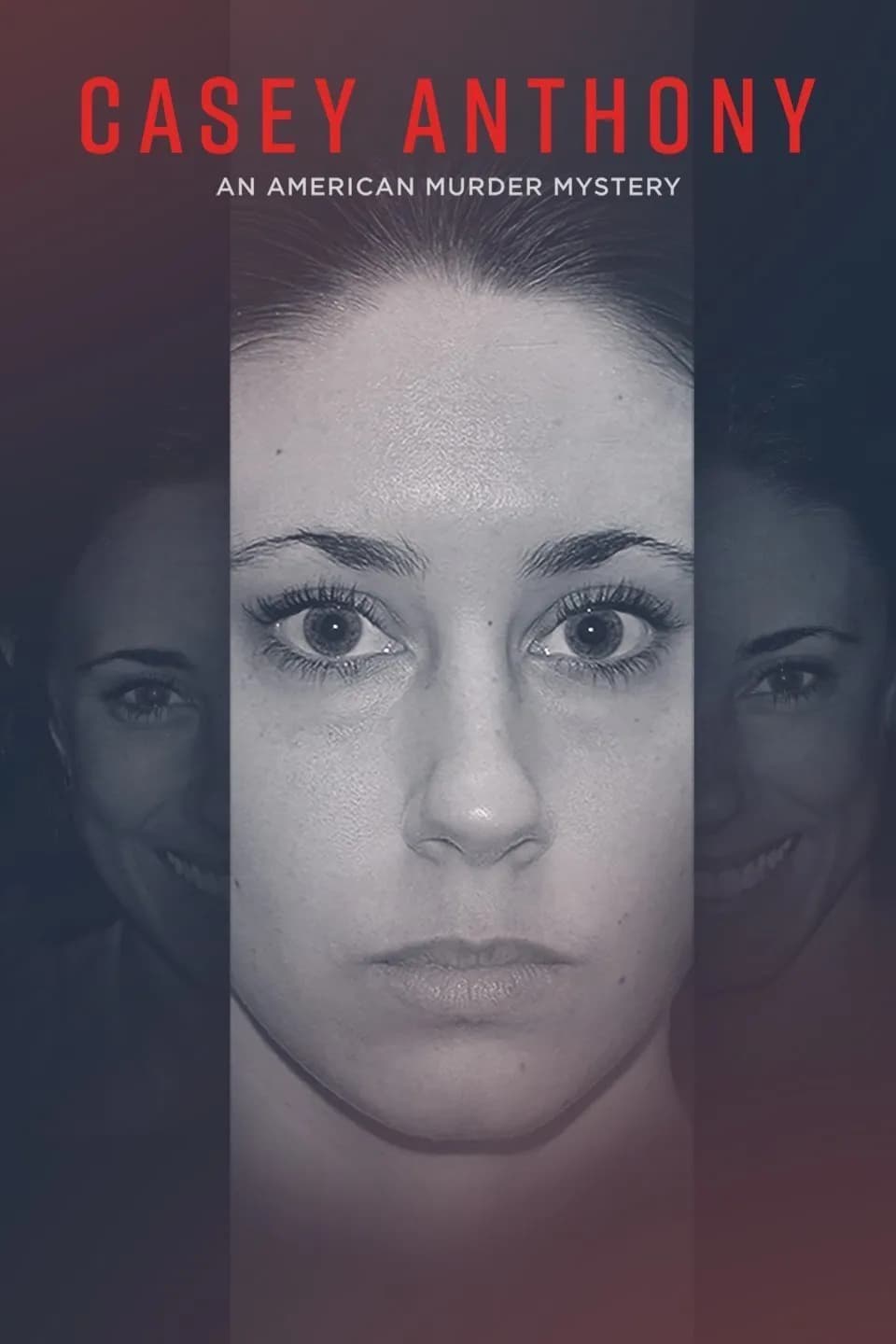
Casey Anthony: An American Murder Mystery
HBO Max, 2017 — The disappearance and death of 2-year-old Caylee Anthony and her mother's acquittal
Quick facts
What Is the Series About?
Casey Anthony: An American Murder Mystery is a 2017 three-part documentary series streaming on HBO Max that examines one of the most polarizing criminal cases in recent American history: the death of two-year-old Caylee Marie Anthony in Orlando, Florida, and the subsequent murder trial of her mother, Casey Anthony. Premiering on April 9, 2017, the series unfolds over three episodes — each running approximately 44 minutes — and promises viewers an unflinching look at the lies, betrayal, and unresolved questions that have kept this case in the public consciousness for over a decade.
Rotten Tomatoes has described the series as a "three-night exposé" on one of the most "captivating and controversial cases" in recent history, while HBO Max's own promotional framing centers the story on "lies, betrayal and murder." The documentary does not shy away from the fundamental tension at the heart of the case: a jury returned a not-guilty verdict on the most serious charges, yet a large portion of the American public — and many legal analysts — remained convinced that justice was never served for a murdered toddler.
The Case
On June 16, 2008, two-year-old Caylee Marie Anthony was last seen alive in Orlando, Florida. Her mother, 22-year-old Casey Marie Anthony, did not report the child missing. It was not until July 15, 2008 — 31 days later — that Caylee's grandmother, Cindy Anthony, called 911 in a panic, telling dispatchers that her granddaughter had been missing for a month and that her daughter Casey's car smelled like a dead body had been inside it.
What followed was a massive law enforcement investigation and a media spectacle that riveted the United States. Casey Anthony offered investigators a series of shifting and demonstrably false explanations for Caylee's whereabouts, including claiming the child had been left with a babysitter named "Zenaida Gonzalez" — a woman who, investigators later confirmed, had no meaningful connection to the Anthony family.
In October 2008, Casey Anthony was indicted on charges of first-degree murder, aggravated child abuse, aggravated manslaughter of a child, and multiple counts of providing false information to law enforcement. Then, on December 11, 2008, skeletal remains were discovered in a wooded area near the Anthony home. Forensic analysis confirmed the remains belonged to Caylee Marie Anthony. Duct tape had been found near the skull.
The murder trial began in May 2011 and quickly became a national media event. The prosecution argued that Casey had chloroformed her daughter and suffocated her with duct tape, motivated by a desire to live a carefree life free from the responsibilities of motherhood. The defense, led by attorney Jose Baez, countered that Caylee had accidentally drowned in the family's backyard swimming pool and that the apparent cover-up was the result of a deeply dysfunctional family's response to tragedy rather than premeditated murder.
On July 5, 2011, the jury acquitted Casey Anthony of first-degree murder, aggravated child abuse, and aggravated manslaughter. She was convicted of four counts of providing false information to law enforcement and was sentenced to time already served. She walked free days later. The verdict triggered an immediate, visceral public reaction — demonstrations outside the courthouse, widespread outrage on social media, and sustained debate about the American justice system's ability to deliver accountability in high-profile cases.
Production
The series was released in April 2017, structured as a three-episode limited documentary event. Each episode runs approximately 44 minutes, offering a measured and methodical examination of the case's key phases: the disappearance and investigation, the trial, and the aftermath. The production incorporates archival news footage from the investigation and trial period — a period that was extraordinarily well-documented given the intense media interest — alongside original interviews conducted specifically for the series.
Notably, the series secured an interview with George Anthony, Caylee's grandfather and Casey's father, whose own testimony during the trial had been a flashpoint — the defense alleged, among other things, that George Anthony had been involved in covering up Caylee's accidental drowning, a claim George Anthony denied under oath. His participation in the documentary added a significant dimension to the series, given how central his figure was to the defense's narrative. The director of the series is not identified in available sources.
The series is available to stream on HBO Max across multiple regions, and is also listed on Apple TV as a 2017 documentary with a runtime of approximately 44 minutes per episode.
Reception
The series arrived at a moment when true crime documentary filmmaking was surging in popularity, in the wake of projects like Serial, Making a Murderer, and The Jinx. Its subject matter — already one of the most-covered criminal cases in American broadcast history — guaranteed a substantial built-in audience. The three-episode format allowed for a degree of narrative depth that cable news coverage of the original trial had not always managed.
Critical and audience reception was shaped heavily by the pre-existing polarization around the case itself. For viewers who had followed the trial in 2011, the documentary offered a structured retrospective; for younger audiences encountering the details for the first time, it functioned as a comprehensive introduction. The series renewed public debate about what actually happened to Caylee Anthony and whether the jury's verdict reflected a failure of the prosecution's evidence or a genuine reasonable doubt.
An IMDb rating for the series is not confirmed in available sources. Rotten Tomatoes' framing of the series as one of the most "captivating and controversial" case documentaries of the period reflects the broader critical consensus that the subject matter remains unresolved and deeply charged.
The Case Today
Casey Anthony has largely remained out of the public eye since her release in July 2011, though she has resurfaced periodically in media coverage. The case itself has never been officially resolved — no other suspect has been charged in connection with Caylee's death, and the cause of death was ruled undetermined by the medical examiner.
The case's cultural footprint has only grown in the years since the documentary's release. A Peacock documentary on Casey Anthony and further CNN coverage have continued to reexamine the case, indicating sustained public appetite for answers. Legal scholars and true crime commentators continue to cite the Casey Anthony trial as a case study in jury decision-making, media influence on public opinion, and the limits of circumstantial evidence in capital prosecutions.
For the millions of Americans who watched the verdict unfold live in July 2011, the question of what happened to Caylee Marie Anthony on or around June 16, 2008, remains as urgent and unresolved as it was the day her grandmother made that call to 911.