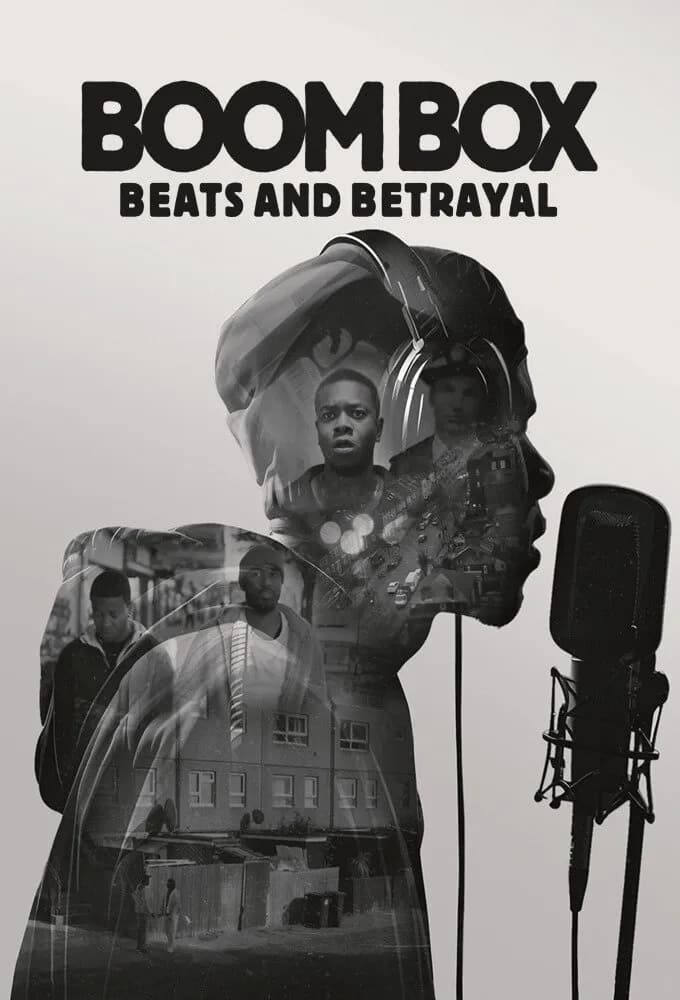
Boom Box: Beats and Betrayal
HBO Max, 2026 — the Metropolitan Police undercover sting that turned a fake North London recording studio into a criminal intelligence trap
Quick facts
What Is the Series About?
Boom Box: Beats and Betrayal is an HBO Max documentary series about Operation Peyzac, a covert Metropolitan Police undercover operation that unfolded in Edmonton, in the London Borough of Enfield, beginning in 2008. The four-part series, directed by Toby Paton and released on 26 March 2026, examines how officers posed as music-industry insiders and ran a fake recording studio and record shop — called Boombox — to gather intelligence on gang-related crime, firearms offences, and drug trafficking. What makes the case particularly striking, and what gives the documentary its emotional core, is the population the operation targeted: local young men, many of them teenagers with genuine aspirations as rappers, who walked through the doors of what they believed was a legitimate creative space.
The series is not a straightforward crime procedural. It is as much an examination of ethics, race, and power as it is a chronicle of police work. Inkl described it as "the most astonishing British TV" currently available, a verdict that speaks to how effectively the documentary balances the competing claims of law enforcement necessity and civil liberties concern.
The Case
In 2008, the Edmonton area of North London was experiencing a marked and alarming surge in violent crime. Five homicides in the area that year prompted the Metropolitan Police to mount an ambitious and unconventional response. Rather than relying solely on traditional investigative methods, officers devised Operation Peyzac — a long-term undercover infiltration built around a cultural institution that young men in the area were likely to trust: a music studio.
The fake venue, Boombox, was operated by undercover officers working under the aliases "Fish" and "Tyrone." According to Mixtape Madness, the studio became a genuine destination for aspiring artists in the local UK rap scene, which meant it also became a space where conversations about guns, drugs, and gang affiliations took place — conversations that were being recorded. The operation ultimately led to the imprisonment of 37 individuals, making it one of the more consequential covert operations the Metropolitan Police ran in that period in North London.
The prosecutions arising from Operation Peyzac involved multiple defendants rather than a single central figure. The available record does not reduce the case to one perpetrator; instead, the documentary explores a network of young men — some with genuine criminal involvement, others whose culpability is presented as far more ambiguous. Barrister Anand Beharrylal KC appears in connection with the documentary and its related legal material, pointing to the complexity and contested nature of at least some of the prosecutions that followed.
Critics of the operation — and there are many, amplified by the documentary — argue that the police did not simply observe crime but may have actively cultivated an environment in which vulnerable young men were encouraged to incriminate themselves. The question of entrapment, and of whether the operation disproportionately targeted young Black British men in a marginalised community, runs through the series as a persistent and uncomfortable thread.
Production
The series was directed by Toby Paton and produced with access to participants from both sides of the Boombox front door — individuals who passed through the studio as clients and, where possible, perspectives on the police operation itself. Rogan Productions is credited with involvement in the project, and the series was acquired and distributed by HBO Max, giving it a significantly wider international platform than most British true crime documentary work receives.
Each of the four episodes runs approximately 44 to 46 minutes, allowing the series to move from the immediate facts of the operation in 2008 through the subsequent arrests, prosecutions, and the longer-term consequences for the individuals and the community involved. The format gives the documentary room to build its argument gradually — establishing the texture of Edmonton's music scene before revealing the apparatus of surveillance underneath it.
The choice to frame the series around the music industry context is deliberate and pointed. UK rap and grime were, in 2008, scenes in which young men from precisely the communities Edmonton's gangs recruited from were finding creative outlets and, in some cases, legitimate pathways out of street life. The Boombox operation, critics argue, colonised that space.
Reception
Since its release on 26 March 2026, Boom Box: Beats and Betrayal has attracted significant critical attention in the United Kingdom and internationally. Inkl's review used the phrase "the most astonishing British TV" — language that reflects the documentary's capacity to unsettle assumptions about both policing and the true crime genre itself. Mixtape Madness reported that the series landed on HBO Max to "critical acclaim" and highlighted the ongoing debate over whether the police manipulated impressionable teenagers.
The most substantive controversy centres on the ethics of the undercover tactics. The Guardian's coverage described the documentary as prompting fresh scrutiny of the Metropolitan Police's methods and the proportionality of running a fake cultural institution as a criminal trap. A secondary layer of controversy concerns the documentary itself: critics have questioned whether a major streaming platform producing a glossy series about the exploitation of young Black British men risks repeating, in a different register, the same extractive dynamic it purports to interrogate.
An IMDb rating had not been confirmed in available sources at the time of publication.
The Case Today
The release of Boom Box: Beats and Betrayal has reopened a case that many of those involved thought was settled. The 37 imprisonments that resulted from Operation Peyzac were, from the Metropolitan Police's perspective, a successful outcome. From the perspective of some defendants, their families, and civil liberties advocates, the operation raises questions that were never properly examined at trial.
The Guardian reported in June 2026 that renewed public attention to the case had prompted calls for Operation Peyzac to be brought within the scope of the UK's Undercover Policing Inquiry — the ongoing statutory inquiry examining decades of covert police operations in Britain. Whether that will happen remains to be seen, but the documentary has ensured that the Boombox story is no longer a footnote in the history of Metropolitan Police covert operations. It is now a live public controversy, and one that intersects with some of the most pressing debates in British public life: about race, about the policing of Black communities, and about who is trusted — and who is surveilled — when they walk into a room.