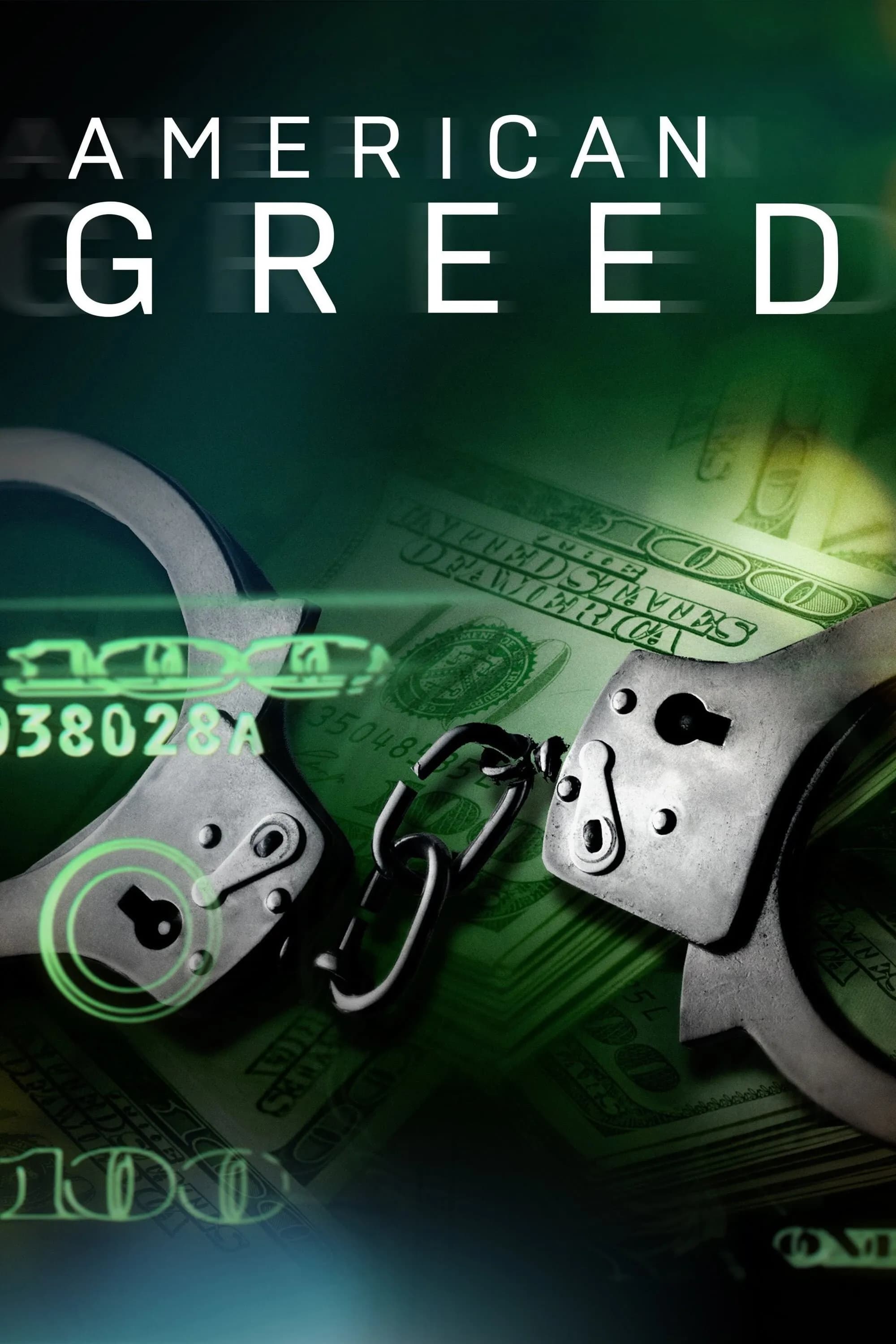
American Greed
CNBC / Peacock, 2007 — Episodic series on white-collar crime, fraud, and Ponzi schemes across America
Quick facts
What Is American Greed?
American Greed is a long-running CNBC documentary series that exposes the darkest corners of financial crime in the United States. Premiering on June 21, 2007, the show does not follow a single criminal case — instead, each episode profiles a distinct real-life story of Ponzi schemes, embezzlement, insurance fraud, tax evasion, and white-collar crime, often escalating into violence. Over the course of 14 seasons and more than 180 episodes, American Greed has built an unrivaled archive of cautionary tales about greed, ambition, and moral collapse.
Narrated by the authoritative voice of Stacy Keach Jr., the series is produced by Bill Kurtis' Kurtis Productions and was created under the direction of Mark Hoffman, former President and CEO of CNBC. The show's signature style blends dramatic reenactments with real investigative footage, court documents, and candid interviews with FBI agents, prosecutors, victims, and — in some cases — the convicted criminals themselves.
With an IMDb rating of 8.4 out of 10, based on over 830 user ratings, American Greed stands as one of the most critically respected true crime series in American television history.
---
The Cases: A Catalog of American Corruption
Unlike most true crime series, American Greed functions as an anthology — a living encyclopedia of financial wrongdoing. Every episode introduces a new villain, a new scheme, and a new set of victims whose lives were upended by someone they trusted.
The cases span decades and demographics. Among the most notable episodes:
- Bernie Madoff — The most infamous Ponzi schemer in U.S. history, who defrauded thousands of investors out of an estimated $65 billion. Madoff was arrested in December 2008 and sentenced to 150 years in federal prison in June 2009. His case became a defining episode of the series and a symbol of Wall Street's capacity for unchecked greed.
- Insurance fraud rings — Episodes covering organized groups that staged accidents, faked deaths, and manipulated medical billing to extract millions from insurers.
- Embezzlement by trusted figures — Church treasurers, corporate accountants, and small-town financial advisors who siphoned life savings from the very communities that trusted them.
- Murder-for-hire linked to fraud — The series frequently explores cases where financial desperation or greed escalated into violent crime, including contract killings arranged to silence whistleblowers or collect life insurance payouts.
The breadth of the case library is part of what makes the series so compelling. No profession, no zip code, and no income bracket is immune. Doctors, lawyers, athletes, and retirees all appear — sometimes as perpetrators, sometimes as victims.
---
Production
American Greed is produced by Kurtis Productions, the Chicago-based company founded by veteran broadcast journalist Bill Kurtis, who is known for his work on Cold Case Files and Investigative Reports. The production model is methodical: each episode is researched using court records, law enforcement interviews, and firsthand accounts from those closest to the crime.
Narrator Stacy Keach Jr. — best known for his role as Mike Hammer — lends the series a gravitas that separates it from more sensationalized true crime programming. His measured, authoritative delivery reinforces the show's journalistic credibility.
The series has been praised for its access to investigators and prosecutors who speak openly about how cases were built, what evidence proved decisive, and — in several cases — what nearly allowed the perpetrators to escape justice. This inside-law-enforcement perspective gives American Greed an educational dimension that goes beyond entertainment.
Full episode listings and case details are available on the CNBC official page and on IMDb.
---
Reception
American Greed has earned a devoted audience over its 17-year run. Viewers and critics consistently praise its rigorous factual foundation, its resistance to cheap dramatization, and its willingness to sit with complexity — showing how perpetrators often presented as charming, credible, and community-minded before their crimes were exposed.
The series holds an 8.4/10 on IMDb, a remarkably high score for a non-fiction television series with over 180 episodes. Critics have noted that the show functions as a portrait of the dark side of the American Dream — the idea that the same drive for success that built this country can, when unchecked by conscience or regulation, destroy individuals, families, and entire communities.
The show has attracted no major controversies regarding its production ethics. Unlike some true crime series that have been criticized for re-traumatizing victims or sensationalizing violence, American Greed is broadly regarded as respectful, accurate, and public-interest journalism in documentary form.
For viewers who want to explore specific episodes, Peacock offers six seasons for streaming, and the series is also reported to be available on free ad-supported platforms including Pluto TV, The Roku Channel, and LG Channels — though availability on these platforms may rotate.
---
The Series Today
As of July 2024, American Greed is on hiatus. CNBC has not officially cancelled the series, leaving open the possibility of future seasons. In the meantime, the existing 180+ episode library remains one of the most comprehensive documentary records of American financial crime ever assembled for television.
The cases featured in the series continue to reverberate. Some perpetrators remain in federal prison. Others have been released and attempted to rebuild their lives. A small number have continued their criminal behavior after serving time. Victims' advocacy groups have cited specific American Greed episodes as instrumental in raising public awareness about investment fraud and pushing for tighter regulatory oversight.
For educators, law enforcement professionals, and concerned investors, the series also serves as a practical resource. Criminology programs at several universities have incorporated episodes into coursework on white-collar crime and corporate ethics. Resources for further academic exploration of the cases featured in the series can also be found through criminal justice library collections.
Whether you are watching to understand how a $500 million Ponzi scheme was constructed and collapsed, or to grasp how a trusted family friend stole a retiree's life savings, American Greed delivers the same essential message across every episode: greed has a cost, and in America, someone always eventually pays it.