From Welder to Hamburg's Most Feared Contract Killer
Werner Pinzner lived a double life in ways few others have. By day he worked as a welder and carpenter. By night he became one of Hamburg's underworld's most sought-after assassins.
Since the 1970s, Pinzner had killed at least 12 people on behalf of drug gangs and organized crime syndicates. His weapon of choice was a specially modified .22-caliber rifle with a silencer—a selection that earned him the nickname "the silent killer" because the weapon was quiet and left few traces.
Among his victims were prominent figures like drug boss Hans-Günter Peine, whom Pinzner shot in 1980, and drug dealer Uwe Prell, killed in 1983. His primary handler was Peter Bertram, known as "Kiekeberg-Bertram," an influential figure in Hamburg's underworld. Pinzner operated methodically, avoided leaving evidence, and was never convicted for these murders.
The Police Station Massacre
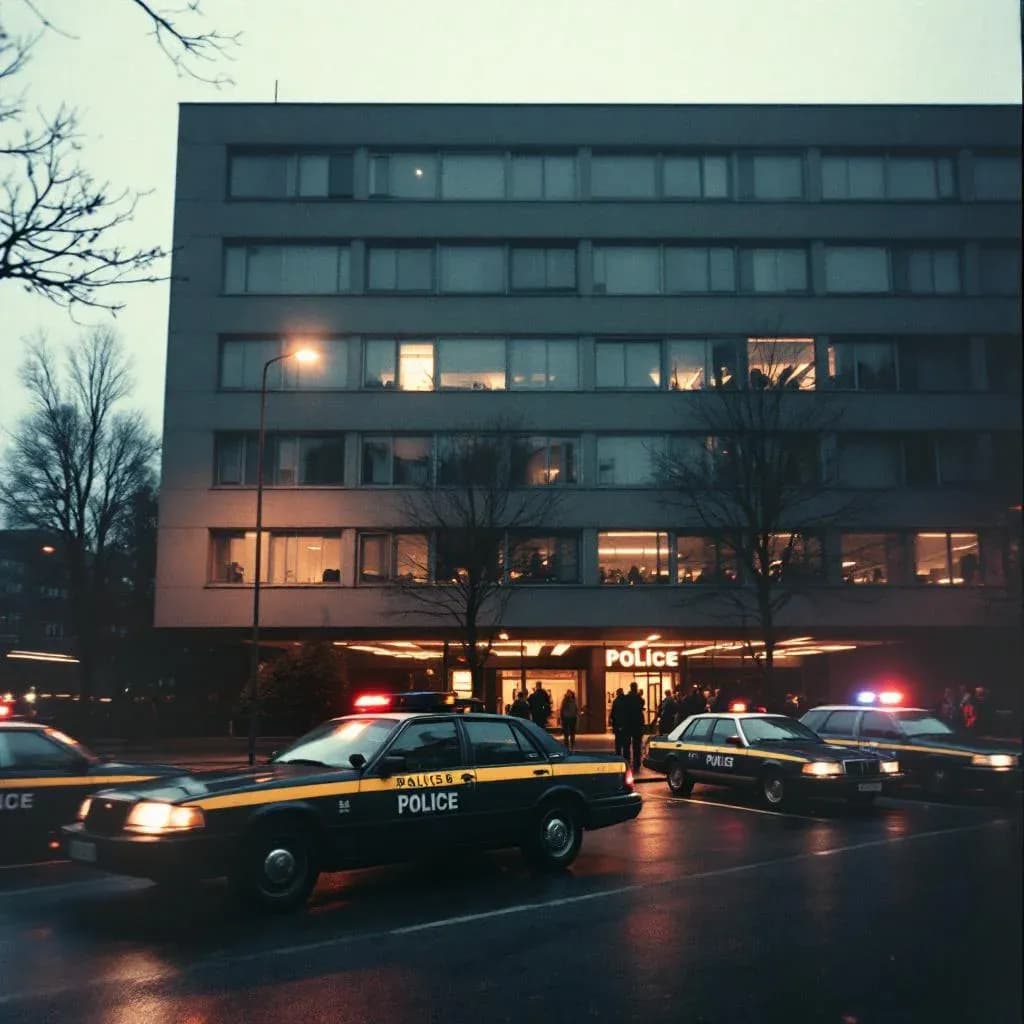
On April 1, 1986 at 10:45 AM, Werner Pinzner entered Hamburg's main police station at Bruno-Georges-Platz 1. He was disguised as a police officer and carried a forged ID badge.
Shortly before, Pinzner had approached police requesting witness protection, claiming he was threatened by underworld rivals. Instead, he carried out one of Germany's most shocking police massacres since World War II.
His first victim was 26-year-old receptionist Muriel Keup, whom he shot at the front desk. He then forced his way into the homicide division's offices, where he killed criminal inspector Hans-Werner Meyer (43) and senior officer Manfred Rost (49)—the very officers working to solve underworld crimes. At 11:02 AM, Pinzner turned his weapon on himself on the third floor.
Hamburg's Interior Senator Wenzel Jacob called the act "the heaviest blow against Hamburg's police force since World War II." The serial number on Pinzner's weapon would later lead to ballistic evidence linking him to several unsolved murders.
Investigation and Justice
After Pinzner's suicide, at least 12 previous murders were attributed to him through ballistic analysis and witness testimony. His gun dealer and primary handler Peter Bertram was sentenced to 15 years in prison in 1987 for ordering murders. Pinzner himself avoided trial through his own death.
The case prompted comprehensive security reforms at Hamburg's police headquarters, including stricter entrance controls and weapon screening. Criminal director Rüdiger Scheel characterized the act as "an unprecedented desperate action and revenge" that struck at the police "in its heart."
Netflix Documentary Sheds Light on Dark Chapter
The Netflix documentary series released in 2023 titled "Pinzner: German Hitman" reconstructs the case based on police reports and interviews with former investigators. The series follows Pinzner's career as an organized crime assassin and the massacre of April 1, 1986.
Werner Pinzner remains one of the darkest chapters in Hamburg's criminal history—a professional killer who hid his double life for years before attacking the justice system itself. The documentary reveals how Hamburg's underworld operated during the 1970s and 1980s, and the fatal consequences of the entanglement between organized crime and violence.