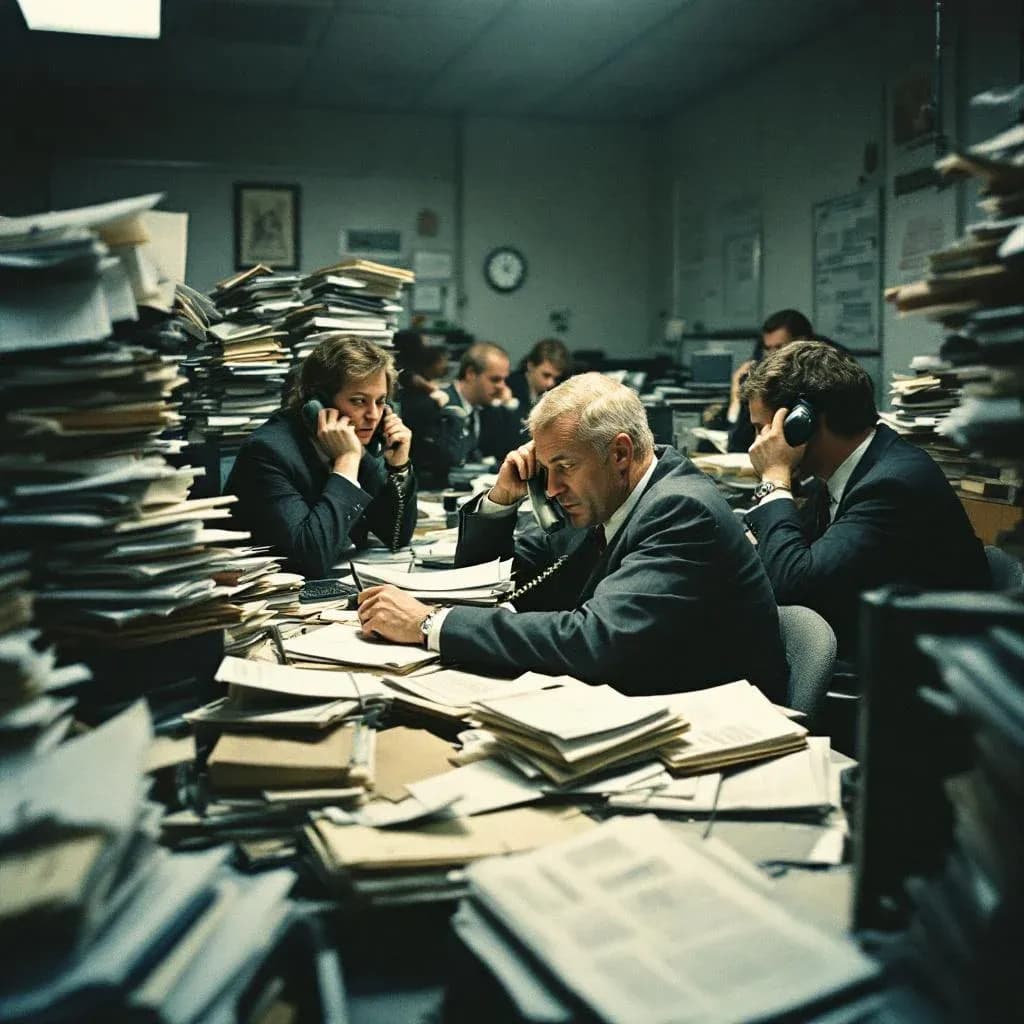
The World Deceived in 1983
In April 1983, Stern magazine announced a sensation: Adolf Hitler's private diaries had been discovered—over 60 volumes allegedly written by the dictator between 1932 and 1945. The purported documents supposedly came from a plane crash near Dresden in 1945. Stern paid 9.3 million DM for the documents and sold exclusive rights to Newsweek and Sunday Times.
Just three weeks after publication on May 25, 1983, the entire story collapsed: the diaries were forgeries created by Stuttgart-based artist Konrad Kujau.
The new RTL+ series "Faking Hitler" starring Moritz Bleibtreu as Stern reporter Gerd Heidemann and August Diehl as Konrad Kujau recreates this media fraud, considered the greatest postwar swindle. The six episodes, available since October 17, 2024 on RTL+, are based on Robert Harris' book "The Fake Hitler Diaries" and court documents from Hamburg's 1985 trial.
The Artist with the Perfect Handwriting
Konrad Kujau was born June 27, 1938 in Stuttgart and developed into a skilled art forger. In his studio on Reinsburgstraße in Stuttgart, he produced over 60 diary volumes between 1980 and 1983, which he sold to Stern reporter Gerd Heidemann for a total of 9.3 million DM. Kujau used old notebooks, artificially aged them, and meticulously imitated Hitler's handwriting.
A forensic examination by the Bundesprüfanstalt für Schrift (Federal Institute for Documents) under Dr. Hilda Ortmann exposed the fraud: the ink contained modern chemicals such as chloramine-T, the bindings consisted of synthetic leather with modern cellulose compounds, and the platinum staples were first manufactured after 1953.
The Reporter Who Failed to Question
Gerd Heidemann, born December 4, 1931 in Hamburg, was the experienced Stern reporter who should have verified authenticity. He met Kujau between 1980 and 1981 in Stuttgart and paid him in installments between April 1982 and May 1983. Heidemann authenticated the diaries to Stern's Hamburg editorial board and became the mastermind behind the fraud.
When the scandal broke on May 8, 1983, Stern publisher Henri Nannen declared: "We have been swindled." The consequences were far-reaching: Managing Director Felix Schmidt and Editor-in-Chief Peter Koch resigned. The magazine suffered losses of approximately 19 million DM.
Court Delivers Verdicts
On January 24, 1985, the Hamburg Regional Court sentenced both perpetrators. Konrad Kujau received 4 years and 6 months imprisonment for fraud in 62 cases. He was released on parole after three years and died on September 12, 2000 in Stuttgart. Gerd Heidemann received 4 years and 8 months imprisonment for complicity in fraud and was released after 28 months in 1986.
Prosecutor Joachim Meißner called the case "the greatest postwar fraud." The series "Faking Hitler" directed by Tim Trantenroth presents this story with documentary precision.
The Drama Becomes Television
The RTL+ production was written by Anna Winger, who closely followed Robert Harris' 1986 investigative book. The six episodes cover the period from 1980 to 1985 and show how a single artist and an ambitious journalist managed to deceive the international media world. The series also illustrates the journalistic failures at Stern, where critical scrutiny was neglected.
The production uses original shooting locations and recreates the atmosphere of the early 1980s, particularly through detailed depictions of interrogations and forensic examinations.