True crime news logo
  • News

Sign up for our newsletter and get the latest stories

Never miss the latest true crime news, reviews and top lists — plus new podcasts, series, films and books.

You can unsubscribe with one click from any email.

True crime news logo

The international true crime destination. Cases, documentaries, podcasts and travel routes.

© 2026 truecrime.news. All rights reserved.

Crime Scene: Critique and Fascination in the Cecil Hotel Narrative

Cecil Hotel: When True Crime Becomes Spectacle

How a Los Angeles landmark transformed from tragedy into entertainment, and what we lose in the process

Published
May 26, 2025 at 10:00 PM

Quick Facts

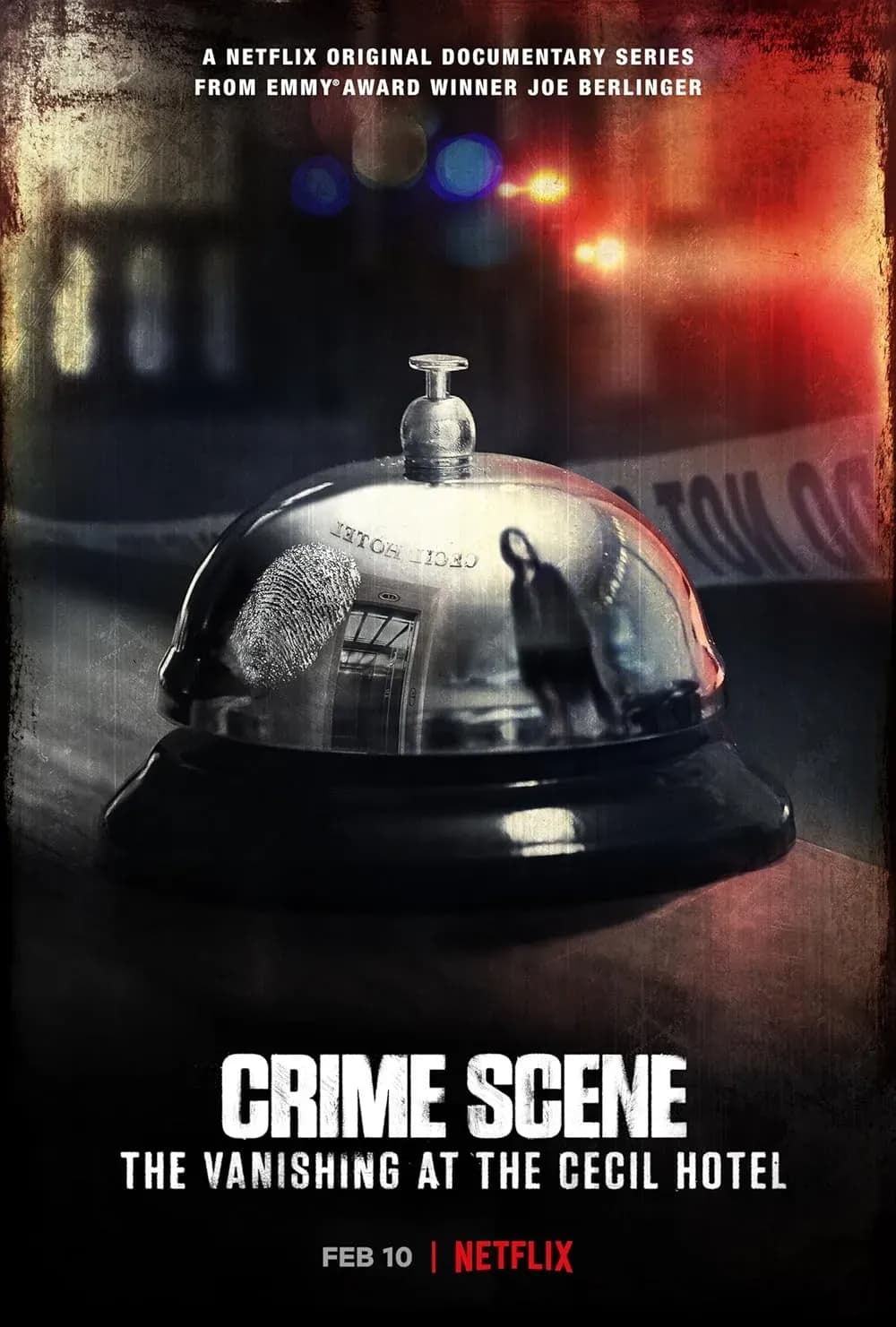
PlatformNetflix
År2020-2021
GenreDokumentarserie
IMDb7.2/10

The Cecil Hotel opened its doors on December 20, 1924, as a respectable middle-class establishment in downtown Los Angeles. Nearly a century later, it stands as one of America's most infamous addresses—not because of what it was, but because of what happened within its walls, and how those tragedies have been packaged for mass consumption.

By the 1960s, the hotel had earned a grim nickname: "The Suicide." The label reflected documented reality. In 1927, Percy Ormond Cook shot himself after a dispute with his wife and child. In 1932, 25-year-old Benjamin Dodich was found dead from a self-inflicted gunshot with no suicide note. That same decade, Margaret Brown exited her room through a window, landing on the hotel marquee below. A 1933 incident claimed a truck driver pinned against the building. These were not rumors—they were recorded deaths that accumulated into a reputation.

But suicides were only part of the story. In 1947, Elizabeth Short—later known as the Black Dahlia—was reportedly seen at the Cecil's bar days before her murder. Her mutilated body was discovered seven miles away, and the case remains unsolved. In 1964, "Pigeon Goldie" Osgood, a 65-year-old resident, was found raped, stabbed, and beaten in her ransacked room. A suspect was arrested but acquitted, leaving another unsolved murder.

The hotel's most documented connection to serial killers came during the 1980s and 1990s. Richard Ramirez, known as the "Night Stalker," stayed at the Cecil during his 1984-1985 crime spree across Southern California. Ramirez committed home invasions, theft, rape, and murder—targeting at least 38 victims ranging from nine to 83 years old. A night clerk confirmed he occupied a top-floor room and disposed of bloody clothes in the hotel dumpster. He was convicted.


Years later, another serial killer sought out the same location. Johann "Jack" Unterweger, an Austrian criminal, stayed at the Cecil in 1991, apparently in homage to Ramirez. Unterweger killed at least three prostitutes—Shannon Exley, Irene Rodriguez, and Peggy Booth—strangling them in his room and removing their bodies undetected. He was convicted in Austria.

In 2013, the Cecil's dark narrative found a new chapter with Elisa Lam, a 21-year-old Canadian tourist staying in a dorm room. Her decomposed body was discovered in the hotel's rooftop water tank after approximately three weeks. Roommates reported erratic behavior, but her death was never ruled a homicide. Yet the case captured global attention, amplified by security footage and internet speculation.

Here lies the contemporary problem: the Cecil Hotel's documented tragedies—real deaths, real victims, real families—have been transformed into entertainment. The hotel itself recognized this shift, rebranding as "Stay on Main" in 2011 to distance itself from its past. But rebranding cannot erase history, nor can it control how that history is consumed.

True crime has become a cultural phenomenon, generating documentaries, podcasts, television series, and social media obsession. The Cecil Hotel represents a particular danger in this ecosystem: a physical location where multiple verified tragedies occurred, now available for armchair investigation and speculation. Each death—whether suicide, murder, or unexplained—involved real people with real families. Yet in the sensationalist framework, they become narrative devices, puzzle pieces to be endlessly analyzed and reinterpreted.

The distinction matters. Documenting the Cecil's history serves legitimate purposes: understanding urban decay, mental health crises, serial crime patterns, and law enforcement failures. But when tragedy becomes pure spectacle, when real deaths become content, something essential is lost. The victims become secondary to the story. The families become background noise to the mystery.

The Cecil Hotel's dark legacy is undeniable and documented. The question worth asking is not what happened there—the record is clear. The question is what we become when we transform those deaths into entertainment, and what responsibility we bear in that transformation.

**Sources** - https://en.wikipedia.org/wiki/List_of_violent_incidents_at_the_Cecil_Hotel - https://www.mentalfloss.com/article/641000/cecil-hotel-los-angeles-facts - https://www.thereallosangelestours.com/crime-seen-the-hotel-cecil/ - https://laghosttour.com/infamous-cecil-hotel/ - https://www.discovery.com/exploration/Cecil-Hotel-LA-Haunted-Reasons

Read more

Murder Book reveals unsolved crime power play
Podcast

Murder Book: How Michael Connelly Solved Cold Cases

Norwegian Mysteries and Murder uncovers Norway's dark sides
Book

Danish Crime Content Explores Nordic Mystery and Murder

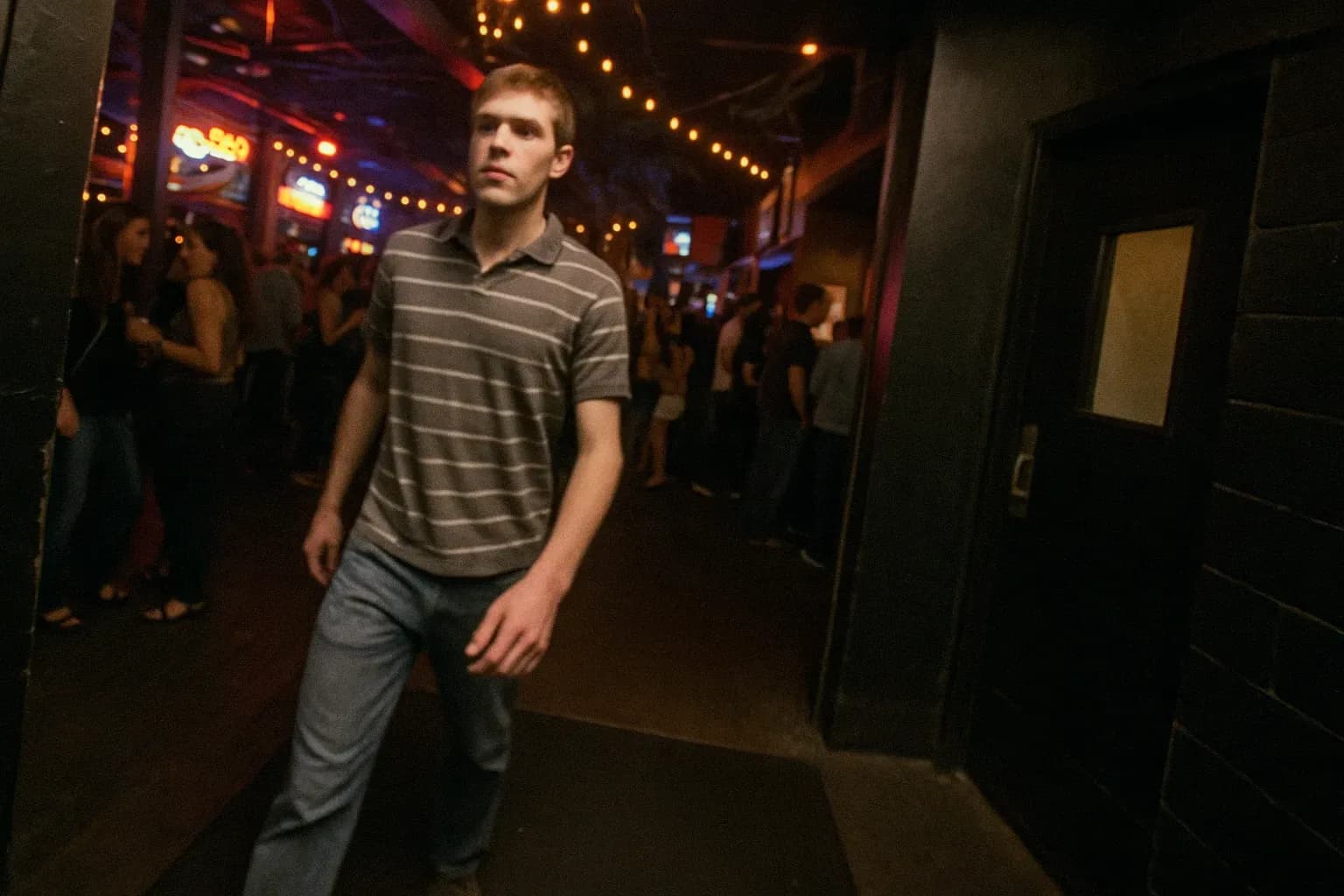
Surveillance footage shows a young man entering the Ugly Tuna Saloona bar in Ohio, surrounded by bustling nightlife, while an exit remains mysteriously void of his presence.
Case

The Vanishing of Brian Shaffer

Related Content
Murder Book reveals unsolved crime power play

Murder Book: How Michael Connelly Solved Cold Cases

Norwegian Mysteries and Murder uncovers Norway's dark sides

Danish Crime Content Explores Nordic Mystery and Murder

Surveillance footage shows a young man entering the Ugly Tuna Saloona bar in Ohio, surrounded by bustling nightlife, while an exit remains mysteriously void of his presence.

The Vanishing of Brian Shaffer

Monster: The Zodiac Killer delves into past mysteries

Monster: The Zodiac Killer Podcast Reopens Bay Area's Darkest Mystery

Advertisement
SS

Susanne Sperling

View all stories →
Share this post: