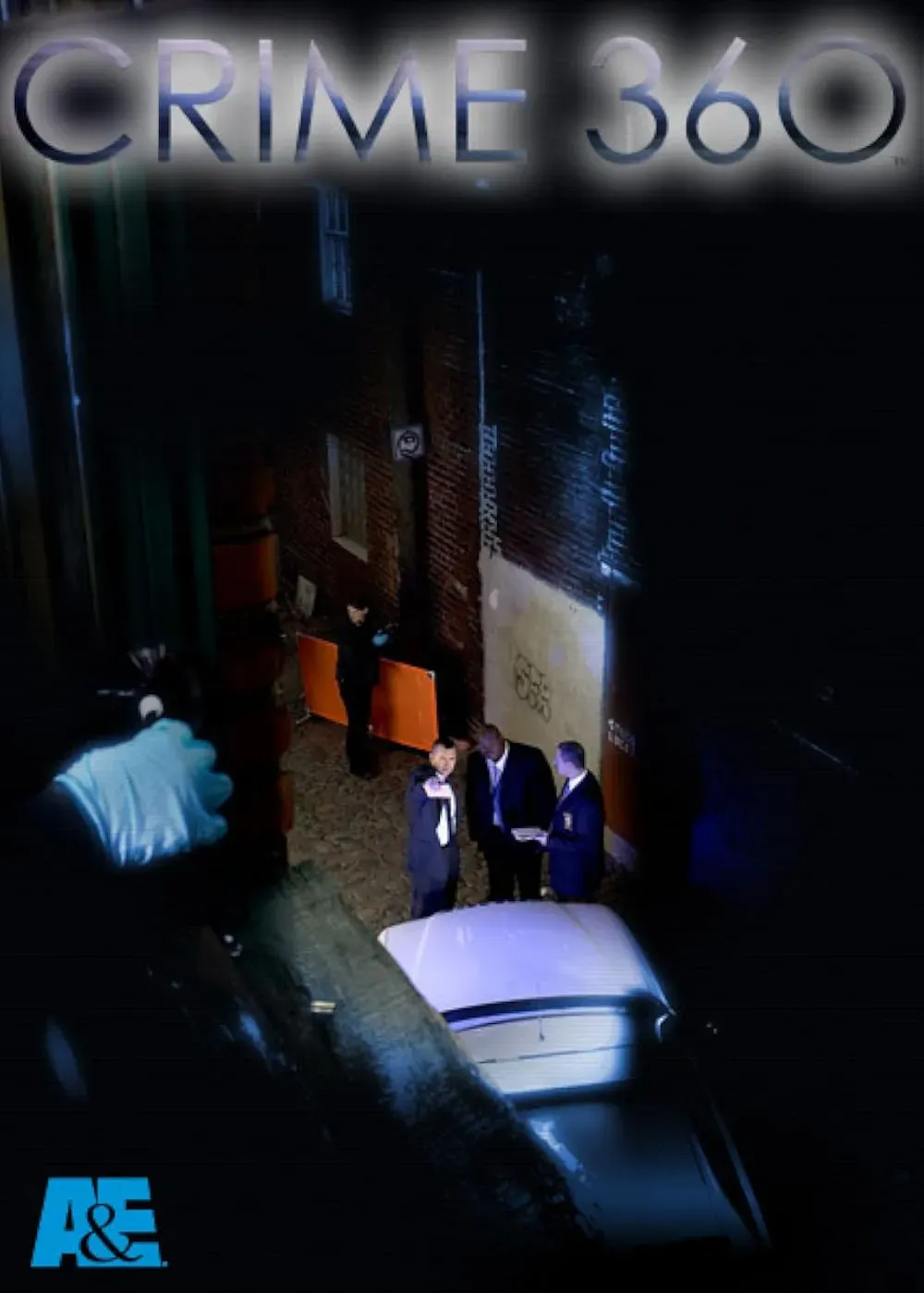
Crime 360: Technological Revolution in Crime Cases
Quick Facts
The digital age of crime with Crime 360
"Welcome to the digital age of crime," whispers the narrator as 3D graphics flow across the screen, transforming abstract clues into visual evidence. Crime 360, an American true-crime TV series, aired on A&E between 2008 and 2009, revolutionizing our view of criminal cases by combining documentary storytelling with groundbreaking technology. The series takes a fact-based journey through the complex world of murder investigations in cities like Richmond and Indianapolis, where advanced 3D laser scanning and CGI animations bring cases to life from the moment police arrive at the crime scene until the case is solved. Created by BASE Productions under the leadership of John Brenkus and Mickey Stern, Crime 360, with its 30 episodes on A&E, left an indelible mark on the television landscape. Today, the series is available on Tubi TV, Prime Video, and Apple TV.
The role of 3D technology and ethical dilemmas in the series
Crime 360 elevates itself above the standard by using 3D technology typically reserved for major dramas to accurately reconstruct case developments. Notably, the episode "Welcome to Homicide" exemplifies this with a dramatic visualization of the reconstruction of an unidentified body found in a car trunk using advanced laser data. Yet, there's a delicate balance between innovation and ethics—inseparably linked to the question of how to avoid lapsing into exaggeration. Critics have pointed out the risk of computer graphics overshadowing the human aspect, offering descriptions like "Cops with a community college degree." However, the series adheres to a fact-based narrative style that integrates speculative elements without letting them dominate.