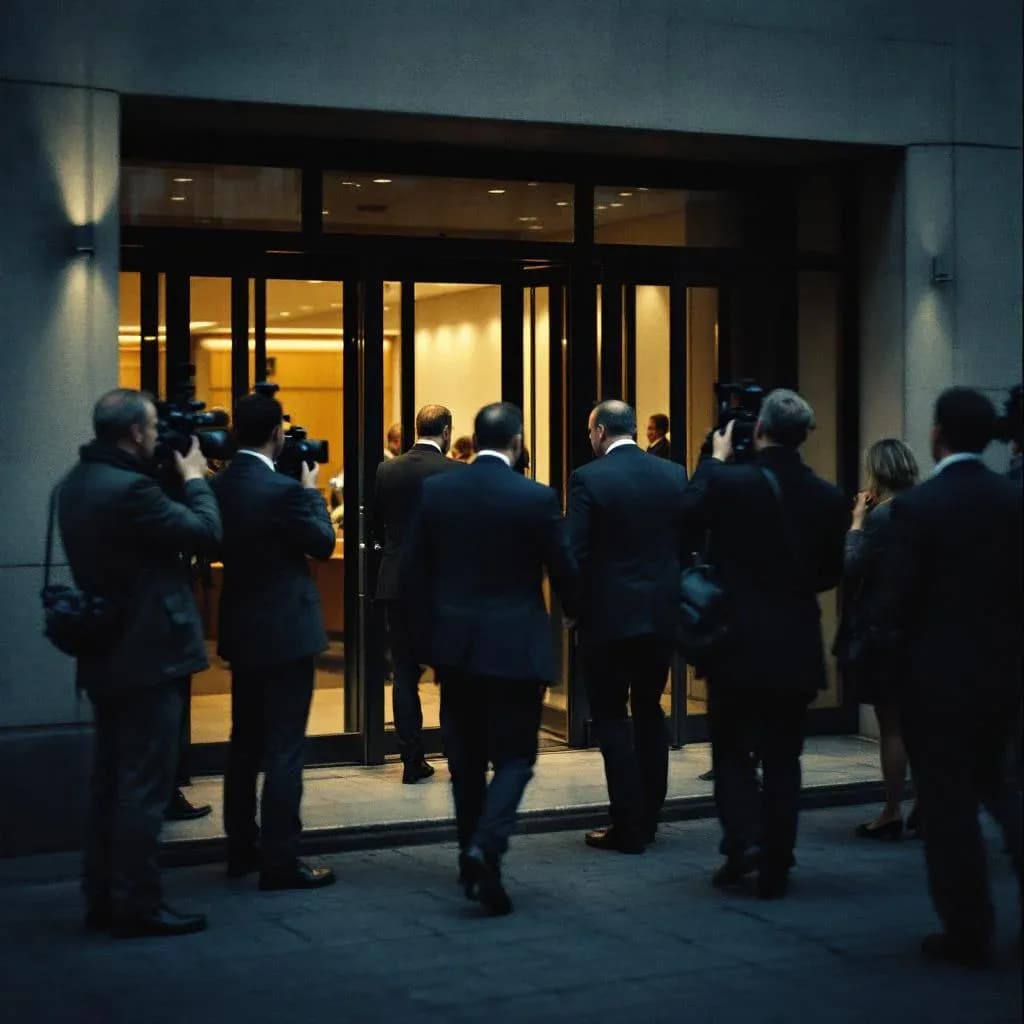
Journalist and author Nils Minkmar was present in the courtroom in Munich as one of post-war Germany's largest and most complex trials unfolded between 2013 and 2018. In his work 'Das Kartell,' he documents five years of proceedings against the National Socialist Underground terror cell network and presents a picture of a system threatening to collapse under its own contradictions.
A State's Collective Failure
Minkmar's analysis focuses not only on the murders committed by the far-right extremist terror cell, but primarily on the incomprehensible: How could this group murder with impunity for over a decade? Between 2000 and 2007, Uwe Mundlos, Uwe Böhnhardt, and Beate Zschäpe killed ten people—nine for racist motives, one police officer.
The book makes clear: this was only possible due to an extraordinary failure by police, intelligence services, and other security agencies. Minkmar meticulously documents how investigators pursued completely wrong leads, suspected victims' families, and systematically excluded far-right extremism as a motive for the crimes.
The title 'Das Kartell' points to a disturbing thesis: the network of informants, authorities, and far-right extremist structures created a system that resembled a criminal organization more than a constitutional state institution.
The Courtroom as Theater of Powerlessness
Over 430 trial days, proceedings took place against main defendant Beate Zschäpe and four accomplices. Minkmar was regularly present and describes the atmosphere: a silent defendant who gave a statement only on trial day 438; lawyers for the victims' families desperately fighting for clarification; and evidence that raised more questions than it answered.
Particularly critical: Minkmar documents how crucial archives were destroyed, informant handlers refused to testify, and witnesses died under mysterious circumstances. The trial became a metaphor for the limits of legal fact-finding when the state's own institutions are part of the problem.
Systemic Racism and Hidden Collaboration
Minkmar's central claims are uncomfortable: First, through its informant strategy, the intelligence service became deeply entangled in far-right extremist circles and possibly covered up crimes. Second, institutional racism and ethnic profiling hindered the investigation. Third, the NSU complex raises the question of whether the German constitutional state structurally failed in combating far-right extremism.
Minkmar's approach is not merely accusation but analysis of the political dimension. How could a terror cell network with openly Nazi declarations escape attention for years? Why were warnings ignored? And what role did intelligence interests play in the cover-up?
A Document That Remains Essential
Eight years after the verdict, Minkmar's work stands as an indispensable source material. It not only preserves the memory of the victims Enver Şimşek, Abdurrahim Özüdoğru, Süleyman Taşköprü, Habil Kılıç, Mehmet Turgut, İsmail Yaşar, Theodoros Boulgarides, Mehmet Kubaşık, Halit Yozgat, and Michèle Kiesewetter. It also raises uncomfortable questions for today: about institutional racism, intelligence services' entanglement with extremist environments, and the public's critical role.
Minkmar writes measured but urgent prose. The book is not an emotional reckoning but a meticulous reconstruction—precisely what makes it so powerful. 'Das Kartell' reminds us that legal accountability and historical truth are not the same thing, and that clarification of the NSU complex is far from definitively concluded.