I'll Be Gone in the Dark: A True Crime Obsession Cut Short
How Michelle McNamara's unfinished hunt for the Golden State Killer became a watershed moment in modern true crime
Michelle McNamara, an accomplished true crime writer, died in her sleep on April 21, 2016, at age 46. The cause was an accidental prescription drug overdose combined with undiagnosed atherosclerosis; the drugs involved were Xanax and fentanyl, substances tied to a long-standing opioid addiction. Her widower, comedian and actor Patton Oswalt, discovered her around 9:40 a.m. after leaving coffee by her bedside.
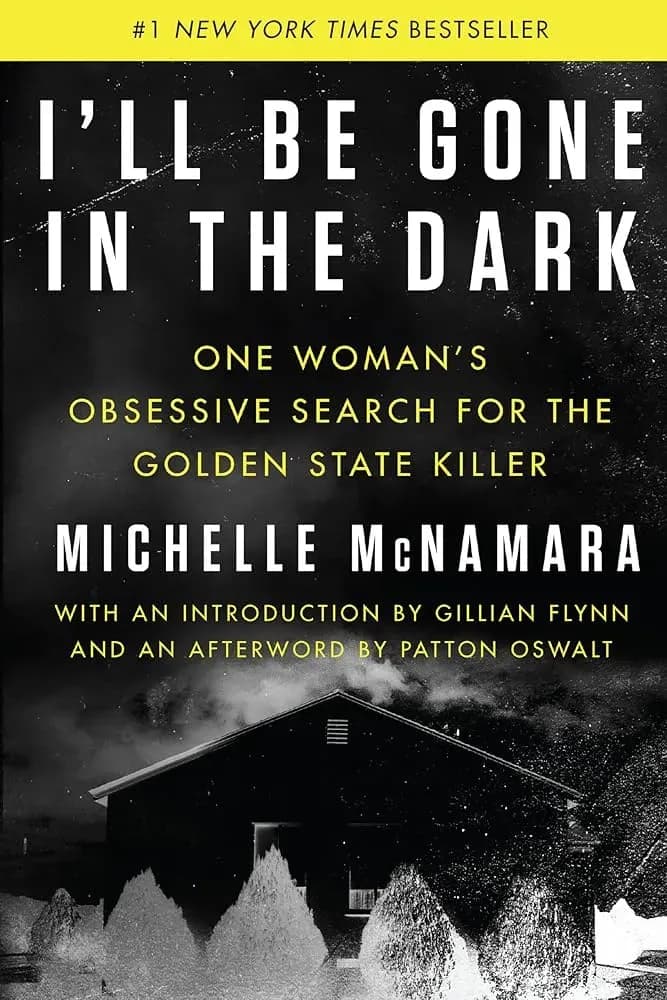
At the time of her death, McNamara was roughly two-thirds of the way through writing *I'll Be Gone in the Dark*, a book obsessively documenting her quest to identify a serial killer who had terrorized California for over a decade. The killer, known by multiple aliases—the East Area Rapist (EAR), the Original Night Stalker (ONS), and EARONS—had committed at least 13 murders, over 50 rapes, and more than 100 burglaries between the 1970s and 1980s. In 2001, DNA evidence had linked the rape cases to the murders, but the perpetrator's identity remained unknown.
McNamara's obsession with the case was personal as much as professional. She became fixated on solving what law enforcement had failed to crack, diving deep into decades-old records and victim testimonies. The book's haunting title derives from a chilling threat made by the killer during one of his attacks. On December 18, 1976, he assaulted 15-year-old Kris Pedretti over more than two hours while her parents were at a Christmas party, attacking her while she sat at her piano. During the assault, he spoke variations of a threat: "You'll be silent forever, and I'll be gone in the dark" or "Do what I say or I'll kill you and be gone in the dark." These words would become the spine of McNamara's unfinished manuscript.
Following her death, the incomplete work was taken up by three collaborators: crime writer Paul Holes, investigative journalist Bill Jensen, and Patton Oswalt himself. Together, they completed the remaining third of the book, assembling McNamara's research, notes, and narrative into a cohesive whole. The finished manuscript was published in February 2018, nearly two years after her death.