Sweden's Hidden Court Murders: How a Podcast Revived Cold Cases
Brottstycken explores Scandinavia's judicial mysteries and 1980s banking heists with archival rigor—and growing pains
Quick Facts
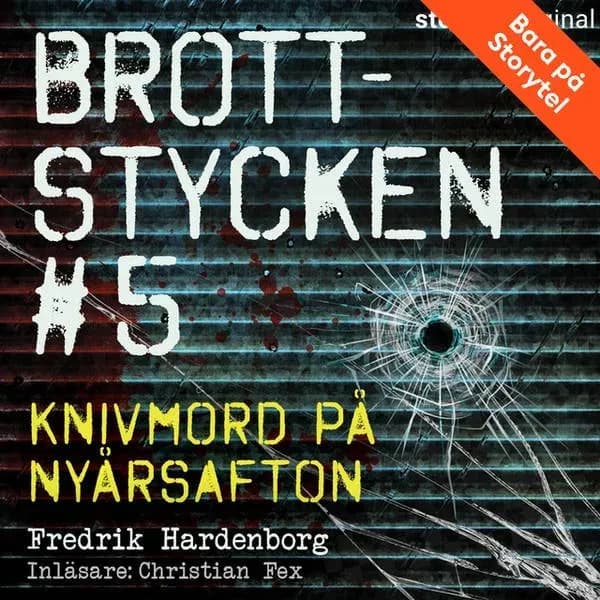
In 2019, Swedish podcaster Fredrik Hardenborg launched Brottstycken—a true crime audio series that would become one of Scandinavia's most popular explorations of criminal history. Available on Storytel, Sveriges Radio, and Apple Podcasts, the series has drawn listeners into some of Sweden's most perplexing unsolved cases, from a cluster of mysterious deaths at the Tingshus (the country's district courthouse) to the audacious exploits of Den stora rånarligan, a criminal gang that systematically targeted Swedish banks during the 1980s.
The Tingshusmorden case—literally "courthouse murders"—forms the series' conceptual anchor: a haunting pattern of deaths within Sweden's judicial system that has never been adequately explained or brought to public consciousness outside Scandinavia. Hardenborg's approach combines archival material, court documents, and personal testimony to reconstruct these cases, offering international audiences a window into how Nordic legal systems have grappled with unsolved crimes and institutional secrecy.
For those unfamiliar with Swedish governance, the Tingshus functions similarly to district courts in common-law countries, serving as the entry point for criminal prosecutions and civil disputes. The courthouse's role as the backdrop for unexplained deaths raises uncomfortable questions about institutional accountability—themes that resonate across borders wherever judicial opacity intersects with public safety.
The series' second focus, Den stora rånarligan, represents a different criminal phenomenon: organized bank robbery that exploited structural vulnerabilities in Sweden's 1980s financial system. During an era when European economies were modernizing, Swedish banking infrastructure contained gaps that a coordinated group of criminals methodically leveraged. Hardenborg's dramatized reconstructions of these heists have proven particularly compelling to younger audiences, many encountering this period of Scandinavian crime history for the first time.