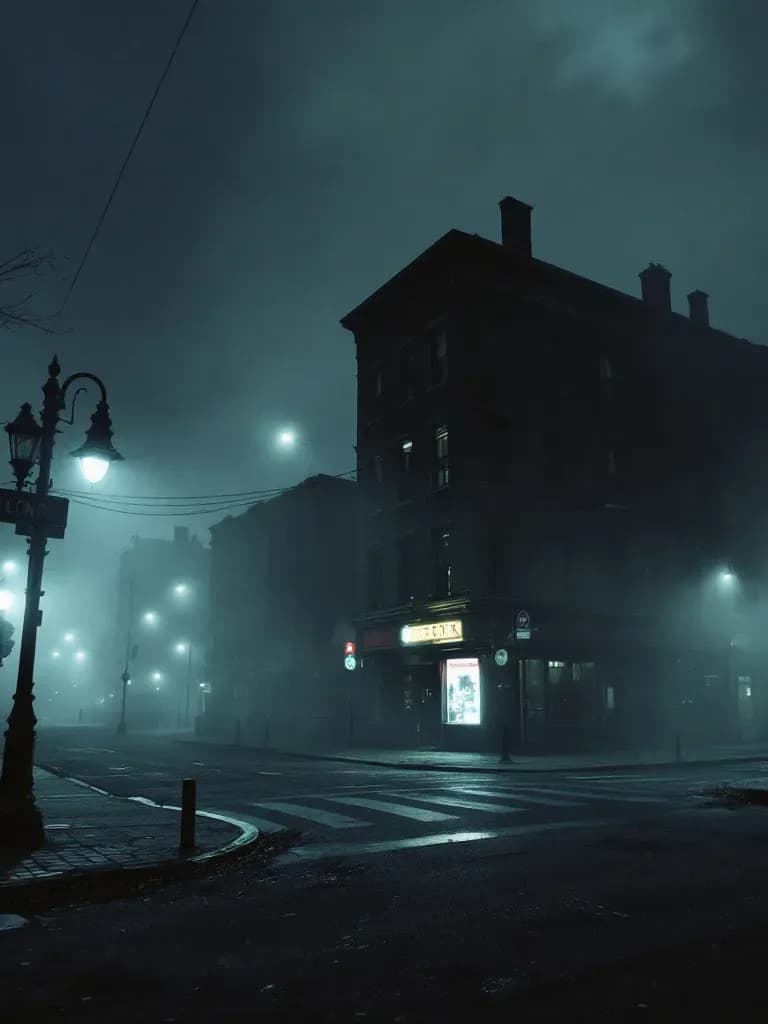
Wallace Souza Case — Murder for Ratings in Brazil
Manaus, Brazil, 2009 — Politician and TV host accused of ordering killings for exclusive footage
Published July 29, 2026
The Case
The Wallace Souza case is one of the most disturbing media-crime scandals in Brazilian history — a story in which the line between reporting on violence and orchestrating it allegedly collapsed entirely. Francisco Wallace Cavalcante de Souza, known publicly as Wallace Souza, was simultaneously a former police officer, an elected state deputy for Amazonas, and the host of the popular crime television program Canal Livre, broadcast out of Manaus. By 2009, Brazilian authorities were alleging something that shocked even seasoned crime reporters: that Souza had not merely covered murders on his show — he had allegedly ordered them, so that his camera crews could arrive at the scenes before police and secure exclusive, graphic footage to drive up ratings.
The case sits at the intersection of political corruption, organized crime, drug trafficking, and the ethics of sensationalist television. It remains a landmark example of how institutional power — in this case, a combination of political immunity, media influence, and alleged criminal networks — can be weaponized to serve personal and commercial interests.
The Crime
According to Brazilian police and prosecutors, Wallace Souza ran a criminal network operating in and around Greater Manaus, Amazonas. Authorities alleged that the network was involved in drug trafficking and illegal weapons trade, and that Souza used his political position as a state deputy to insulate himself and his associates from investigation.
Timeline
Wallace Souza born in Manaus
Francisco Wallace Cavalcante de Souza is born in Manaus, Amazonas, Brazil. He would later become a policeman, television presenter, and elected state deputy.
Mass arrests — 16 suspects detained
Brazilian authorities arrest 16 people in connection with the investigation into Wallace Souza's alleged criminal network, including his son Rafael Souza. The arrests mark the public beginning of the scandal.
Souza turns himself in / taken into custody
Following mounting pressure and media exposure, Wallace Souza surrenders to or is taken into custody by authorities. Allegations of murder-for-ratings and drug trafficking are formally aired in public.
International media coverage explodes
Outlets including BBC News, Der Spiegel, and Die Welt publish major reports on the case, describing allegations that Souza's TV crew arrived at murder scenes before police — because his network had allegedly ordered the killings.
Wallace Souza dies in São Paulo before trial
Wallace Souza dies on July 27, 2010, in São Paulo, without having stood trial for the murder allegations. His death effectively closes the main criminal proceedings against him personally.
Rafael Souza convicted and sentenced
Wallace Souza's son Rafael is convicted of homicide and sentenced to nine years in prison, making him the principal person to face a formal legal consequence in the case. Several other defendants are acquitted or have charges dropped.
The most sensational allegation, however, concerned his television program. Investigators alleged that Souza arranged for murders to be committed — primarily targeting rivals in the drug and weapons trade — and that his TV crews were tipped off in advance to travel to the crime scenes. In multiple documented instances, Canal Livre cameras reportedly arrived at murder scenes before law enforcement, a pattern that prosecutors argued could not be explained by coincidence alone. On air, Souza would present himself as a tough-on-crime commentator, condemning the very violence his network allegedly orchestrated.
The alleged victims — five individuals named in the broader investigation — were described by sources as rivals within the illicit trade networks Souza was accused of controlling. Their precise identities, ages, and the exact dates of individual killings were not confirmed by the verified source material available; the public record focuses primarily on the pattern of behavior rather than the specific homicide events.
The Victims
The verified sources do not identify the five alleged murder victims by name or age. What is documented is the general profile attributed to them: individuals described as competitors or adversaries within the drug and weapons trafficking networks that Souza allegedly dominated in the Manaus region. This anonymity in the public record is itself notable — it speaks to the degree to which the case was prosecuted and covered as a political and media scandal rather than as a conventional homicide investigation focused on the deceased.
The lack of named victims in the international record may also reflect the broader dynamics of crime reporting in the Amazon region, where violence against people involved in the illegal economy has historically received limited individualized media attention.
Investigation
The investigation came to a head on 25 April 2009, when Brazilian authorities moved against Souza's alleged network and arrested 16 people, including Wallace Souza's son, Rafael Souza. The scale of the simultaneous arrests indicated a prolonged and coordinated intelligence effort by federal and state police.
Key evidence cited in contemporaneous reporting included the suspicious pattern of Canal Livre crews consistently appearing at crime scenes ahead of law enforcement, testimony from individuals within the network, and material gathered during surveillance operations. Authorities also alleged that Souza leveraged his status as a state deputy — a position carrying significant legal protections in Brazil — to hamper earlier investigations.
Souza himself surrendered or was taken into custody later in 2009. By that point, the case had become an international story, with major European outlets describing it as a grotesque example of the dangers posed when media, politics, and organized crime become intertwined.
The investigation also drew scrutiny to the broader ecosystem that had allowed Souza to operate: a political culture in which a man facing serious criminal allegations could simultaneously hold elected office and run a publicly broadcast television program, presenting himself as a voice of law and order.
Trial and Verdict
Wallace Souza never stood trial for the murder allegations. He died on 27 July 2010 in São Paulo — before proceedings could reach a conclusion — bringing the main criminal case against him personally to an end by default.
His son, Rafael Souza, did face trial and was subsequently convicted of homicide, receiving a sentence of nine years in prison. He is the principal individual to have faced formal legal consequences in the case. Several other defendants who had been swept up in the 2009 arrests were either acquitted or had charges against them dropped, underscoring the complexity of prosecuting a case so heavily dependent on the testimony of insiders and on circumstantial patterns of behavior rather than direct physical evidence.
The legal outcome was widely regarded as incomplete. Critics noted that the death of the central figure before trial meant that the full scope of his alleged crimes — and the networks that enabled them — was never subjected to rigorous public judicial scrutiny.
Today
The Wallace Souza case endures as a reference point in discussions of media ethics, political corruption, and organized crime in Brazil. It is frequently cited in academic and journalistic analyses of so-called "crime entertainment" television in Latin America, and in debates about the legal frameworks governing politicians who face criminal investigation.
In Brazil, the case prompted renewed discussion about parliamentary immunity and the mechanisms by which elected officials can delay or obstruct criminal proceedings. It also raised lasting questions about the responsibilities of television networks that broadcast graphic crime content and the standards applied to their hosts.
International true crime journalism has returned to the case periodically as an extreme illustration of a phenomenon seen in milder forms elsewhere: the symbiosis between sensationalist crime media and the criminal activity it purports to document. Cases such as Drug Lord Media Corruption Cases and Brazilian Organized Crime share thematic overlap with the Souza scandal, as does the broader phenomenon of Political Immunity and Criminal Prosecution in Latin America.
Rafael Souza's nine-year conviction stands as the sole formal legal resolution of a case that, at its core, alleged something almost without precedent: that a man elected to protect the public had instead turned murder into a television production strategy.
Ask about this case
Answers from KrimiNyt's coverage onlyFollow this case
Get an email when a new documentary, podcast or book about Wallace Souza Case — Murder for Ratings in Brazil appears, or when a verdict is reached.