The Palme Murder: Sweden's Unsolved Mystery
A 34-year hunt for a killer ended with a dead suspect and no conviction — Sweden's greatest trauma remains officially unresolved
Published June 6, 2025
Case Details
Quick Facts
Classification:
Quick facts
The Shots on Sveavägen: The Start of a 34-Year Investigation
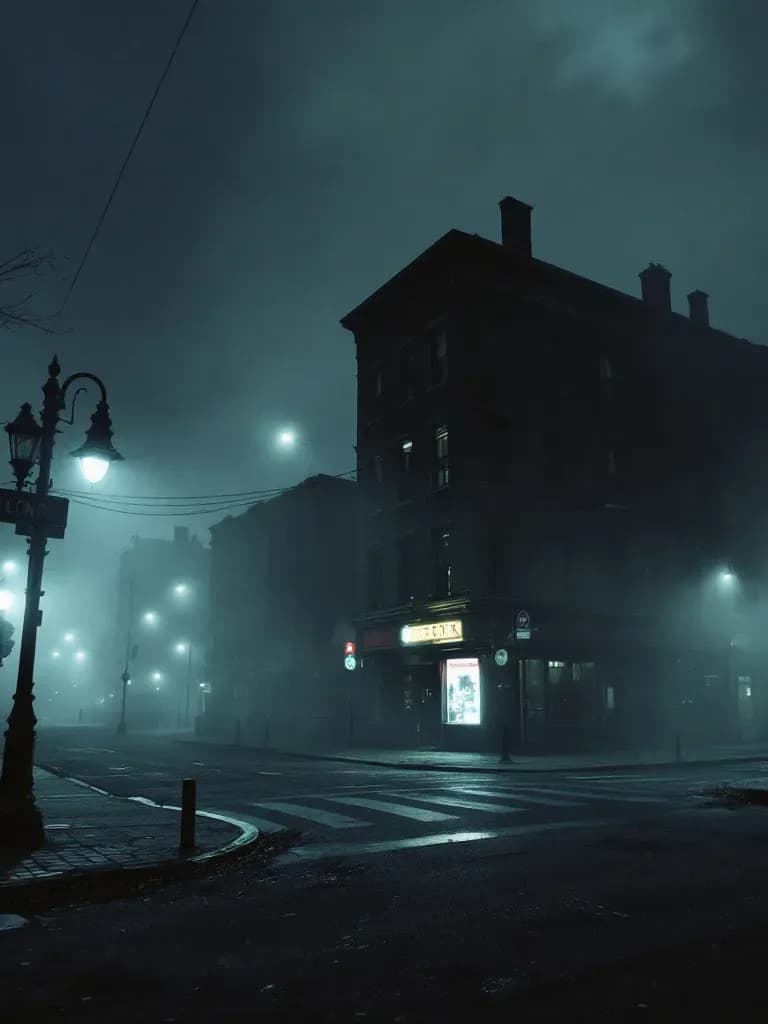
At 11:21 PM on Friday, 28 February 1986, two gunshots shattered the quiet of Sveavägen, a central street in Stockholm. Swedish Prime Minister Olof Palme fell to the ground, fatally struck in the back. His wife, Lisbeth Palme, miraculously escaped with only minor injuries. The couple had been walking home from the Grand Cinema, alone and without bodyguards — a symbol of the trust in public safety that was abruptly destroyed for an entire nation that night.
The gunman fled up the nearby steps of Tunnelgatan, and the chaotic scenes that unfolded in the minutes and hours that followed marked the beginning of the most extensive and controversial murder investigation in Nordic history. The hunt for the truth about the Palme assassination would stretch across 34 years, defined by political intrigue, a failed prosecution, and a seemingly endless stream of conspiracy theories.
Olof Palme's Last Hours
On the fateful evening, Olof and Lisbeth Palme had said goodbye to their son Mårten and his girlfriend outside the Grand Cinema at around 11:15 PM. They walked south along Sveavägen and briefly stopped at a shop window near the Tunnelgatan intersection — moments before the attack. An unknown man fired two shots at close range. Multiple witnesses described the perpetrator as a figure in a dark coat and light-coloured hat who immediately fled up the stairway at Tunnelgatan toward Malmskillnadsgatan.
Timeline
The murder of Olof Palme
At 11:21 p.m., Sweden's Prime Minister Olof Palme is shot on Sveavägen in Stockholm by an unknown assailant. The assailant flees, unidentified.
Death at the hospital
At 12:06 a.m., Olof Palme is declared dead at Sabbatsbergs sjukhus. Sweden is in shock.
Christer Pettersson convicted
Christer Pettersson is convicted of murder based on Lisbeth Palme's identification.
Acquittal on appeal
The verdict against Pettersson is overturned on appeal. The evidence is deemed insufficient.
Death of Stig Engström
Stig Engström, later the main suspect, dies by suicide, long before he is officially named as the perpetrator.
Death of Christer Pettersson
Christer Pettersson dies from a brain hemorrhage. He had maintained his innocence throughout.
Investigation closed
Swedish prosecutors name the deceased Stig Engström as the most likely perpetrator and close the investigation.
The first police patrol did not arrive until 11:26 PM. The initial police response at the scene was later heavily criticised for being slow and disorganised. At Sabbatsbergs Hospital, doctors fought in vain. Olof Palme was pronounced dead at 12:06 AM on 1 March 1986.
Olof Palme: International Critic and a Nation's Leader
Olof Palme (1927–1986) was not merely a Swedish political leader — he was an internationally recognised figure and a prominent global voice. He was known for his outspoken criticism of the United States' conduct in the Vietnam War and his strong support for the ANC in the struggle against apartheid in South Africa. This engagement earned him considerable international respect, but also intense domestic opposition. The so-called 'Palme hatred' from sections of the Swedish right wing and parts of the business community, including arms manufacturer Bofors, was particularly pronounced in the years leading up to his death.
His wife, Lisbeth Palme, became a crucial but also controversial witness in the subsequent legal proceedings. Her later identification of a suspected perpetrator proved vital to the case's development — but also became a subject of extensive debate and criticism.
The Two Central Suspects: Christer Pettersson and Stig Engström
Two men came to dominate the long-running investigation into the Palme murder: Christer Pettersson and Stig Engström.
Christer Pettersson (1947–2004), a petty criminal with a history of substance abuse, came to police attention following a tip that was reportedly linked to Lisbeth Palme's observations. In 1989, Pettersson was convicted of the murder of Olof Palme by the district court, primarily on the basis of Lisbeth Palme's eyewitness testimony. He was later acquitted by the court of appeal, Svea Hovrätt, due to a lack of technical evidence and doubts about the reliability of the identification made under the chaotic conditions at the crime scene. Pettersson's death in 2004 following a brain injury added yet another layer of mystery to the already unsolved case.
The second central figure, Stig Engström (1925–2000) — better known as 'the Skandia Man' because of his workplace in the Skandia building near the crime scene — only came under serious scrutiny in the years leading up to 2020. Engström's contradictory statements, his known political antipathy toward Olof Palme, and the fact that he had access to a friend who owned a .357 Magnum — the suspected calibre of the murder weapon — made him the primary suspect for the new investigative team.
A Flawed Investigation: Lost Evidence and the 1989 Trial
The investigation into the Palme murder was beset by serious missteps from the outset. The crime scene on Sveavägen was not adequately secured, potential evidence on a recovered raincoat was lost when it was washed, and initial witness statements were often fragmentary and contradictory. More than 700,000 pages of investigative material and thousands of interviews generated an enormous body of information, but yielded few concrete answers in the hunt for Palme's killer. An early published photofit image, based on imprecise descriptions, resulted in thousands of fruitless tips to Stockholm police.
The most criticised episode was undoubtedly the 1989 trial of Christer Pettersson. The case suffered from a conspicuous lack of decisive physical evidence — no fingerprints, no DNA, and crucially, no murder weapon. The district court conviction rested almost entirely on Lisbeth Palme's identification, which the court of appeal found insufficient as the sole basis for a conviction. Pettersson's later, often contradictory, 'confessions' in various media outlets served mainly to deepen the confusion surrounding his role in the murder.
Conspiracy Theories: From the 'Baseball League' to the CIA
Alongside the official investigation, a multitude of conspiracy theories emerged and flourished. Suspicion fell on a range of groups and motives: a group of right-wing Stockholm police officers, known as the 'Baseball League', was investigated following witness reports of walkie-talkie communications near the crime scene. South Africa's apartheid regime was frequently cited as a possible orchestrator, in revenge for Palme's prominent criticism and support for the ANC. Another persistent theory linked the murder to the extensive Bofors scandal, in which Palme could potentially have moved to block a controversial arms deal. Palme's role as a UN mediator in the conflict between Iran and Iraq was also highlighted as a possible motive for a carefully planned political assassination, with some theories pointing to foreign intelligence services — including speculation about a possible CIA role.
The Journalistic Breakthrough: 'Den osannolika mördaren' and Engström
The Palme case took a significant new turn in 2018, when journalist Thomas Pettersson published the book Den osannolika mördaren ('The Unlikely Murderer'), presenting Stig Engström — the Skandia Man — as his well-reasoned prime suspect. Pettersson's research demonstrated that Engström's own account of his whereabouts on the night of the murder was incompatible with the statements of other key witnesses. Furthermore, Engström's appearance matched several witness descriptions of the man seen fleeing up the Tunnelgatan stairway immediately after the shots were fired.
It was documented that Engström had clocked out of his workplace at the Skandia building just two minutes before the murder of Olof Palme took place. He himself claimed to have arrived at the crime scene shortly afterwards and to have attempted to render first aid — an account contradicted by several other witnesses who were present.
Official Closure: Engström Named, But No Conviction
In June 2020, after more than three decades of investigation, chief prosecutor Krister Petersson announced his long-awaited conclusion: Stig Engström was in all likelihood the murderer of Olof Palme. However, since Engström had died in the year 2000, no charges could be brought, and the investigation was officially closed.
The conclusion was met with considerable scepticism. The continued absence of the murder weapon and the lack of definitive physical evidence directly linking Engström to the crime left many questions unanswered. That the Palme investigation — one of the most expensive political assassination inquiries in the world, costing more than 350 million Swedish kronor — was closed by naming a deceased man as the probable perpetrator, with no possibility of a trial, was for many a deeply unsatisfying end to a national trauma.
Sweden's Wound: The Legacy of the Palme Murder
The murder of Olof Palme left deep and lasting scars on Swedish society. The brutal political assassination shattered the image of Sweden as a uniquely safe and innocent country. For Lisbeth Palme personally, living through the murder of her husband and the subsequent trial represented a lifelong trauma. Her unwavering insistence in court on her identification of Christer Pettersson stands today as both an act of courage and a heartbreaking struggle to be believed. As she said in a rare interview: 'I saw him clearly — the face, the eyes. But the world did not want to hear me.'
Although the investigation is now officially closed, the conspiracy theories and the gnawing doubt live on. Questions remain: why did surveillance footage from a nearby shop reportedly disappear? Who owned the mysterious raincoat found at the crime scene? How could an apparently ordinary man like Stig Engström carry out such a seemingly professional killing without leaving more definitive traces? These unresolved elements continue to fuel theories about political plots, professional hired killers, and possible insider knowledge within the police or intelligence services.
The murder of Olof Palme remains an open wound in Sweden's modern history — a tragic story of political vulnerability, the limitations of the Swedish justice system, and the enduring human need for truth, even when certainty seems forever out of reach. As a Stockholm pensioner was reported to have put it at the case's 30th anniversary: 'We all know it was Engström. But we also know we will never really know.'
Media coverage
TV series
- Sweden's Palme Murder Mystery Gets New Scrutiny in Documentary(2025)
Ask about this case
Answers from KrimiNyt's coverage onlyFollow this case
Get an email when a new documentary, podcast or book about The Palme Murder: Sweden's Unsolved Mystery appears, or when a verdict is reached.