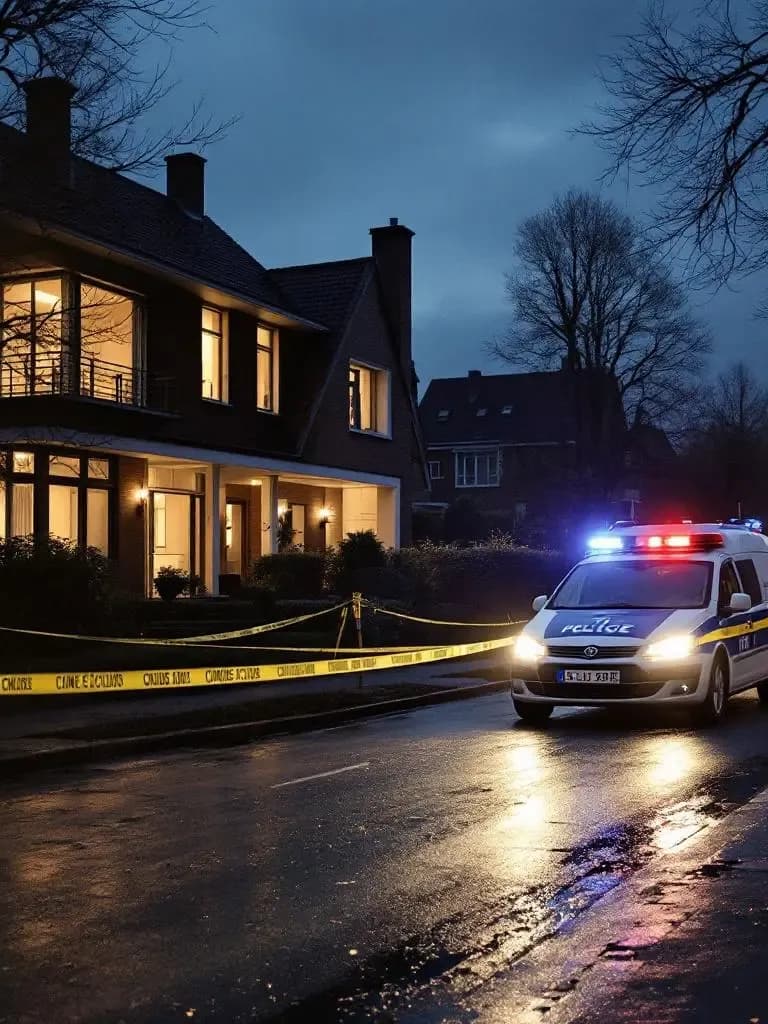
The NSU Terror Cell: Germany's Decade-Long Neo-Nazi Murder Spree
Tyskland, 2000–2011 – afsluttet med livstidsdom i 2018, stadfæstet 2021
Published May 4, 2026
Quick Facts
Beate Zschäpe was born on January 2, 1975, in Jena, East Germany. Raised by her grandmother after her parents separated, she drifted into the neo-Nazi scene during her teenage years in the turbulent post-reunification era. There she met Uwe Mundlos and Uwe Böhnhardt, forming a tight-knit trio that would eventually become the core of Germany's deadliest post-war terrorist organization. The NSU's victims were predominantly small business owners of Turkish and Greek descent: Enver Şimşek, Abdurrahim Özüdoğru, Süleyman Taşköprü, Habil Kılıç, Mehmet Turgut, İsmail Yaşar, Theodoros Boulgarides, Mehmet Kubaşık, and Halit Yozgat. The tenth victim was German policewoman Michèle Kiesewetter, shot during a 2007 attack in Heilbronn.
The NSU operated undetected for over a decade while committing what became known as the Döner Murders, a term later criticized as racist. Between 2000 and 2007, Mundlos and Böhnhardt systematically executed nine men, typically shooting them at close range in their workplaces. The cell also carried out at least two bombings in Cologne, including a 2004 nail bomb attack in a Turkish neighborhood that injured 22 people. To fund their operations, they robbed at least 15 banks across Germany, stealing approximately 600,000 euros.
The investigation represents one of the most catastrophic failures in German law enforcement history. Despite thousands of investigative hours, police consistently pursued false leads, treating the murders as organized crime or drug-related rather than racist terrorism. Investigators infamously focused on the victims' families and communities, subjecting them to humiliating interrogations while ignoring evidence pointing to far-right extremism. The Federal Office for the Protection of the Constitution, Germany's domestic intelligence agency, had informants within the neo-Nazi scene but failed to connect the dots. The cell's existence only came to light on November 4, 2011, when Mundlos and Böhnhardt died in an apparent murder-suicide after a botched bank robbery in Eisenach. Hours later, Zschäpe set fire to the apartment they shared in Zwickau, destroying evidence before turning herself in to police four days later.
Timeline
NSU trio goes underground
Uwe Mundlos, Uwe Böhnhardt and Beate Zschäpe begin living in hiding and build up the NSU terror network. The group is active from 1998.
First murder: Enver Şimşek in Nuremberg
Enver Şimşek shot and killed in Nuremberg on September 9, 2000 – NSU's first confirmed murder.
Süleyman Taşköprü killed in Hamburg
Third murder takes place in Hamburg on June 27, 2001, just two weeks after the previous murder.
Mehmet Turgut killed in Rostock
After a pause of more than two years, another murder is committed: Mehmet Turgut killed in Rostock on February 25, 2004.
Theodoros Boulgarides killed in Munich
Theodoros Boulgarides killed in Munich on June 15, 2005 – the only victim of Greek background.
Mehmet Kubaşık killed in Dortmund
Mehmet Kubaşık killed in Dortmund on April 4, 2006.
Halit Yozgat killed in Kassel
Halit Yozgat killed in Kassel on April 6, 2006, just two days after the murder in Dortmund.
Police officer Michèle Kiesewetter killed in Heilbronn
The tenth and final murder is committed in Heilbronn on April 25, 2007. The victim is a German police officer.
Zschäpe's trial began on May 6, 2013, at the Munich Higher Regional Court and lasted over five years, becoming the longest criminal trial in German history. Prosecutors argued that while Zschäpe did not pull the trigger, she was equally culpable as a co-founder and essential member of the terrorist organization who provided logistical support, maintained their cover identities, and managed their finances. Zschäpe remained largely silent throughout the proceedings, offering only a written statement in 2015 in which she claimed ignorance of the murders. On July 11, 2018, the court convicted her on ten counts of murder, membership in a terrorist organization, and arson. She received the maximum sentence of life imprisonment with subsequent preventive detention, meaning she may never be released.
The NSU case exposed deep structural failures within German security services and prompted painful national reflection on institutional racism. Parliamentary inquiries revealed that intelligence agencies had destroyed relevant files after the cell's exposure, raising questions about potential cover-ups and the extent of state knowledge. The case fundamentally changed how Germany approaches far-right terrorism, leading to reforms in intelligence coordination and victim support services. For the families who endured years of wrongful suspicion, the verdict provided only partial justice. Many questions remain unanswered about the NSU's support network and whether the full scope of their crimes will ever be known. The case stands as a stark reminder of the deadly consequences when authorities fail to recognize and confront racist violence.
Media coverage
Books
- NSU Trial: Documenting State Failure(2026)
Ask about this case
Answers from KrimiNyt's coverage onlyFollow this case
Get an email when a new documentary, podcast or book about The NSU Terror Cell: Germany's Decade-Long Neo-Nazi Murder Spree appears, or when a verdict is reached.