The Frank Olson Case — CIA scientist's mysterious death
New York City, 1953 — death officially undetermined, no conviction
Published June 3, 2026
Case Details
Quick Facts
Classification:
The Case
The Frank Olson case is an unsolved death that has remained one of America's most controversial Cold War mysteries for seven decades. Frank Rudolph Olson was a 43-year-old U.S. Army biochemist and biological warfare scientist who died after falling from a hotel window in New York City on November 28, 1953. The death was initially ruled a suicide, but decades of investigation have revealed covert CIA drug experiments, conflicting forensic evidence, and persistent allegations of murder that have never resulted in criminal charges.
What makes the Olson case extraordinary is not just the mysterious circumstances of his death, but the subsequent government admissions that fundamentally changed the case's nature. In 1975, the CIA acknowledged that Olson had been secretly dosed with LSD by agency personnel just nine days before his fatal fall. This revelation transformed what appeared to be a simple suicide into a complex case involving Cold War espionage, illegal human experimentation, and possible assassination. Despite multiple investigations, exhumation of Olson's body, and reclassification of his death as "undetermined," no one has ever been criminally charged in connection with his death.
The Crime
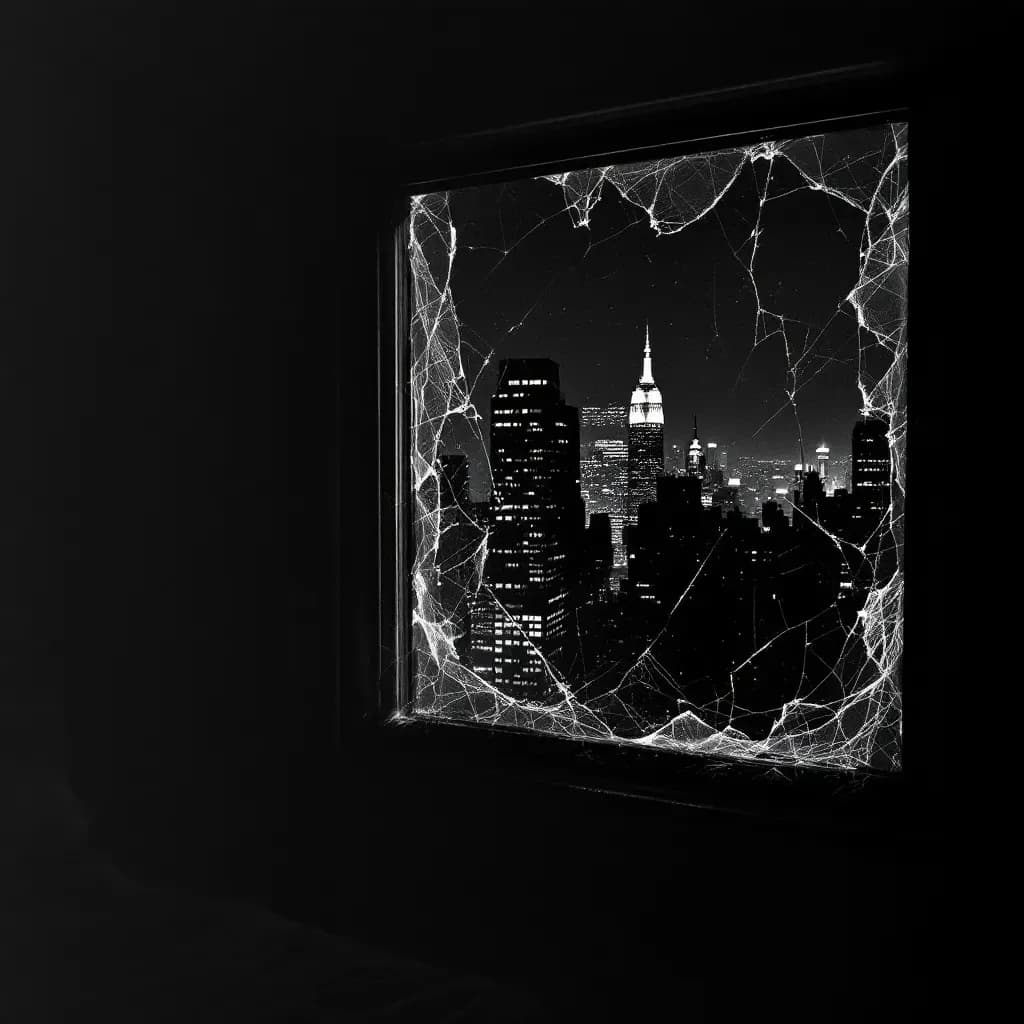
On the night of November 27-28, 1953, Frank Olson fell from the 10th-floor window of room 1018A at the Hotel Statler in New York City, landing on the sidewalk below around 2:30 a.m. He was rushed to a hospital but was pronounced dead shortly after arrival. The Hotel Statler was located near Times Square and catered to business travelers and government officials.
Timeline
LSD administered at CIA retreat
Frank Olson was secretly given LSD by CIA chemist Sidney Gottlieb during a meeting at Deep Creek Lake, Maryland, as part of covert mind-control experiments.
Death at Hotel Statler
Olson fell from the 10th-floor window of the Hotel Statler in New York City around 2:30 a.m. and was pronounced dead. Initial police conclusion was suicide.
CIA admits LSD dosing
The CIA publicly acknowledged that Olson had been unwittingly drugged with LSD nine days before his death. President Ford apologized to the Olson family.
Exhumation reveals new evidence
Olson's body was exhumed and forensic pathologist James Starrs found evidence of a blow to the head before the fall. The New York District Attorney reclassified the death as undetermined.
Family files wrongful death lawsuit
Eric Olson and family members sued the U.S. government for wrongful death, alleging murder and cover-up. The case was dismissed on national security grounds.
Olson was not alone in the hotel room. He was accompanied by Robert Lashbrook, a CIA scientist who was supposedly keeping watch over him due to concerns about his mental state. Lashbrook's account of the incident stated that he was asleep in another bed when he heard glass breaking, looked up to see the window shade flapping, and realized Olson had gone through the closed window. The initial police investigation concluded that Olson had committed suicide, noting that he had been under psychiatric care.
What was not known at the time—and would not be revealed for more than two decades—was that Olson had been unwittingly drugged with LSD nine days earlier at a CIA retreat in rural Maryland. On November 19, 1953, during a meeting at Deep Creek Lake, CIA chemist Sidney Gottlieb had spiked Olson's Cointreau liqueur with the powerful hallucinogen as part of the agency's MKUltra mind-control program. Olson was told about the dosing only after the drug had taken effect.
In the days following the LSD administration, colleagues reported that Olson became increasingly anxious, paranoid, and disoriented. He expressed concerns about mistakes in his work and appeared deeply troubled. His supervisor, Vincent Ruwet, and CIA handler Lashbrook took him to see a CIA-cleared psychiatrist in New York, and it was during this trip that he fell to his death.
The Victim
Frank Rudolph Olson was born in 1910 and worked as a bacteriologist and biological warfare scientist at Fort Detrick in Maryland, the U.S. Army's center for biological weapons research. He held a senior position as Acting Chief of the Special Operations Division, which developed methods for delivering biological warfare agents. His work brought him into close contact with the CIA's Technical Services Staff, which was exploring the potential military applications of psychoactive drugs and biological agents.
By all accounts, Olson was a dedicated scientist and family man. He was married to Alice Olson and had three children: Eric, Nils, and Lisa. Colleagues described him as conscientious and thoughtful, though some noted he had become troubled in the months before his death. His son Eric would later suggest that his father had developed moral qualms about the nature of his work, particularly after witnessing interrogation techniques during European trips that may have involved biological agents.
Olson's position gave him access to some of the most sensitive Cold War programs involving both biological weapons and the CIA's mind-control experiments. This access would later fuel speculation that his death was not accidental but rather an elimination of someone who knew too much and might have been preparing to leave his position or even speak publicly about classified programs.
Investigation
The initial 1953 police investigation was brief and concluded that Olson had committed suicide while suffering from depression. The case might have remained closed indefinitely had it not been for the revelations that emerged during the Rockefeller Commission investigation into CIA abuses in the 1970s.
In June 1975, the Washington Post reported that a civilian Army scientist had died after being given LSD by the CIA. The Olson family recognized the details and realized for the first time that Frank had been drugged before his death. The CIA subsequently acknowledged the LSD dosing, and President Gerald Ford personally apologized to the Olson family at the White House. The family was awarded a financial settlement of $750,000 and received what the government described as the full account of events.
However, Frank's son Eric remained unsatisfied with the official explanation. In 1994, he had his father's body exhumed for a new forensic examination. Forensic pathologist James Starrs led a team that found evidence inconsistent with a simple fall from a window. Most significantly, they identified a previously undocumented hematoma on Olson's head that Starrs concluded was caused by a blow before the fall, not by the fall itself. Based on these findings, the New York District Attorney's office reclassified Olson's death from suicide to "unknown" or "undetermined."
The exhumation findings suggested a different scenario: that Olson may have been struck in the head, rendered unconscious or disoriented, and then thrown or pushed through the window. This theory gained support from the pattern of injuries and the fact that Olson would have needed to run at considerable speed to crash through a closed hotel window from a standing position inside the room.
No criminal charges were ever filed. Sidney Gottlieb, the CIA chemist who administered the LSD, was never prosecuted for his role in the MKUltra program. He died in 1999. Robert Lashbrook, the CIA officer present when Olson fell, maintained his account until his death but was never charged with any crime.
Trial and Verdict
There has never been a criminal trial in the Frank Olson case. In 2002, Eric Olson and other family members filed a wrongful death lawsuit against the U.S. government, seeking to compel fuller disclosure of the circumstances surrounding Frank's death. They alleged that the government had committed murder and then engaged in a decades-long cover-up.
The lawsuit was dismissed in 2004 on the grounds that it was filed too late and that the government's national security interests outweighed the family's right to further information. Courts ruled that the 1975 settlement constituted a final resolution of the case. The government successfully argued that allowing the case to proceed would require disclosure of classified information that could harm national security.
The dismissal meant that key questions would never be answered in court. Documents related to Olson's death remain classified, and the CIA has never provided a complete accounting of his activities in the weeks before his death or the full circumstances of the LSD dosing. The individuals who were present at Deep Creek Lake when Olson was drugged, and those who accompanied him in his final days, have never been required to testify under oath in a criminal proceeding.
Today
The Frank Olson case remains officially unsolved and classified as an undetermined death. No one has been held criminally responsible for Olson's death, whether it was murder, manslaughter in connection with illegal drug experimentation, or negligent homicide. The case has become emblematic of Cold War-era government abuses and the limits of accountability when national security interests are invoked.
Eric Olson has dedicated much of his life to investigating his father's death. He established the Frank Olson Project to compile documents and evidence, maintaining that his father was murdered because he had become a security risk due to his knowledge of illegal CIA and military programs. The case received renewed attention with the 2017 release of Errol Morris's Netflix documentary series "Wormwood," which examined the evidence and explored the psychological toll the mystery has taken on the Olson family.
The case continues to raise profound questions about government accountability, the ethics of human experimentation, and the lengths to which intelligence agencies might go to protect their secrets. While the Church Committee investigations of the 1970s exposed the MKUltra program and led to reforms, the Olson case demonstrates that some Cold War mysteries may never be fully resolved. Documents continue to be classified, key witnesses have died, and the passage of time has made definitive answers increasingly unlikely.
For the Olson family and those who have studied the case, Frank Olson's death represents an injustice that has never been remedied—a man who served his country, was subjected to illegal experimentation, and whose suspicious death has never been properly investigated as a potential homicide. Whether Olson jumped, fell, or was pushed from that hotel window in 1953 remains, officially at least, unknown.
Media coverage
TV series
- Wormwood: How Netflix Exposed the CIA's Secret LSD Murder(2026)
Ask about this case
Answers from KrimiNyt's coverage onlyFollow this case
Get an email when a new documentary, podcast or book about The Frank Olson Case — CIA scientist's mysterious death appears, or when a verdict is reached.