The Len Davis Case: When a Cop Became a Killer
How a corrupt New Orleans police officer ordered the murder of a woman who filed a brutality complaint—and what it exposed about institutional rot in the NOPD
Published June 6, 2025
Quick Facts
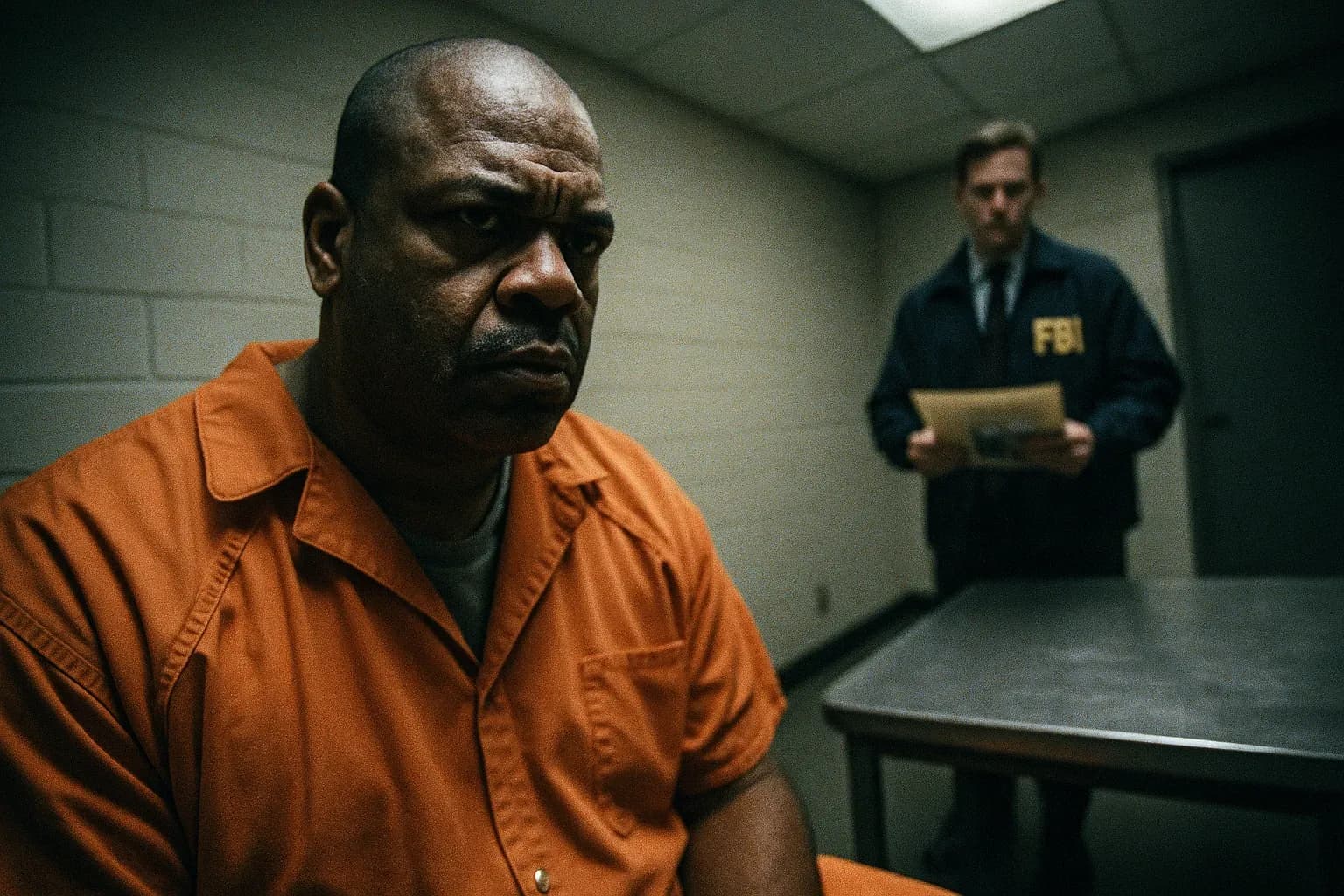
Kim Groves did what she thought was right. In early 1994, the 32-year-old New Orleans resident witnessed NOPD Officer Len Davis and his partner brutally beating a young boy in her neighborhood. She filed a complaint. Six months later, in October 1994, she was shot dead outside her home in front of her three children—including her daughter Jasmine. The killing was no random act of violence. It was an execution ordered by the very officer she had reported.
Len Davis was not an ordinary corrupt cop. He was something far more dangerous: a predator with a badge and institutional protection. Nicknamed "Robocop" and the "Desire Terrorist" by residents of his 6th District precinct, Davis led a ring of fellow officers dealing cocaine, protecting drug dealers, and extorting the community they were sworn to serve. He falsified evidence, incited violence, and accumulated more than 20 brutality complaints. Yet for years, he operated with near impunity.
The motive for Groves' murder was simple and chilling: retaliation. Her complaint threatened Davis's position and profit. Federal investigators later learned that Davis didn't pull the trigger himself—that fell to drug dealers Paul Hardy and Damon Causey—but the order was his. According to testimony, Davis's own partner witnessed him celebrating Groves' death, jumping in joy at the news that the problem had been eliminated.
Timeline
Kim Groves shot and killed in New Orleans' 9th Ward
On October 13, 1994, 32-year-old mother Kim Marie Groves was shot on Alabo Street in New Orleans' 9th Ward. The murder had been ordered by NOPD officer Len E. Davis.
FBI launches Operation Shattered Shield against NOPD corruption
The FBI's investigation into systematic corruption within the New Orleans Police Department – Operation Shattered Shield – uncovered the context in which the murder of Groves took place.
Davis, Hardy and Causey convicted in federal court in New Orleans
In 1996, Judge Ginger Berrigan found all three defendants guilty. Davis and Hardy were sentenced to death; Causey was sentenced to life in prison.
New sentencing trial for Davis – death sentence upheld
After the Fifth Circuit Court of Appeals vacated one count against Davis, the court held a new sentencing trial in 2005. Davis represented himself and was again sentenced to death.
Biden commutes Davis' death sentence to life in prison
In 2024, President Joe Biden commuted the death sentences of a group of federally condemned prisoners, including Len Davis, to life in prison.
The killing might have been buried like so many others in mid-1990s New Orleans, but federal authorities were already closing in. The FBI's Operation Shattered Shield, launched in early 1994, had penetrated the NOPD's criminal enterprise using informants and wiretaps. The investigation captured Davis in his own words: ordering the hit on Groves and threatening another complainant, Nathan Norwood, with a chilling nursery rhyme message: "rock-a-bye, baby."
Davis was convicted in federal court on April 24, 1996—a swift verdict, with jurors deliberating just 30 minutes. The evidence was overwhelming. Judge Ginger Berrigan presided over the trial that began on April 8, 1996. On May 1, Davis received the death penalty. Notably, Davis refused to participate in the penalty phase of his own trial, effectively giving up his defense.
The broader context made the case even more damning. In 1994 alone, the same year Groves died, Davis provided false information that led to the wrongful arrests and convictions of three men—Bernell Juluke, Kunta Gable, and Leroy Nelson. They were not exonerated until 2022, when Orleans Parish District Attorney Jason Williams' office finally reviewed the cases and corrected the record.
The NOPD of that era was a cesspool. Officers earned roughly $20,000 annually, creating conditions ripe for corruption. The department suffered from low hiring standards, rampant nepotism, and a culture where side hustles—drug dealing, protection rackets, theft—were simply part of the job. The Len Davis case exposed this rot to the world, triggering national attention and, eventually, meaningful reforms: firings, outside oversight, and efforts to rebuild community trust.
Davis remained on death row for three decades until President Joe Biden commuted his sentence to life imprisonment in 2024. The commutation infuriated Davis, who appealed to have his death sentence reinstated—an extraordinary position that underscores the depths of his psychopathology.
The case also haunted other officers. Antoinette Frank, a contemporary NOPD officer, was convicted for unrelated murders and remains on Louisiana's death row.
Kim Groves never got to see her children grow up. She paid the ultimate price for expecting accountability from those in power. Her death, and the investigation that followed, became the measure by which the world would judge the New Orleans Police Department—and find it catastrophically wanting.
**Sources:**
https://studycorgi.com/the-len-davis-case-power-abuse-corruption-and-kim-groves-murder/
https://www.encyclopedia.com/law/law-magazines/len-davis-trial-1996
https://veritenews.org/2024/10/21/nopds-history-of-corruption-came-to-a-head-with-the-murder-of-kim-groves/
https://pod.wave.co/podcast/gone-south/s4e33-defending-len-davis-af6918a7
https://www.police1.com/arrests-sentencing/ex-cop-appeals-to-have-death-sentence-upheld-after-biden-gives-death-row-inmates-life-in-prison-instead
Ask about this case
Answers from KrimiNyt's coverage onlyFollow this case
Get an email when a new documentary, podcast or book about The Len Davis Case: When a Cop Became a Killer appears, or when a verdict is reached.