Fritz Honka — Serial Killer of Hamburg's St. Pauli District
Den tyske alkoholiker dræbte fire kvinder i 1970'erne
Published May 7, 2026
Quick Facts
The Perpetrator's Background
Fritz Honka was born Karl-Heinz Honka on July 31, 1935, in Leipzig during the Nazi era. His childhood was marked by violence and neglect. His father was an alcoholic who abused the family, an experience that would have a lifelong impact on Honka's psyche. After World War II, the family fled to West Germany.
Honka grew up as a marginalized and lonely man with significant social problems. He developed a disfigured facial appearance following several operations and became a target of bullying. As an adult, he worked as a night porter but quickly became dependent on alcohol. His life centered around the cheap bars and taverns in Hamburg's St. Pauli district, particularly around the Reeperbahn area.
Timeline
First murder committed in December 1970
Fritz Honka commits the first of the documented murders in December 1970, connected to the St. Pauli/Altona-Ottensen area of Hamburg.
Fire reveals body parts at Zeißstraße 74
On July 17, 1975, a fire breaks out in the building. Firefighters find human remains hidden in Honka's apartment and in the attic. Fritz Honka is arrested.
Verdict handed down at Landgericht Hamburg
On December 20, 1976, Fritz Honka is convicted of one count of murder and three counts of manslaughter (Totschlag). The sentence is 15 years in prison and placement in a psychiatric institution.
Fritz Honka dies in Hamburg-Langenhorn
Fritz Honka dies on October 19, 1998, in Hamburg-Langenhorn.
The small, slovenly man with crooked facial features became a regular at Elbschlosskeller and other bars, where he sought the company of socially marginalized women — prostitutes, alcoholics, and the homeless.
The Murders in St. Pauli
Between 1970 and 1975, Fritz Honka committed at least four murders of women he met in bars around St. Pauli. His victims were all socially marginalized women aged 40 to 57, whom society had largely forgotten. They were perfect victims for a serial killer because no one really missed them.
Honka lured the women to his small apartment at Zeißstraße 74 in the Ottensen district with promises of more alcohol and company. There he strangled them during or after sexual acts. The method was primitive — he used his bare hands or garters to asphyxiate his victims.
After the murders, he dismembered the bodies with a saw and knives in his bathroom. Body parts were wrapped in plastic bags and hidden in the attic directly above his apartment. He removed the hair from the heads and stored them separately. The stench in the building was nauseating, but neighbors attributed it to Honka's poor hygiene and chain-smoking.
The Discovery
On July 17, 1975, a fire broke out in the building at Zeißstraße 74. When firefighters responded and searched the property, they made macabre discoveries in the attic: remains of three women wrapped in plastic and hidden among old furniture and debris.
Police quickly identified Fritz Honka, who had himself been present during the fire suppression. He was arrested and shortly afterward confessed to the murders. During interrogation, he described his crimes in detail with a cold indifference that shocked investigators.
The victims were identified as Gertrude Bräuer (disappeared 1970), Anna Beuschel (disappeared 1974), Frieda Roblick (disappeared 1974), and Ruth Schult (disappeared 1975). All were alcoholics and prostitutes from the St. Pauli environment.
The Trial and Conviction
Fritz Honka was brought to trial in 1976 in a case that attracted major media attention in Germany. He was charged with four murders and dismemberment of corpses. During the trial, he appeared as a cold and emotionless person who showed minimal remorse.
Forensic psychiatrists examined Honka and concluded that he suffered from personality disorders and alcoholism, but that he was sane and knew what he was doing. He was found guilty of all four murders.
On December 10, 1976, Fritz Honka was sentenced to 15 years in prison for manslaughter — a relatively lenient sentence compared to the brutality of the crimes. The judges took into account his mental state and the lack of premeditation in his crimes.
Later Life and Death
Honka served his sentence at Fuhlsbüttel Prison in Hamburg. He was released in 1993 after serving his full sentence. The final years of his life were spent in a nursing home, where he lived as a withdrawn and forgotten figure.
Fritz Honka died on October 19, 1998, at the age of 63. His crimes had been largely forgotten by the public, but his case remained one of the most bizarre chapters in Hamburg's criminal history.
In 2019, his crimes were retold in the German film "Der Goldene Handschuh" (The Golden Handshake) directed by Fatih Akin, based on Heinz Strunk's 2016 novel. The film brutally depicts the sordid environment of 1970s St. Pauli and Honka's atrocities.
The St. Pauli District
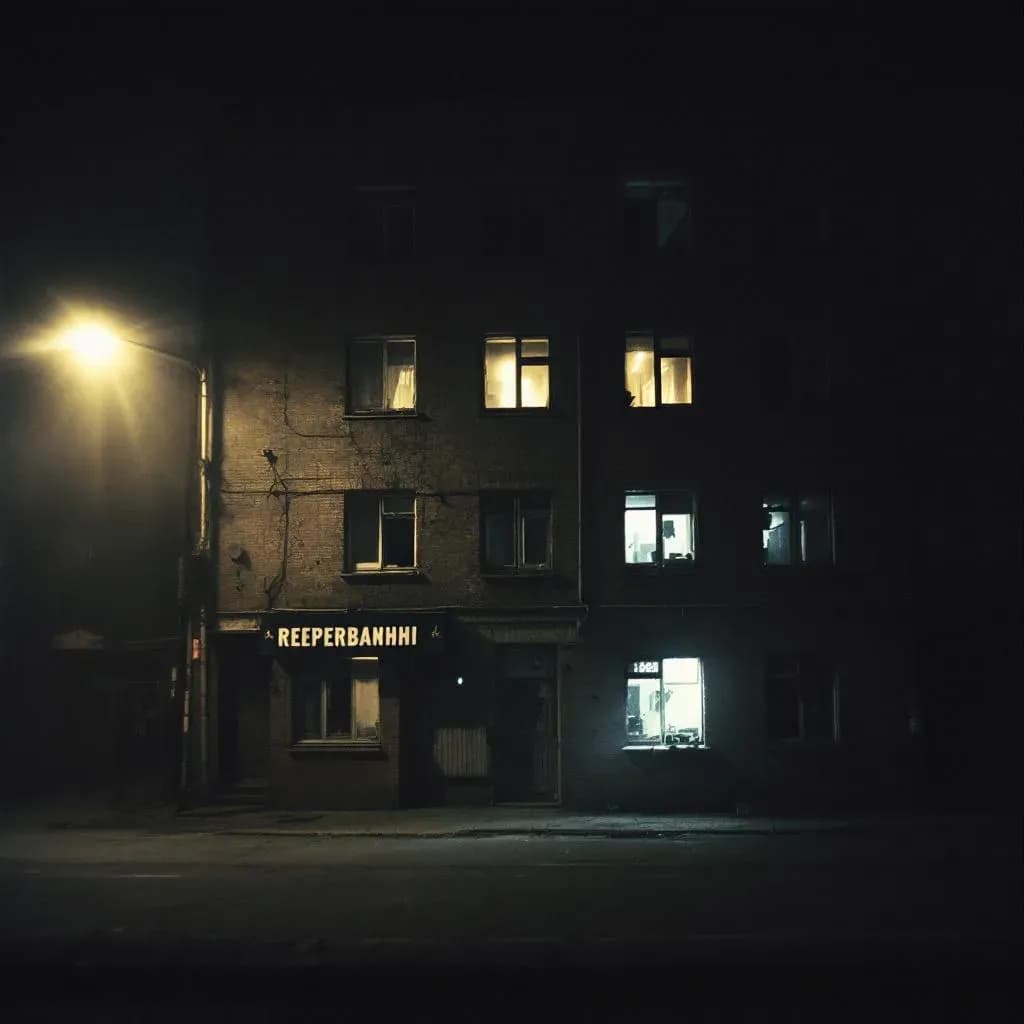
Fritz Honka's crimes unfolded in the heart of Hamburg's most notorious district. St. Pauli and particularly Reeperbahn were marked in the 1970s by prostitution, crime, and deep social misery alongside a vibrant nightlife.
The bars where Honka found his victims were havens for society's most vulnerable — people living in deep alcoholism and poverty without a social safety net. It was an environment where people could disappear without anyone asking questions.
The building at Zeißstraße 74, where the crimes took place, still stands today, but remains as a silent witness to one of Germany's most disturbing criminal cases.
Media coverage
Documentaries
- Der Goldene Handschuh: Fatih Akin's Fritz Honka Film(2026)
- Hamburg Serial Killer Fritz Honka Gets Brutal Film Treatment(2026)
Ask about this case
Answers from KrimiNyt's coverage onlyFollow this case
Get an email when a new documentary, podcast or book about Fritz Honka — Serial Killer of Hamburg's St. Pauli District appears, or when a verdict is reached.