El Chapo: From Prison Escapes to Life Behind Bars
How Mexico's most notorious drug lord evaded capture twice before facing justice in a Brooklyn courtroom
Published June 6, 2025
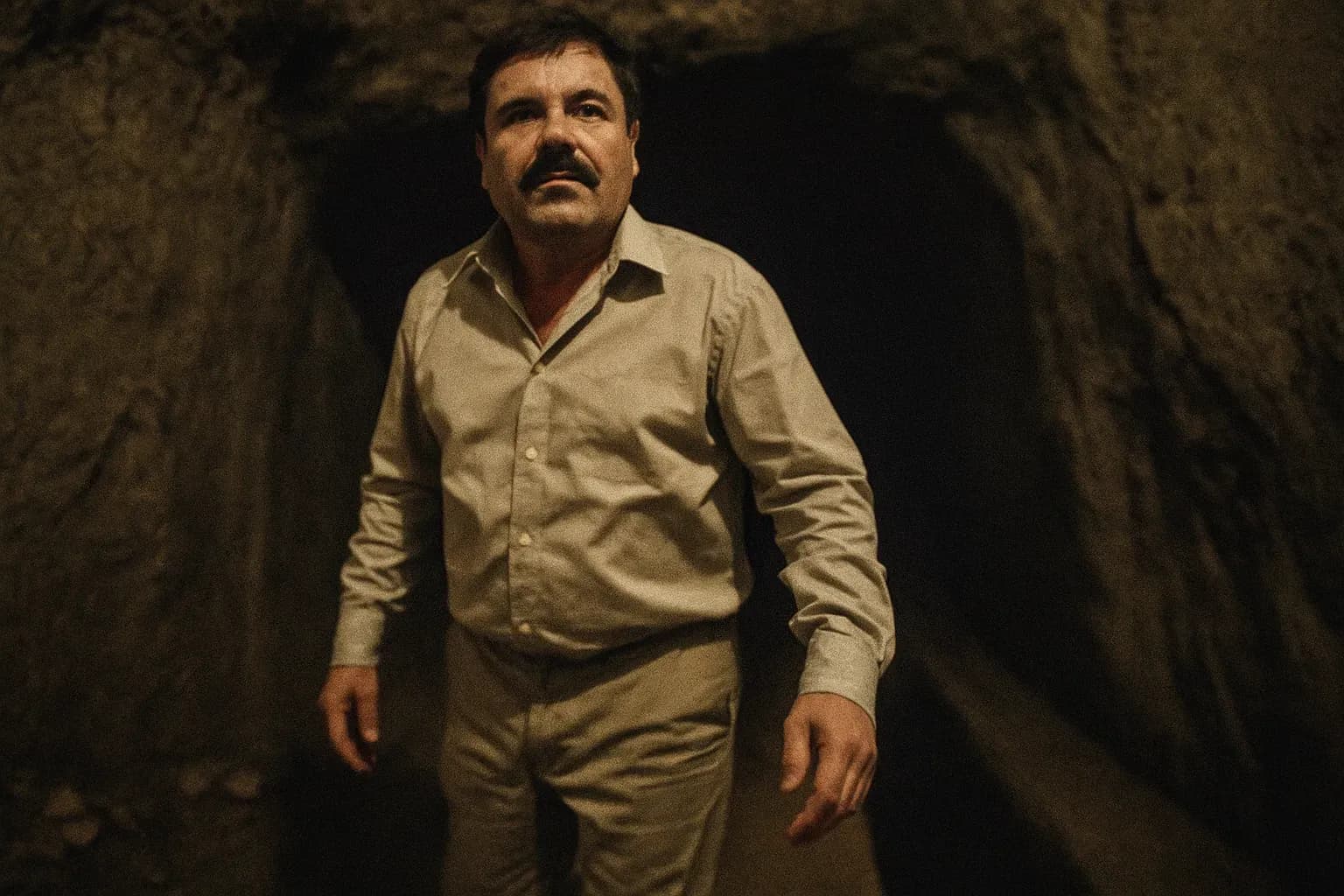
Case Details
Quick Facts
Classification:
Quick facts
Joaquín 'El Chapo' Guzmán, one of the world's most wanted criminals, engineered two brazen escapes from maximum-security Mexican prisons—exploits that cemented his legend before federal authorities finally locked him away for life.
Guzmán was first arrested in 1993 for murder and drug trafficking, sentenced to 20 years in Puente Grande prison. But incarceration barely slowed him. Prison guards accepted bribes, and Guzmán lived in relative comfort with custom meals, cellphones, and regular visits from prostitutes. On January 19, 2001, he made his first escape by hiding in a laundry cart. A corrupted prison guard helped escort him out while security cameras sat disabled. He vanished into Mexico's underworld.
For years, Guzmán ran the Sinaloa Cartel from the shadows, directing a criminal empire that moved hundreds of tons of cocaine, heroin, and marijuana from Colombia, Ecuador, and Mexico into US cities including Los Angeles, Chicago, and New York. Prosecutors later estimated the cartel's trafficking profits at $12.6 billion over two decades. His organization employed an army of sicarios—hired assassins—tasked with kidnapping, torture, and murder to protect territorial interests and eliminate rivals.
Timeline
Born in La Tuna
Joaquín Guzmán Loera is born in La Tuna, Mexico
First spectacular escape
El Chapo escapes from a Mexican maximum-security prison
Tunnel escape
Second escape through a 1.5-kilometer-long tunnel on a motorcycle
Arrest in Sinaloa
Mexican marine infantry arrests El Chapo, five bodyguards die
Sentenced to life
El Chapo is sentenced to life in a Supermax prison
The Mexican government pursued Guzmán relentlessly. Bounties climbed to approximately $2.3 million in Mexico and $5 million in the United States. Yet he remained elusive, protected by corrupt officials and his own cunning. Authorities eventually tracked him down and arrested him again—only for history to repeat itself.
On July 11, 2015, Guzmán escaped from the Federal Social Readaptation Center No. 1, known as Altiplano, one of Mexico's most secure facilities. This time, he didn't walk out casually. Accomplices dug a 1.5-kilometer tunnel from his shower area directly beneath the prison walls. The sophistication of the operation stunned Mexican authorities and embarrassed the government. Within months of his recapture in 2016, US federal agents took custody and extradited him north.
Guzmán faced trial in the US District Court for the Eastern District of New York in Brooklyn, before Judge Brian Cogan. The 11-week trial was extraordinarily complex and heavily securitized. Federal agents trained courtroom staff in active-shooter response. Police deployed snipers near the courthouse. Bomb-sniffing dogs worked the perimeter. A sequestered jury of anonymous citizens deliberated the government's evidence—a mountain range of testimony from 56 witnesses, including 14 of Guzmán's former associates who had turned state's evidence. The defense called just one witness.
In February 2019, the jury returned guilty verdicts on all 10 felony counts: continuing criminal enterprise, narco-trafficking conspiracy, conspiracy to commit murder, weapons possession, money laundering, and international drug distribution. The continuing criminal enterprise conviction alone triggered a mandatory life sentence.
Four months later, in July 2019, Judge Cogan handed down the official sentence: life in prison plus an additional 30 years. In his ruling, the judge called Guzmán's crimes an expression of "overwhelming evil." Guzmán showed no contrition, claiming instead that he received no justice because of alleged juror misconduct and excessive media coverage. He sought a new trial; the court denied his request.
Today, Guzmán is believed to be housed at ADX Florence, the federal Supermax prison in Colorado, where the most dangerous inmates in the US system spend 23 hours each day in solitary confinement. The man who once commanded armies of smugglers and assassins now faces decades of isolation—a fitting end for a career built on violence and corruption.
**Sources**
https://themobmuseum.org/blog/federal-judge-hands-el-chapo-life-sentence/
https://en.wikipedia.org/wiki/Manhunt_of_El_Chapo_Guzm%C3%A1n
https://www.foxnews.com/us/mexican-drug-kingpin-el-chapo-draws-life-sentence-in-us-prison
https://www.oxygen.com/crime-time/joaquin-el-chapo-guzman-sentenced-life-in-prison
Ask about this case
Answers from KrimiNyt's coverage onlyFollow this case
Get an email when a new documentary, podcast or book about El Chapo: From Prison Escapes to Life Behind Bars appears, or when a verdict is reached.