The Deep Calls: When Darkness Swallowed Nautilus and a Swedish Journalist's Dreams
Sagsdetaljer
Quick Facts
A Fateful Sunset over Refshaleøen
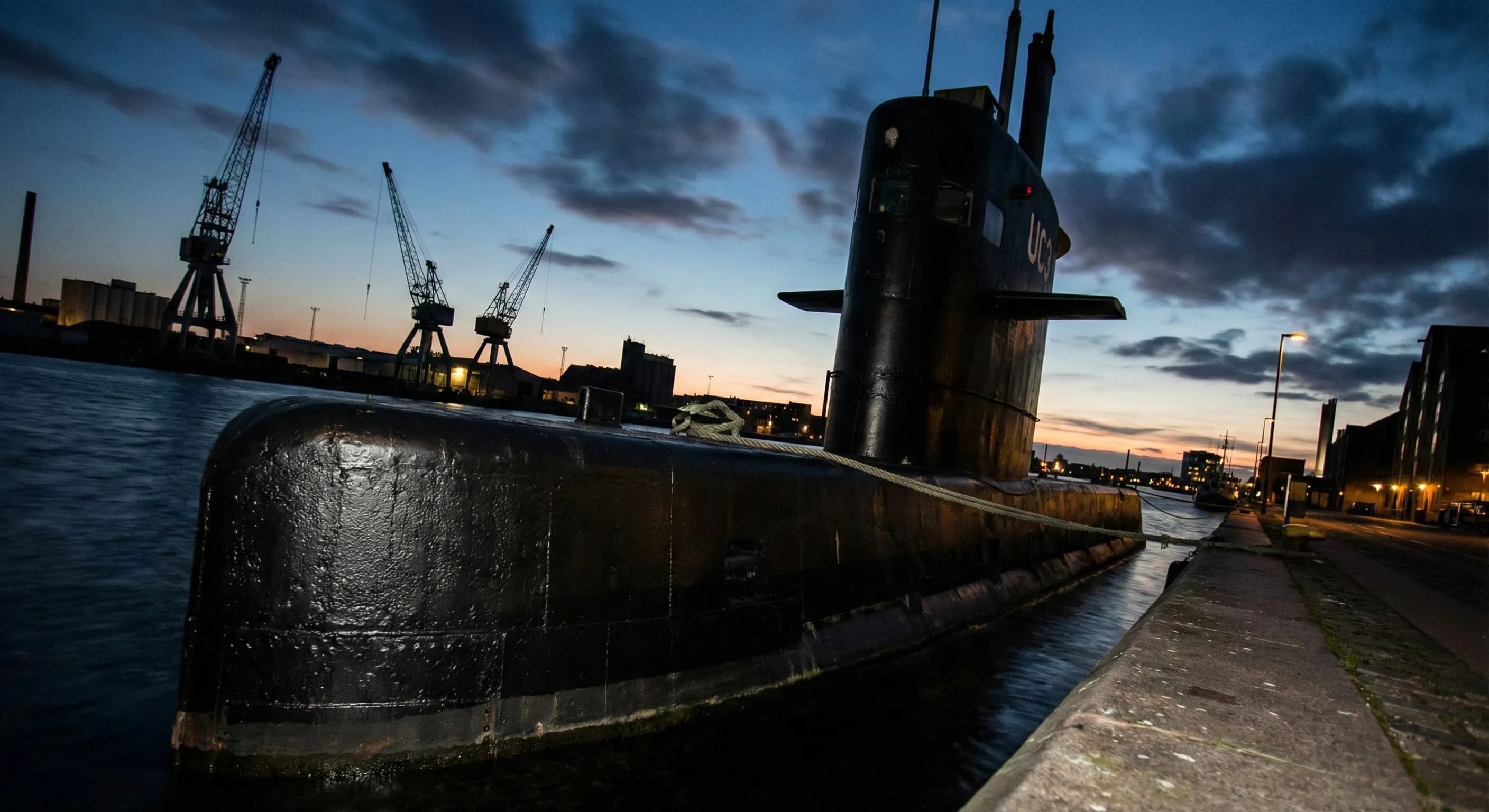
The sky above Copenhagen was painted in soft, pastel strokes of purple and orange on that evening in August 2017, when reality fractured. On Refshaleøen’s rustic waterfront, Peter Madsen, a man viewed by the public as a blend of Gyro Gearloose and a modern adventurer, stood ready to welcome a guest aboard his homemade pride, the submarine UC3 Nautilus. For Kim Wall, the Swedish journalist with the world as her workplace and curiosity as her compass, it looked like the beginning of another fascinating reportage. She stepped down into the hatch with a smile, unaware that she had just crossed the threshold into a claustrophobic hell where no one could hear her scream.
The image of the two in the tower, waving to random pleasure boaters as the sun went down, stands today as a chilling monument to the loss of innocence. It was the last time the world saw Kim Wall alive. In the hours that followed, as darkness settled over the Oresund, the cramped cabin beneath the sea surface transformed from a technological workshop into a brutal crime scene. What was supposed to be a short trip into the deep became a journey into the darkest recesses of the human psyche, where megalomania and sadism merged into a deadly cocktail.
The Dance of Truth in Køge Bay
When the sun rose again, Nautilus had sunk, and Madsen was pulled ashore as the sole survivor. His initial explanations were like the water around him—fluid, opaque, and constantly changing. He spoke of technical malfunctions, of a hatch that slipped, of a tragic accident. But as the seabed was combed by police divers, the truth began to rise to the surface, piece by piece, in a macabre puzzle that sent shockwaves through all of Scandinavia.
It was not merely the discoveries in Køge Bay that shook the population, but the icy calm with which Madsen met the accusations. While the nation held its breath in collective horror, the inventor appeared almost unaffected, detached, as if observing an experiment from the outside rather than a tragedy of which he was the chief architect. This total lack of empathy became a focal point of the investigation. It became clear that the charismatic "Rocket Madsen," whom many had admired for his will to achieve the impossible, was masking a narcissistic and deeply disturbed personality that had fantasized about the perfect murder long before the hatch was closed that night.